


Starlit Power Systems Ltd and the New Era of Intelligent Energy Management
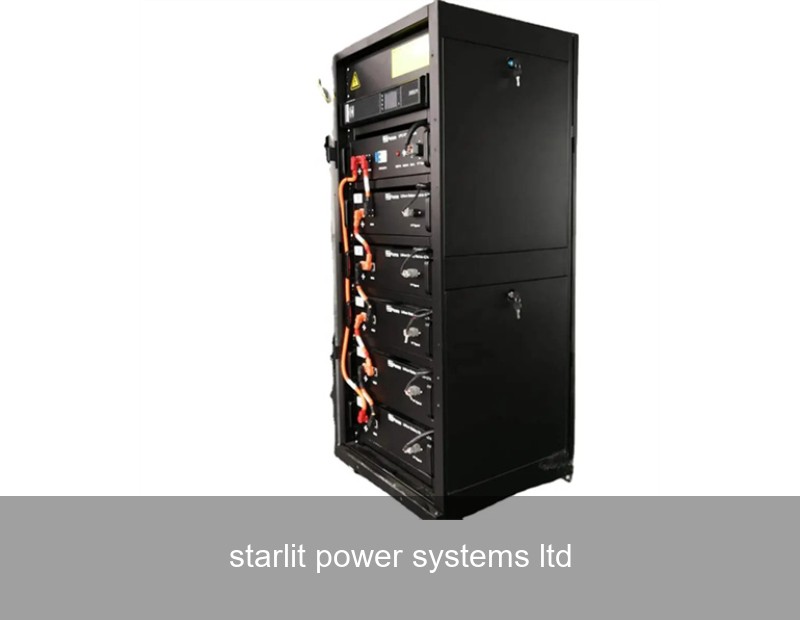
Imagine a world where your business isn't just powered by electricity, but by intelligence. Where energy flows seamlessly, costs are predictable, and your operations are resilient against grid fluctuations. This isn't a distant future—it's the reality being built today by innovators in the energy storage sector. Companies like Starlit Power Systems Ltd are at the forefront, pushing the boundaries of how we store and manage power. But what does truly intelligent energy management look like in practice, and how can businesses and communities not just participate in, but actively benefit from, this energy revolution?
Table of Contents
The Urgency: Beyond Intermittency
For years, the conversation around renewables like solar and wind has centered on their intermittent nature. The sun sets, the wind calms. The solution has always been clear: energy storage. However, the challenge has evolved. It's no longer just about storing excess energy; it's about creating a dynamic, responsive, and economically optimized power asset. Modern facilities, from manufacturing plants to data centers, require a system that acts as a strategic partner—managing demand charges, providing backup power, and even generating revenue through grid services. This is the complex problem that advanced providers aim to solve.

Think of it this way: an old-fashioned battery is like a spare tire. You hope you never need it, and it just sits there. A modern Battery Energy Storage System (BESS), however, is like a high-performance hybrid drivetrain—constantly optimizing energy use, saving fuel (costs), and enhancing the overall performance of the vehicle (your facility).
The Data: Quantifying the Storage Imperative
The numbers speak volumes. According to the International Energy Agency (IEA), global energy storage capacity needs to expand dramatically to meet net-zero goals, with annual additions needing to grow over 30% per year through 2030. In markets like California (CAISO) and parts of Europe, frequency regulation and capacity markets are creating direct revenue streams for storage assets. A study by the U.S. National Renewable Energy Laboratory (NREL) highlights that commercial and industrial (C&I) entities can often see payback periods of 5-7 years on storage investments through a combination of demand charge reduction, energy arbitrage, and resilience benefits.
This isn't just about green credentials; it's a compelling financial equation. The key is in the software—the brain that decides when to charge, when to discharge, and how to stack these value streams without compromising the battery's health or the facility's operational needs.
Case Study: A European Industrial Park's Transformation
Let's ground this in reality. Consider a mid-sized industrial park in Northern Germany, housing several manufacturing units. Their challenges were classic: volatile energy prices, high grid demand charges that spiked during certain operational hours, and a corporate mandate to reduce carbon footprint.
They partnered with a systems integrator to deploy a 2.5 MWh / 2.5 MW battery storage solution. The results over 18 months were telling:
| Metric | Before Installation | After Installation | Change |
|---|---|---|---|
| Peak Demand from Grid | 1.8 MW | 1.2 MW | -33% |
| Monthly Demand Charges | €12,000 | €7,500 | -37.5% |
| On-Site Renewable Consumption | 65% | 92% | +27% |
| Grid Service Revenue (Ancillary Services) | €0 | €800/month (avg.) | New Income Stream |
This tangible success story mirrors the mission of companies exploring this space: to turn energy from a pure cost center into a managed, value-generating asset. The intelligence of the system's software was the unsung hero, continuously learning consumption patterns and market prices.
The Intelligence Layer: More Than Just a Battery
This leads us to the core of modern energy storage: the intelligence layer. A high-quality lithium-ion battery is the muscle, but the power conversion system (PCS) and energy management software (EMS) are the brain and nervous system. A truly advanced system must:
- Forecast & Optimize: Use weather and load forecasting to plan charge/discharge cycles.
- Value Stacking: Seamlessly prioritize between self-consumption, demand shaving, and grid services based on real-time economics.
- Ensure Safety & Longevity: Implement sophisticated battery management (BMS) to prevent thermal runaway and maximize cycle life.
- Integrate Seamlessly: Communicate with existing solar inverters, building management systems, and grid operators.
This is where the expertise of a seasoned provider becomes non-negotiable. It's the difference between buying a box of components and partnering for a guaranteed performance outcome.
How Highjoule Enables Advanced Power Systems
At Highjoule, with nearly two decades of experience since 2005, we've witnessed and driven this evolution from simple backup to intelligent energy platforms. Our role is to provide the robust, reliable, and smart hardware that system integrators and developers—who may work on projects for entities like Starlit Power Systems Ltd—need to deliver on their promises.
Our H-Series Commercial & Industrial (C&I) ESS is engineered for this precise multi-value application. It features:
- All-in-One Design: Integrating battery racks, PCS, BMS, and cooling into a pre-assembled, UL-certified enclosure for faster deployment.
- Advanced Cycle Chemistry: LFP (Lithium Iron Phosphate) batteries renowned for safety, longevity (over 6000 cycles), and stable performance.
- Open API EMS Platform: Our JouleBrain software provides the open interface that allows integrators to build their custom optimization algorithms, connect to any third-party monitoring platform, or participate in specific grid programs like FERC 2222 in the US or balancing markets in Europe.
- Scalable Architecture: From 100 kWh to multi-MWh installations, systems can scale modularly as a customer's needs grow.

For microgrid and utility-scale applications, our MegaJoule Containerized ESS offers utility-grade performance. We provide the dependable, high-performance foundation, allowing our partners to focus on delivering tailored solutions and financial models to their end clients—whether that's a factory, a hospital, a university campus, or a community microgrid.
The Future: Integrated, Adaptive, and Profitable
The trajectory is clear. The future energy landscape will be defined by distributed, digitally-connected assets. Virtual Power Plants (VPPs) will aggregate thousands of storage systems, like those potentially deployed by Starlit Power Systems Ltd, to act as a single, flexible power plant. Artificial Intelligence and machine learning will move from advanced features to standard tools, predicting faults before they occur and optimizing revenue down to the second.
The question for any business leader or community planner is no longer "Should we consider storage?" but rather "How do we implement the most intelligent, future-proof, and profitable storage strategy for our specific needs?"
What is the single biggest barrier—be it financial, technical, or regulatory—that you see holding back a smarter energy strategy in your own organization or community?
 Inquiry
 Online Chat