


Unlocking the Sun's Heat: A Practical Guide to Efficient Storage of Solar Thermal Energy
Have you ever wondered why your home feels warmest in the afternoon, yet you need the most heat in the evening? This daily mismatch is the central challenge in solar thermal technology. While photovoltaic (PV) panels get most of the attention, the storage of solar thermal energy is the unsung hero that can truly transform sunlight into a reliable, 24/7 heat source. It's about capturing the sun's abundant warmth when it's available and holding onto it until it's needed—be it hours or even months later. For businesses, industries, and communities aiming for energy independence and deep decarbonization, mastering this storage is no longer a luxury; it's a necessity.
Table of Contents
The Core Challenge: Why We Can't Use Solar Heat Instantly
The sun is a generous but inconsistent partner. Cloud cover, nighttime, and seasonal variations create a significant gap between energy supply and demand. Without effective storage of solar thermal energy, these systems are limited, often requiring fossil-fuel backup. This undermines their economic and environmental benefits. The key metric here is "solar fraction"—the percentage of your total heat demand met by the sun. Without storage, this fraction might struggle to exceed 30-40%. With effective storage, it can soar to 70%, 90%, or even higher, slashing both carbon emissions and energy bills.
How It Works: From Simple Tanks to Molten Salt
At its heart, thermal storage is about insulating a medium after it has been heated by concentrated sunlight or solar collectors. Think of it as a giant, super-efficient thermos. The duration and temperature required dictate the technology.
- Sensible Heat Storage: The most common method. This involves heating a solid or liquid (like water, sand, or rocks) without changing its phase. The storage of solar thermal energy in a well-insulated water tank for domestic hot water is a classic example.
- Latent Heat Storage: Uses Phase Change Materials (PCMs) that absorb or release large amounts of energy when melting or solidifying (e.g., from solid to liquid). This allows for much more compact storage at a near-constant temperature.
- Thermochemical Storage: The frontier of research. It involves reversible chemical reactions that store and release heat, offering the potential for very long-duration, loss-free storage.

Image: Concentrated Solar Power plants use molten salt for large-scale, high-temperature storage of solar thermal energy. Credit: U.S. Department of Energy.
Key Technologies for Storing the Sun's Warmth
Choosing the right storage solution depends on scale and application. Here’s a breakdown:
| Technology | Best For | Duration | Temperature Range |
|---|---|---|---|
| Insulated Water Tanks | Residential & Commercial DHW, Space Heating | Hours to Days | 40°C - 90°C |
| Buried Pit/ Borehole Storage | District Heating, Seasonal Storage | Months (Seasonal) | 30°C - 80°C |
| Molten Salt Tanks | Concentrated Solar Power (CSP) Plants | Hours to 10+ Hours | 250°C - 565°C |
| Phase Change Material (PCM) Modules | Compact Systems, Temperature Regulation | Hours | Depends on Material (e.g., 58°C) |
A Real-World Case: Pioneering Seasonal Storage in Denmark
Let's move from theory to a stunning real-world application. In the town of Dronninglund, Denmark, a community-driven district heating system showcases the power of long-term storage of solar thermal energy. The system comprises:
- A massive 37,500 m³ underground pit storage tank, lined with a special foil and insulated.
- Over 18,000 square meters of solar thermal collectors.
Here’s the magic: In the summer, excess solar heat warms the water in this giant "thermos" to nearly 90°C. This heat is then retained for months. During the long Scandinavian winter, this stored energy is drawn upon to supply over 40% of the town's annual heating demand. The project, operational since 2014, has reduced the community's reliance on biomass boilers and serves as a global benchmark. You can explore the technical details in this IEA report on seasonal storage.
This case highlights a critical insight: the most successful projects integrate smart control systems to manage the complex charging and discharging cycles. This is where expertise in system integration becomes paramount. At Highjoule, our work in intelligent energy management for microgrids and commercial sites directly parallels this need. While we specialize in advanced battery energy storage systems (BESS), the core principle is identical: using sophisticated software to maximize the utility and ROI of stored energy, whether it's electrons in a battery or heat in a tank.
Beyond Heat: The Synergy with Electrical Storage
The future of energy is integrated. Imagine a factory or a farm powered by both solar PV and solar thermal. The PV system generates electricity, which can be stored in a battery for lights and machines. The thermal system provides process heat or space heating, stored in a tank. But what about excess PV electricity on a sunny day? This is where sector coupling shines.
Power-to-Heat technology can convert that surplus renewable electricity into heat (using immersion heaters or heat pumps) and inject it into the thermal storage system. This creates a resilient, multi-vector energy hub. At Highjoule, we design and deploy these integrated solutions. Our HiveMind Energy OS can orchestrate such a system, deciding in real-time whether to send solar power to the battery, the grid, or to boost the thermal store, always prioritizing efficiency and cost savings for the owner. For a deeper dive into this synergy, the National Renewable Energy Lab (NREL) provides excellent resources.

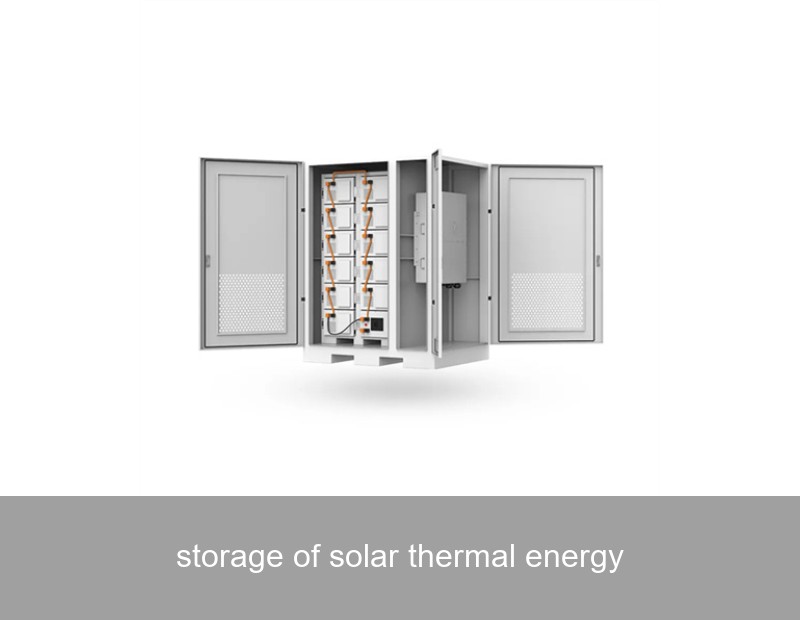
Image: An integrated energy system combining electrical and thermal storage for maximum resilience. Credit: Highjoule Inc.
The Future and Your Questions
The journey for efficient storage of solar thermal energy is accelerating. Innovations in materials (like higher-temperature PCMs), smarter controls, and hybrid systems are pushing the boundaries of what's possible. The goal is clear: to make renewable heat as dispatchable and reliable as any conventional fuel.
For a business owner, a factory manager, or a community planner, the question is no longer *if* thermal storage is viable, but *how* to implement it effectively. What is the optimal size for your specific load profile? How do you financially model a system with a 20-year lifespan? How do you integrate it with your existing electrical infrastructure?
We at Highjoule, with nearly two decades of experience in designing sophisticated storage solutions, believe the answer lies in a holistic view. Whether your immediate need is for cutting-edge battery storage, or you are planning a comprehensive renewable thermal project, understanding the entire energy ecosystem is key. What specific energy challenge are you looking to solve in your operation that might have a thermal component?
 Inquiry
 Online Chat