


Substation Battery Systems: The Unsung Heroes of Grid Stability and Renewable Integration
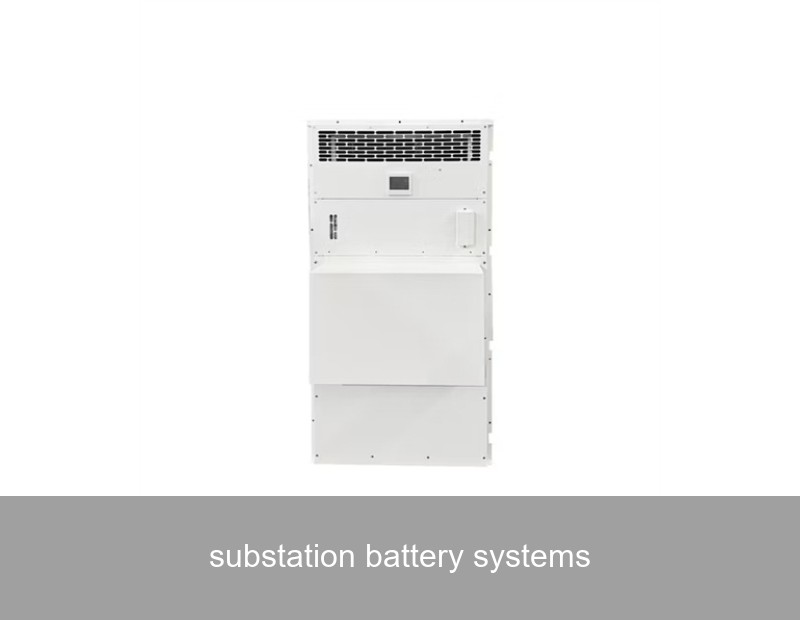
Have you ever wondered what keeps the lights on during a sudden power plant trip or a massive surge in demand? While the substation transformers and switches are the visible hardware, a quiet revolution is happening in the backlot. Substation battery systems are rapidly evolving from niche applications to cornerstone assets for modern, resilient power grids. As we integrate more variable renewable energy like solar and wind, these stationary energy storage units provide the critical flexibility and reliability that our electricity networks desperately need.
Table of Contents
- What Are Substation Battery Energy Storage Systems (BESS)?
- Why the Urgency for Substation BESS Now? The Data Tells the Story
- Key Functions: More Than Just a Backup
- A Real-World Case Study: California's SCE Mira Loma Substation
- The Highjoule Approach: Intelligent Substation BESS for Modern Grids
- The Future Outlook and Challenges
What Are Substation Battery Energy Storage Systems (BESS)?
In simple terms, a substation battery system is a large-scale energy storage installation colocated with an electrical substation. Think of a substation as a busy traffic hub for electricity—it steps voltage up for transmission or down for distribution to homes and businesses. A Battery Energy Storage System (BESS) at this location acts as a massive, grid-responsive "shock absorber" and "power reservoir."
These systems typically consist of:
- Battery Racks: Thousands of individual lithium-ion (or other chemistry) cells assembled into modular racks.
- Power Conversion System (PCS): The brain that converts DC battery power to AC grid power and vice versa.
- Energy Management System (EMS): The sophisticated software that controls when to charge or discharge based on grid signals.
- Thermal Management & Safety Systems: Crucial components to ensure safe, long-lasting operation.

Image source: U.S. Department of Energy (public domain illustration of BESS at a substation).
Why the Urgency for Substation BESS Now? The Data Tells the Story
The push for substation battery systems isn't just a trend; it's a direct response to three seismic shifts in the energy landscape.
1. The Renewable Energy Tsunami
In the U.S., EIA data shows that wind and solar are the fastest-growing sources of electricity generation. In Europe, the EU aims for 42.5% renewable energy by 2030. These sources are intermittent—the sun sets, the wind calms. Substation BESS can store excess renewable generation during peak production and discharge it during periods of high demand or low generation, smoothing out the "duck curve" that challenges grid operators.
2. Aging Infrastructure and Rising Demand
Much of the grid infrastructure in Europe and North America is decades old. Simultaneously, electrification of transport and heating is increasing peak loads. Upgrading traditional infrastructure (wires, transformers) is costly and time-consuming. A strategically placed substation battery system can defer or avoid these costly upgrades by providing localized power and relieving congestion, acting as a "non-wires alternative."
3. The Need for Ultra-Fast Grid Services
Grid frequency must stay within a tight band (e.g., 60 Hz in the US, 50 Hz in EU). A sudden loss of generation or a spike in demand can cause dangerous frequency deviations. Lithium-ion batteries can respond to such events in milliseconds, far faster than traditional gas "peaker" plants. This frequency regulation is becoming a vital, revenue-generating service for storage assets.
Key Functions: More Than Just a Backup
A modern substation battery system is a multi-talented asset. Its core functions include:
| Function | Description | Benefit |
|---|---|---|
| Frequency Regulation | Automatically injecting or absorbing power to maintain grid frequency. | Enhances grid stability and reliability; creates market revenue. |
| Voltage Support | Providing reactive power to maintain proper voltage levels on the distribution network. | Improves power quality, reduces equipment stress, and avoids violations. |
| Peak Shaving / Capacity Deferral | Discharging during periods of highest demand to reduce load on specific assets. | Defers costly grid upgrades, reduces transmission charges. |
| Renewable Integration & Ramp Management | Absorbing excess solar/wind generation and smoothing its output profile. | Reduces curtailment, enables higher renewable penetration. |
| Backup Power / Resilience | Providing short-term backup for critical community facilities during outages. | Enhances community and grid resilience against extreme weather events. |
A Real-World Case Study: California's SCE Mira Loma Substation
One of the most cited early examples of a large-scale substation battery system is Southern California Edison's (SCE) Mira Loma facility. Commissioned in 2016 by Tesla, this 20 MW / 80 MWh system was, at the time, one of the world's largest lithium-ion battery installations.
- The Challenge: The Aliso Canyon gas leak crisis in 2015 created a pressing need for rapid alternatives to gas-fired peaker plants to ensure grid reliability in the Los Angeles basin, especially during evening peaks when solar generation faded.
- The Solution: SCE deployed the BESS at a strategic substation to provide peak capacity and grid services.
- The Results: The system successfully demonstrated the ability to provide reliable, instantaneous power. It helped shift solar energy to evening hours and provided critical ancillary services. A California Energy Commission report highlighted that such storage projects were instrumental in addressing local capacity requirements and integrating renewables. The success of Mira Loma paved the way for gigawatts of subsequent storage projects in California and served as a global proof-of-concept for utility-scale substation BESS.
The Highjoule Approach: Intelligent Substation BESS for Modern Grids
At Highjoule, with nearly two decades of experience since 2005, we've moved beyond the basic battery pack. Our substation battery systems are built as intelligent, grid-aware solutions. We understand that a successful installation isn't just about the hardware; it's about delivering guaranteed performance and seamless integration.
Our H-Series Utility BESS is engineered specifically for harsh substation environments and rigorous grid service duty cycles. What sets it apart?
- Multi-Layer Intelligence: Our proprietary GridSynergy EMS doesn't just react; it forecasts. By integrating weather data, load forecasts, and market price signals, it optimizes the battery's operation to maximize economic value (through energy arbitrage or market services) while fulfilling all grid support contracts.
- Unmatched Safety & Longevity: We use a passive safety-focused cell chemistry combined with an active liquid cooling thermal management system. This ensures stable operation across a wide temperature range and extends the system's cycle life, delivering a lower total cost of ownership. Our systems comply with the latest international standards like UL 9540 and IEC 62933.
- Plug-and-Play Grid Integration: We provide a complete, containerized solution that includes medium-voltage transformers and switchgear, pre-tested for seamless interconnection. This reduces on-site construction time and complexity for our utility and developer partners, getting the asset online and revenue-generating faster.

Image source: Highjoule company portfolio (example of a deployed containerized BESS).
For a grid operator facing renewable intermittency, a Highjoule system acts as a reliable partner for frequency regulation and ramping support. For a developer, it's a turnkey asset optimized for the highest return across multiple value streams.
The Future Outlook and Challenges
The future for substation battery systems is bright, but not without hurdles. We expect to see:
- Longer Duration Storage (8-12+ hours): As renewable penetration moves beyond 50%, the need for multi-hour and even multi-day storage will grow, potentially blending lithium-ion with alternative chemistries like flow batteries.
- Hybrid "Storage-Plus" Substations: Batteries co-located with solar, wind, or even hydrogen electrolyzers, creating multi-functional energy hubs.
- Advanced Grid-Forming Inverters: Future BESS won't just follow the grid's lead; they will be capable of "forming" the grid—providing voltage and frequency stability in areas with high inverter-based resources, essentially acting as virtual power plants.
The main challenges remain: navigating complex interconnection queues, evolving market rules to fully value the stack of services storage provides, and ensuring sustainable supply chains for battery materials.
As you look at your own grid's roadmap—whether you're a municipal utility, a large industrial energy user, or a developer—the question is no longer if battery storage will play a role, but how and where to deploy it for maximum impact. What single grid constraint in your service territory could be most cost-effectively solved with a strategically placed substation battery system today?
 Inquiry
 Online Chat