


Solar Panel Rotating Mounts: Maximizing Your Energy Harvest, Day by Day
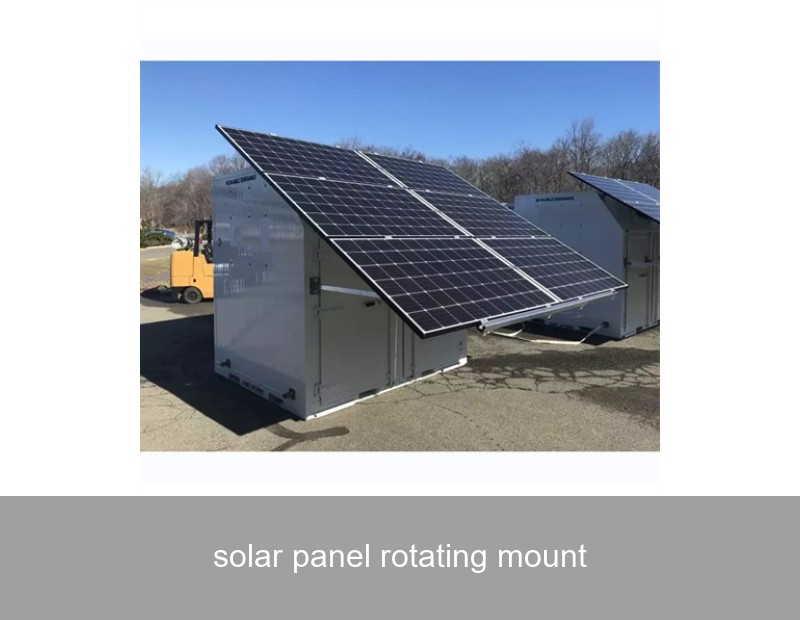
Imagine your solar panels not just sitting statically on the roof, but actively following the sun across the sky, like a sunflower. This isn't science fiction; it's the practical innovation of solar panel rotating mounts, also known as solar trackers. For homeowners and businesses in Europe and the US looking to squeeze every possible kilowatt-hour from their investment, understanding this technology is key. While fixed-tilt systems capture sunlight, rotating mounts chase it, significantly boosting energy production. But how much more power can you really get, and is it the right choice for your property? As a leader in intelligent energy solutions, Highjoule integrates these advanced mounting technologies with smart storage to create truly optimized, resilient power systems.
Table of Contents
- The Phenomenon: Fixed Panels vs. The Moving Sun
- The Data: How Much Energy Can You Really Gain?
- The Case Study: A German Dairy Farm's Success Story
- The Insight: Technology, Integration, and Smart Control
- Highjoule's Role: Beyond the Mount - Complete System Intelligence
- Making the Choice: Is a Solar Rotating Mount Right for You?
The Phenomenon: Fixed Panels vs. The Moving Sun
Here's the simple truth: a stationary solar panel only receives optimal, direct sunlight for a few hours around solar noon. In the morning, afternoon, and during lower winter sun angles, the light hits the panel at an oblique angle, reducing its effectiveness. It's like trying to catch rainwater with a bucket tilted sideways—you won't collect nearly as much.
A solar panel rotating mount solves this by dynamically adjusting the panel's orientation. There are two main types:
- Single-Axis Trackers: These rotate panels from east to west, following the sun's daily path. They are the most common type for large-scale installations.
- Dual-Axis Trackers: These add a second tilt adjustment, following the sun's daily east-west movement and its seasonal north-south altitude changes. This offers the absolute maximum energy capture.

Image: A commercial solar farm utilizing single-axis trackers. Source: Wikimedia Commons (Creative Commons)
The Data: How Much Energy Can You Really Gain?
The promise of solar trackers is backed by compelling numbers. According to the National Renewable Energy Laboratory (NREL), a reputable authority, the energy boost can be substantial but varies by location.
| Location | Gain of Single-Axis vs. Fixed Mount | Gain of Dual-Axis vs. Fixed Mount |
|---|---|---|
| Southern US (e.g., Arizona) | 15% - 25% | 25% - 35% |
| Central Europe (e.g., Germany) | 20% - 30% | 30% - 40% |
| Northern US (e.g., New York) | 25% - 35% | 35% - 45%+ |
Why the higher gains in some northern regions? It's because the sun's path is lower and wider in the sky. A tracker can capture more of that diffuse, low-angle light throughout the day and year, compared to a fixed system set at a compromise angle. This makes solar panel rotating mounts particularly interesting for markets in Northern Europe and the northern states of the US, where maximizing limited sunlight is crucial.
The Case Study: A German Dairy Farm's Success Story
Let's look at a real-world example from Bavaria, Germany. A medium-sized dairy farm with high electricity demands for cooling and processing wanted to achieve near-total energy independence. They had limited roof space but ample unused land adjacent to their operations.
- Challenge: Maximize annual energy yield from a constrained ground area to cover a consistent, daily load.
- Solution: Installation of a 150 kW photovoltaic system using single-axis solar panel rotating mounts.
- Result: Compared to a fixed-tilt system of the same capacity, the tracker system increased annual energy production by 28%. This extra yield, particularly during shoulder hours (early morning and late afternoon), aligned perfectly with the farm's milking and cooling schedule. The system now meets over 80% of the farm's annual electricity needs, with the surplus fed into the grid.
This case highlights a key insight: the value of a tracker isn't just in total kWh, but in when those kWh are produced. Aligning generation with consumption patterns is where the true economic and operational benefits lie.
The Insight: Technology, Integration, and Smart Control
Modern rotating mounts are feats of engineering simplicity and reliability. They use quiet, low-power motors and are controlled by sophisticated algorithms that consider sun position, weather forecasts, and even wind speeds—automatically stowing panels flat in high winds to protect them.
However, the real magic happens when this optimized generation is paired with intelligent storage. This is a critical point often overlooked. A tracker generates more power, especially in extended morning and afternoon periods. Without storage, much of this excess power might be exported to the grid at lower rates. By integrating a solar panel rotating mount system with a high-performance battery storage system, you can capture that extra, perfectly timed solar energy and use it precisely when you need it most—during peak evening rates or during a grid outage.

Image: A close-up of a robust solar tracker axis and motor. Source: Unsplash (Free to use)
Highjoule's Role: Beyond the Mount - Complete System Intelligence
At Highjoule, we view the solar panel rotating mount as a powerful component within a holistic energy ecosystem. Since 2005, we've specialized in creating smart, efficient, and sustainable power solutions that don't just generate energy, but manage it intelligently.
For commercial and industrial clients, as well as large residential estates, our approach involves:
- Custom Feasibility Analysis: We model your site's specific solar irradiance, weather patterns, and energy load profile to determine if trackers will deliver a strong return on investment for your case.
- Seamless System Integration: We pair optimized solar arrays—whether using fixed-tilt or rotating mounts—with our high-capacity, long-lifecycle Highjoule BESS (Battery Energy Storage Systems). Our batteries are designed for daily, deep cycling, making them perfect for storing surplus solar generation.
- AI-Powered Energy Management: Our proprietary energy management system (EMS) is the brain of the operation. It doesn't just control the trackers; it dynamically decides, in real-time, whether to send solar power to your facility, charge the batteries, or sell back to the grid based on weather forecasts, tariff structures, and your consumption patterns. Learn more about grid services and storage from the U.S. Department of Energy.
For a microgrid application—like a remote community or a critical infrastructure site—this combination of tracking solar and smart storage is transformative, providing a stable, resilient, and cost-effective power supply independent of the main grid.
Making the Choice: Is a Solar Rotating Mount Right for You?
So, should you invest in this advanced technology? The answer depends on several factors. They typically require more space between rows to avoid shading, making them better suited for ground-mounted systems than most residential rooftops. They also have a slightly higher upfront cost and minimal maintenance needs compared to fixed systems.
The ideal candidate for a solar panel rotating mount is a project with:
- Available land or a large, flat commercial roof.
- A high, consistent daytime energy load profile.
- A goal to maximize energy output per square meter.
- A plan to integrate with storage for full energy autonomy.
Ultimately, the goal is not just to generate more solar energy, but to have reliable, controllable, and cost-effective power 24/7. This is where the synergy between advanced generation (like tracking) and advanced storage becomes non-negotiable.
Your Energy Future
As electricity prices remain volatile and the demand for clean, self-sufficient power grows, the question shifts from "Can I generate solar power?" to "How can I generate and manage it in the most intelligent way possible?"
What specific energy challenge—be it reducing peak demand charges, achieving backup resilience, or maximizing your ROI on clean tech—could a smarter combination of solar generation and storage solve for you?
 Inquiry
 Online Chat