


Finding the Right Supplier of 16 kW Solar and Storage: Your Guide to Energy Independence
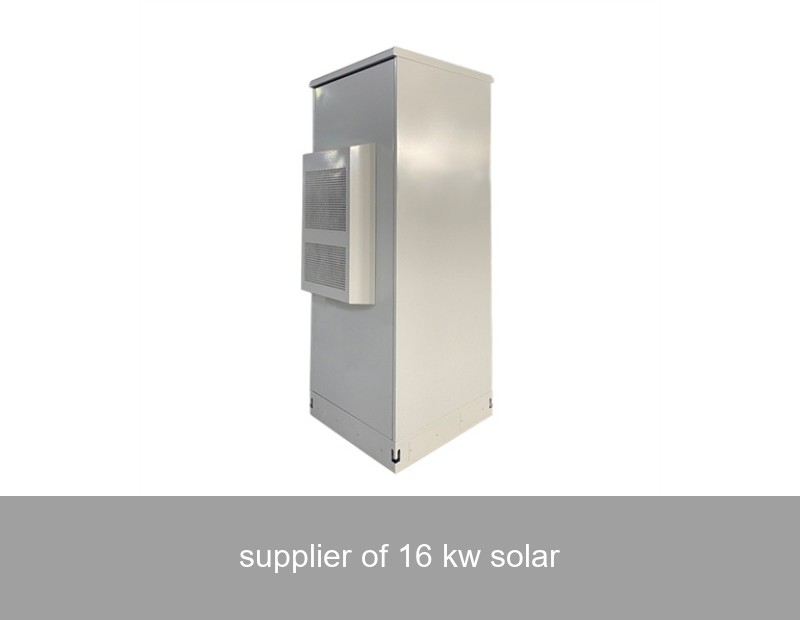
So, you're considering a 16 kW solar system. That's a fantastic decision. It's a size that strikes a powerful balance for many larger homes, small businesses, or farms—offering substantial energy production to slash bills and increase self-reliance. But here's the pivotal question many overlook: the supplier. Choosing the right supplier of 16 kW solar and battery storage isn't just about panels on the roof; it's about securing a holistic energy solution that's intelligent, reliable, and built to last for decades. In today's market, a true partner provides more than hardware; they deliver peace of mind through integrated design, smart energy management, and unwavering support.
Table of Contents
Why a 16 kW Solar System is a Strategic Choice
A 16 kW photovoltaic system is a significant step up from typical residential installations. We're moving from simply offsetting usage to actively managing a major energy asset. Let's break down what this means:
- High Energy Output: Depending on your location (like sun-rich Southern Europe or California), a 16 kW system can generate 18,000 to 24,000 kWh annually. That's enough to power an energy-intensive household with electric vehicles, pool pumps, and air conditioning, or a robust small commercial operation.
- The "Prosumer" Shift: You're no longer just a consumer. You become a "prosumer"—producing, storing, and intelligently managing your own energy. This shift requires technology that can handle complexity.
- The Grid Interaction Challenge: Without storage, excess solar energy produced midday often gets exported to the grid at low rates, only for you to buy it back at night at higher prices. This is where the choice of your supplier of 16 kW solar and storage becomes critical. The right system turns this challenge into an opportunity.

Image: A home with a substantial solar array, typical of a 16kW scale. Source: Unsplash
Beyond Panels: The Critical Role of Your Storage Supplier
Think of your 16 kW solar array as a powerful engine. A battery energy storage system (BESS) is the intelligent transmission and fuel tank that harnesses that power effectively. Not all storage solutions are created equal, and your supplier's expertise here is paramount.
The phenomenon is clear: solar generation peaks when demand is often lower. Data from the U.S. Department of Energy shows that solar often creates a "duck curve" of over-generation, stressing grid stability. For you, this means wasted potential.
An advanced supplier provides a storage system that does more than just backup. It should:
- Maximize self-consumption, storing excess solar for use at night.
- Provide seamless backup power during outages.
- Enable intelligent time-of-use management to avoid peak utility charges.
- Be scalable and safe, with robust thermal management and long cycle life.
Real-World Impact: A Case Study from California
Let's look at a concrete example. A family-owned winery in Sonoma County, California, was facing unpredictable utility costs and feared disruption from Public Safety Power Shutoffs (PSPS). They partnered with a premium supplier of 16 kW solar and battery storage for a comprehensive solution.
The system included a 16.2 kW ground-mounted solar array paired with a 30 kWh lithium iron phosphate (LFP) battery system. The results after one year were telling:
| Metric | Before Installation | After Installation |
|---|---|---|
| Grid Electricity Purchases | ~28,000 kWh/year | ~3,200 kWh/year |
| Estimated Annual Energy Cost | $8,400+ | <$1,000 (minimal grid service fees) |
| Outage Protection | None (full shutdowns during PSPS) | Critical operations powered for 72+ hours |
The winery's energy independence soared to over 88%, protecting both their finances and their core production process. This case underscores that the value lies in the integrated system intelligence, not just the components.
What to Look for in a Supplier of 16 kW Solar Systems
Given the scale and investment, your selection criteria must be rigorous. Here’s a logical ladder to guide your decision:
- Holistic Design Capability: Can they model your exact energy profile and design a system that fits your consumption patterns, not just a generic package?
- Technology Agnosticism & Quality: Do they offer best-in-class components (like high-efficiency panels, LFP batteries) chosen for performance, not just supplier agreements?
- System Integration & Software: Is their energy management system (EMS) intuitive and powerful, allowing you to monitor, control, and optimize your energy flows from your phone? This is the "brain" of your installation.
- Long-Term Partnership: What does their warranty, maintenance, and support look like over a 10-25 year horizon? Your supplier should be a steadfast partner.
The Highjoule Integrated Approach
This is where Highjoule's philosophy shines. With nearly two decades of experience since 2005, we don't just sell components; we engineer intelligent, efficient, and sustainable power ecosystems. For a client seeking a robust supplier of 16 kW solar and storage, our process is distinct.
We start with our proprietary energy assessment platform, analyzing your historical usage (if available) and future needs. For a 16 kW scale, we often recommend our HPS-16 integrated power station—a solution that combines high-efficiency bifacial solar compatibility, our modular HJ Cube LFP battery units (scalable from 10 kWh to over 50 kWh), and the Highjoule Harmony EMS.

Image: A modern, modular battery storage system akin to Highjoule's HJ Cube. Source: Unsplash
The Harmony EMS is what transforms hardware into a smart asset. It uses predictive weather data and real-time utility pricing signals (in applicable markets) to autonomously decide when to store solar energy, power your home, or sell back strategically. For commercial and microgrid applications, this level of control is indispensable for ROI and resilience.
Our services extend from initial consultancy and grid-permission support to remote monitoring and proactive maintenance, ensuring your investment is protected and performing optimally year after year, whether you're in Germany, Texas, or anywhere in between.
Why LFP Battery Chemistry Matters
A key insight from Highjoule's expertise is our commitment to Lithium Iron Phosphate (LFP) chemistry for storage. Compared to older NMC batteries, LFP offers superior safety (higher thermal runaway temperature), longer cycle life (often 6,000+ cycles), and maintains performance without cobalt. For a 16 kW system meant to last 25+ years, this choice, championed by leading suppliers, is fundamental to long-term value and safety. You can read more about the technical advantages from resources like the U.S. DOE's vehicle technology page, which details these battery advancements.
Is Your Property Ready for a 16 kW Energy Transformation?
Embarking on this journey requires a trusted guide. The right supplier of 16 kW solar and battery storage will demystify the process, from assessing your roof or land space and grid connection capacity to financial modeling and final commissioning. They should make you feel confident and informed at every step.
We invite you to consider not just the price per watt, but the total cost and value of ownership over the next generation. What specific energy challenge—be it volatile bills, reliability concerns, or a sustainability goal—is motivating you to explore a 16 kW solution today?
 Inquiry
 Online Chat