


Finding the Right Supplier of Afriq Energy: Your Guide to Sustainable Power in Africa
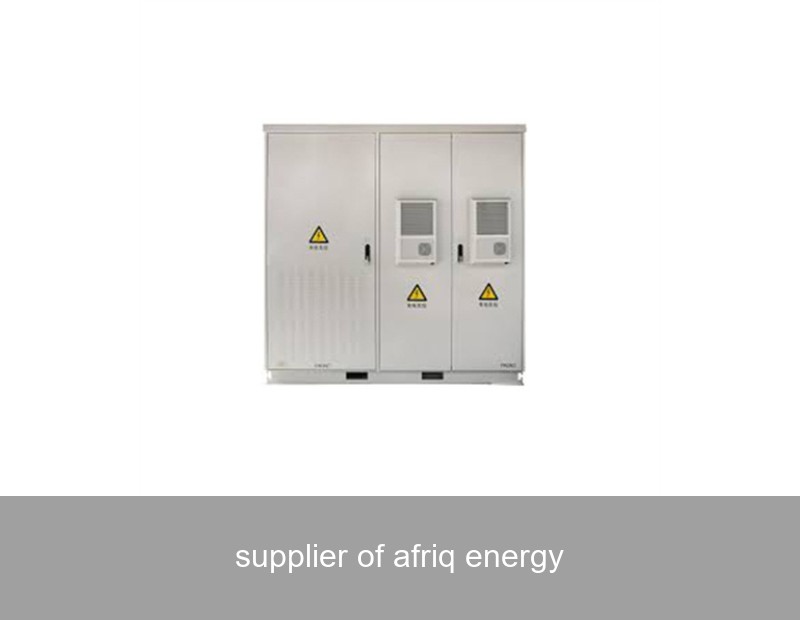
Africa's energy landscape is undergoing a remarkable transformation. While the continent boasts immense renewable resources, unlocking this potential requires more than just technology—it requires the right partners. For businesses, communities, and governments looking to harness solar and storage solutions, choosing a reliable supplier of Afriq energy is the critical first step. This isn't just about buying equipment; it's about securing a partnership for long-term energy independence, resilience, and growth. Let's explore what makes a world-class supplier and how the right choice can power your future.
Table of Contents
The Challenge: Beyond Intermittent Power
You know the scene: a factory humming at full capacity suddenly grinds to a halt. A hospital's critical equipment flickers off. A telecom tower goes silent. The culprit? Unreliable grid power or expensive, polluting diesel generators. The African Development Bank notes that over 600 million people in Africa lack access to electricity, and for those connected, supply is often erratic. This isn't just an inconvenience; it's a direct brake on economic development, healthcare, and education.
The solution isn't simply installing solar panels. The sun doesn't shine at night, and peak energy demand often extends beyond daylight hours. This creates the "duck curve"—a mismatch between solar generation and consumption patterns. Without a way to store excess daytime energy, a significant portion of your renewable potential is wasted. This is where the expertise of a sophisticated supplier of Afriq energy becomes indispensable. They provide the integrated system—the intelligent brain and the robust battery storage—that turns variable solar power into a firm, dispatchable 24/7 energy source.
What Makes a True Supplier of Afriq Energy?
Not all providers are created equal. A true partner goes beyond a one-time sale. They offer a comprehensive solution built for Africa's unique conditions—from intense heat and dust to complex grid dynamics. Here’s what to look for:
- End-to-End System Expertise: They should design, supply, and often maintain the entire ecosystem: solar PV, advanced battery storage, power conversion systems, and intelligent energy management software (EMS).
- Technology Built for Tough Environments: Equipment must have high thermal tolerance, dust and moisture protection (high IP ratings), and robust cycling capabilities to handle daily charge/discharge cycles.
- Focus on Total Cost of Ownership (TCO): The best suppliers prioritize your long-term savings, not just the lowest upfront cost. This means high-efficiency components that minimize energy loss and batteries with long warranties and degradation guarantees.
- Localized Support & Training: Can they provide local technical support, spare parts, and training for your staff? This is crucial for minimizing downtime and ensuring a system's longevity over 10-20 years.
Choosing a partner who ticks these boxes means you're not just buying hardware; you're investing in a decades-long energy asset.
Case Study: Powering a Nigerian Agro-Processing Plant
Let's make this concrete. A major cashew processing plant in Ogun State, Nigeria, faced crippling power outages and spent over $18,000 monthly on diesel. Their operations were unpredictable, and costs were eating into profits. They needed a supplier of Afriq energy that could deliver a turnkey industrial solution.
The project, completed in 2023, involved a 1.2 MW solar carport installation coupled with a 2.4 MWh containerized battery energy storage system (BESS). The intelligent EMS prioritizes solar consumption, stores excess energy, and seamlessly switches to battery power during grid outages—all without a millisecond of interruption to the sensitive processing machinery.

Credit: Industrial solar installation. Photo via Unsplash.
The results speak for themselves:
| Metric | Before Installation | After Installation |
|---|---|---|
| Monthly Energy Cost | > $18,000 (Diesel) | ~ $2,500 (Grid + O&M) |
| Grid Diesel Reliance | ~ 85% | < 10% |
| Annual CO2 Reduction | Baseline | Approx. 450 tonnes |
| Power Availability | ~ 65% | > 99.5% |
This transformation was possible because the supplier provided a holistic, high-performance system designed for heavy industry, not just generic components.
Highjoule's Role as Your Strategic Energy Partner
At Highjoule, with nearly two decades of global experience since 2005, we understand these challenges intimately. We position ourselves not just as a manufacturer, but as your strategic supplier of Afriq energy solutions. Our approach is built on three pillars:
- The Highjoule H-Series BESS: Our flagship product is a modular, containerized battery system built on Lithium Iron Phosphate (LFP) chemistry, known for its superior safety and long cycle life. It's engineered with integrated liquid cooling to perform optimally in high ambient temperatures, a common challenge across Africa.
- JouleMind AI Energy Management Platform: This is the brain of the operation. Our proprietary software doesn't just react to outages; it predicts energy usage patterns, optimizes for time-of-use tariffs where applicable, and manages the state of charge of the batteries to maximize their lifespan and your savings.
- From Microgrids to MegaFactories: Our scalable solutions serve diverse applications. We power remote microgrids for communities, provide backup and load-shifting for commercial & industrial facilities like the case study above, and enable energy self-sufficiency for large-scale residential developments.
Our service includes in-depth site assessment, custom financial modeling, installation supervision, and remote monitoring—a true partnership for the long haul.

Credit: Technician monitoring advanced energy systems. Photo via Unsplash.
Future Trends in African Energy Storage
The future is intelligent and interconnected. As noted by the International Renewable Energy Agency (IRENA), Africa's battery storage capacity is set for significant growth, driven by falling costs and rising demand. We see two key trends:
- Virtual Power Plants (VPPs): Networks of distributed storage systems (like those in homes or businesses) can be aggregated to support the national grid during peak demand, creating new revenue streams for system owners.
- Second-Life EV Batteries: As electric vehicles proliferate globally, repurposing their batteries for stationary storage presents a cost-effective and sustainable opportunity for the African market, a area where forward-thinking suppliers are already innovating.
A leading supplier of Afriq energy will have a roadmap that incorporates these innovations, ensuring your investment is future-proof.
Your Next Step Towards Energy Resilience
The journey to energy independence starts with a conversation. What is the single biggest cost or operational risk your business faces due to unreliable power? Is it spoiled inventory, lost production time, or exorbitant diesel bills? Imagine the impact of converting that cost into a predictable, clean, and controlled energy asset.
We invite you to share your specific challenge. What unique energy hurdle does your project or community need to overcome?
 Inquiry
 Online Chat