


Navigating the Energy Shift: Choosing the Right Supplier of ESS (Energy Storage System)
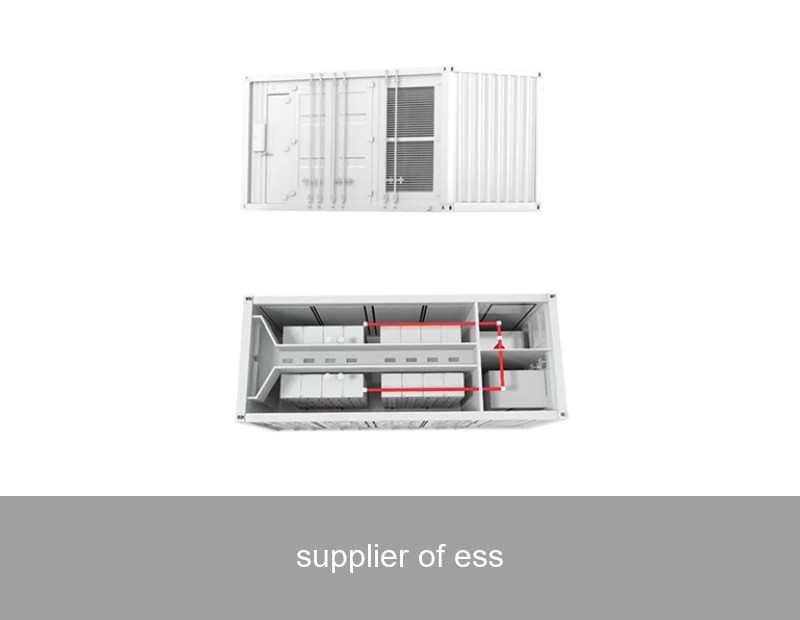
It's a typical afternoon at your facility. The sun is shining, your on-site solar panels are humming, but grid electricity prices are soaring during peak demand. You're producing clean energy, yet a significant portion of your operational costs is still tied to the volatile, often expensive, traditional grid. This common scenario highlights a critical gap in our modern energy landscape—the gap between generation and consumption. This is precisely where the strategic choice of a supplier of ESS (Energy Storage System) becomes not just an equipment purchase, but a foundational business decision. An intelligent ESS acts as the keystone, enabling you to capture, store, and deploy energy precisely when and where it's most valuable.
The transition to renewable energy is accelerating across Europe and the United States, driven by climate goals and economic pragmatism. However, the intermittent nature of sources like solar and wind creates a challenge for grid stability and cost predictability. This is the core problem a sophisticated energy storage system solves. It's the buffer that smooths out the bumps, turning variable renewable generation into a reliable, dispatchable power source. For commercial and industrial entities, this translates directly to enhanced resilience, substantial cost savings, and a stronger sustainability profile. But not all storage solutions are created equal. The expertise and holistic approach of your chosen supplier of ESS will determine the success of your investment.
Beyond the Battery: What Makes a True Supplier of ESS?
When evaluating a supplier of ESS, it's crucial to look beyond the battery cells. A battery pack is a component; an Energy Storage System is an integrated solution. The distinction lies in the intelligence, safety, and service wrapped around the hardware.
A leading supplier of ESS provides a comprehensive ecosystem:
- Advanced Battery Technology: Utilizing proven, safe chemistries like Lithium Iron Phosphate (LFP) which offer longer lifespan, superior thermal stability, and are cobalt-free.
- Intelligent Energy Management System (EMS): The true brain of the operation. A high-caliber EMS doesn't just monitor; it forecasts, optimizes, and automates. It analyzes weather patterns, electricity tariffs, and your consumption habits to make autonomous decisions that maximize financial return.
- Power Conversion Systems (PCS): High-efficiency inverters that seamlessly manage the flow of energy between DC storage and your AC facility, ensuring minimal energy loss during conversion.
- Robust Safety & Monitoring: Multi-layered protection from the cell level to the system level, including active thermal management, fault detection, and 24/7 remote monitoring capabilities.
- Project Lifecycle Support: From initial site assessment and financial modeling to engineering, installation, commissioning, and long-term maintenance.
This is the philosophy at Highjoule. Since 2005, we have evolved from a technology innovator into a global supplier of ESS dedicated to empowering businesses, communities, and grids. Our solutions, like the Highjoule H-Series Commercial ESS, are engineered as complete, plug-and-play platforms. They integrate our proprietary AegisAI software, which continuously learns and adapts to market signals and usage patterns, ensuring your system is always operating at peak economic performance. We don't just sell hardware; we deliver a guaranteed outcome: energy resilience and optimized cost savings.
The Data Don't Lie: The Tangible Impact of a Smart ESS
Let's move from theory to numbers. The financial and operational benefits of partnering with a capable supplier of ESS are well-documented. According to a 2023 report by the National Renewable Energy Laboratory (NREL), commercial solar-plus-storage projects can reduce electricity costs by 20-40% depending on local market structures and utility rates. The mechanism is multifaceted:
| Benefit Mechanism | How It Works | Direct Impact |
|---|---|---|
| Peak Shaving | The ESS discharges during periods of highest grid demand (and highest prices), reducing draw from the utility. | Lowers demand charges, which can constitute 30-70% of a commercial electricity bill. |
| Solar Self-Consumption Optimization | Stores excess solar energy produced midday for use in the evening/night. | Increases consumption of self-generated clean energy from ~30% to over 70%, maximizing ROI on solar assets. |
| Backup Power & Resilience | Provides seamless, instantaneous power during grid outages. | Prevents operational downtime, data loss, and revenue interruption. Critical for manufacturing, cold storage, and data centers. |
| Grid Services & Revenue | In some markets, ESS can provide frequency regulation or capacity services to the grid. | Creates an additional revenue stream, improving the payback period of the system. |
For instance, a medium-sized industrial facility in California on a time-of-use (TOU) rate schedule might see a peak price of $0.45/kWh compared to an off-peak price of $0.15/kWh. An intelligently managed ESS can virtually eliminate consumption at the $0.45 rate, leading to dramatic savings. The key is the "intelligent" management—a basic system might just store and release on a timer, but one from a strategic supplier of ESS like Highjoule uses predictive algorithms to optimize for the most complex, real-time tariff structures.

Image: A modern industrial site integrating solar generation with a containerized battery energy storage system. (Photo by American Public Power Association on Unsplash)
Case Study: A Bavarian Bakery's Recipe for Energy Independence
Let's look at a real-world application. Müller Brot GmbH, a family-owned industrial bakery in southern Germany, faced a classic energy dilemma. Their baking processes, especially the high-power ovens and refrigeration, led to significant energy demand, particularly in the early morning and late afternoon, coinciding with high grid tariffs. They had a sizable rooftop PV system, but much of its midday production was being exported to the grid at a relatively low feed-in tariff, while they simultaneously bought expensive power from the grid during their peaks.
Their goal was clear: increase energy self-sufficiency, cut costs, and ensure uninterrupted production. They partnered with Highjoule as their supplier of ESS. We deployed a tailored 245 kWh / 250 kW Highjoule H-Series system integrated with their existing PV infrastructure. The AegisAI EMS was configured to prioritize self-consumption, charging the batteries with surplus solar energy and strategically discharging during their two daily demand peaks.
The Results (12-month period):
- Solar Self-Consumption Rate: Increased from 35% to 82%.
- Peak Grid Demand Reduction: Reduced by 68%, slashing capacity charges.
- Annual Electricity Cost Savings: Achieved €31,500 in savings.
- Backup Power: The system now provides critical backup for refrigeration units, protecting thousands of euros worth of inventory during any grid disturbance.
“For us, it was never just about buying batteries,” said the managing director. “It was about finding a partner who understood our energy profile and business cycle. Highjoule provided the complete system and the brain to run it. We now have predictable energy costs and true control over our power.” This case exemplifies the transformative role a strategic supplier of ESS can play beyond mere commodity supply.
Future-Proofing Your Energy Strategy with Highjoule
The energy market is evolving at a breakneck pace. Electrification of transport and heat, the rise of dynamic tariffs, and the increasing value of grid services are creating both complexity and opportunity. Your choice of an energy storage partner should be forward-looking. A system installed today must be software-upgradable to participate in the energy markets of tomorrow.
This is a core design principle for Highjoule. Our systems are built on a modular, scalable architecture. Whether you need a compact Highjoule Cube for a small business or a multi-megawatt Highjoule Matrix for an industrial campus or microgrid, the underlying intelligence remains the same. Our AegisAI platform receives continuous updates, allowing our clients' assets to adapt to new utility programs or market mechanisms without costly hardware replacements.
Consider this: many regions in Europe and the U.S. are developing Virtual Power Plant (VPP) programs, where aggregated distributed energy resources like ESS can provide grid stability and earn revenue. By choosing a connected, intelligent system from a supplier of ESS with a software-first mindset, you are not just solving today's cost problem—you are positioning your physical asset to become an active, revenue-generating participant in the future energy ecosystem.

Image: A modern energy management system dashboard visualizing energy flows in real-time. (Photo by ThisisEngineering on Unsplash)
Your Energy Journey Starts with a Question
The journey toward energy resilience and independence is unique for every organization. It begins with understanding your specific load profile, your local utility's rate structures, and your sustainability ambitions. As a global supplier of ESS with nearly two decades of experience, Highjoule's first step is always a collaborative conversation and a detailed analysis.
We leave you with this open question to consider: If you could visualize your facility's energy flow for the past year, where would you identify the single biggest opportunity—is it the spike in demand charges every afternoon, the surplus solar energy you're giving back to the grid, or the vulnerability to an unexpected outage? Identifying that opportunity is the first step. We're here to help you navigate the rest.
 Inquiry
 Online Chat