


How Much Power Can a Vega Power Cell Really Deliver? Demystifying Energy Storage Capacity
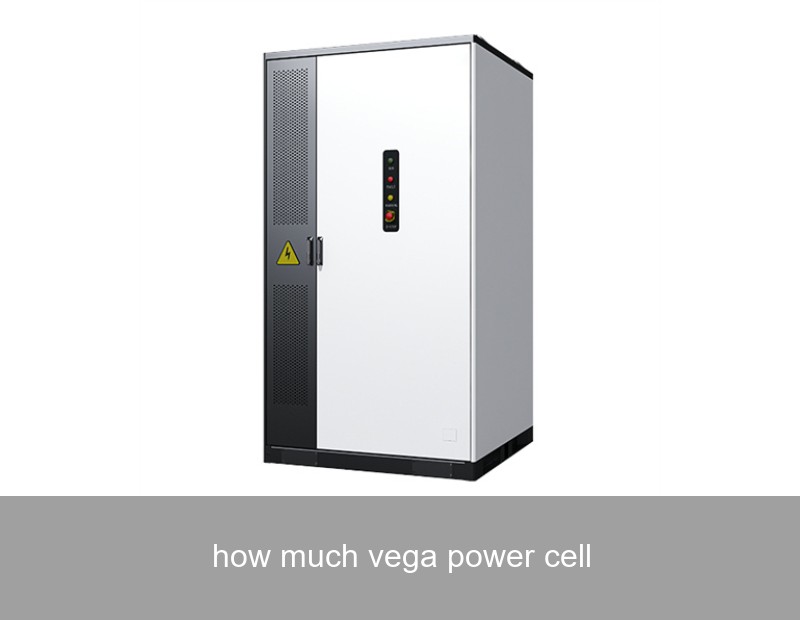
You're considering an energy storage system for your home or business, and you've likely come across terms like "Vega power cell" or similar. The burning question is: how much power can a Vega power cell actually provide? Is it enough to run your household through the night, or keep critical operations online during an outage? The answer isn't just a single number. It's a nuanced discussion about capacity, power, and the intelligent system that manages it all. As energy independence becomes more crucial, understanding the true capability of your storage system is the first step towards a resilient, sustainable future.
Table of Contents
Understanding Capacity vs. Power: The kWh and kW Dance
Let's clear up a common point of confusion first. When people ask "how much power?" they often conflate two distinct concepts:
- Energy Capacity (kWh): This is the "size of the fuel tank." It tells you how much total electricity is stored. A 10 kWh battery can, in theory, deliver 1 kW for 10 hours, or 5 kW for 2 hours.
- Power Output (kW): This is the "size of the hose." It tells you how fast you can pull electricity out at any given moment. Can it simultaneously run your fridge, air conditioner, and machinery?
So, "how much Vega power cell" you need depends on both: how long you want to power your loads (kWh) and what those loads are (kW). A single Vega cell module has specific ratings for both, but the true beauty lies in how they are combined and managed.

Image Source: Unsplash - Photo of battery cells
Decoding "Vega Power Cell" Specifications
While "Vega" is often used as a generic term, at Highjoule, our advanced lithium iron phosphate (LFP) battery cells form the core of our storage solutions. Let's talk typical specs. A standard Highjoule Vega-based module might have an energy capacity of 5.12 kWh. Its continuous power output rating is typically around 5 kW.
But here's the key: these modules are designed to scale. You don't buy just one cell; you build a system.
| Configuration | Total Energy Capacity (kWh) | Typical Continuous Power (kW) | Ideal For |
|---|---|---|---|
| Single Stack (e.g., 3 modules) | ~15.36 kWh | ~5 kW | Average home backup, solar self-consumption |
| Multi-Stack (e.g., 6 modules) | ~30.72 kWh | ~10 kW | Larger homes, small commercial operations |
| Custom Industrial Array | 100 kWh - 1 MWh+ | 50 kW - 500 kW+ | Factories, microgrids, large-scale renewable integration |
This scalable architecture is fundamental to Highjoule's design philosophy. We don't believe in a one-size-fits-all solution. Instead, our IntelliBOS (Battery Operating System) seamlessly manages multiple Vega cell modules, creating a unified storage resource that can be tailored precisely to your energy profile.
Real-World Factors That Affect Your Delivered Power
The nameplate specs are just the beginning. Actual delivered power depends on:
- Depth of Discharge (DoD): Regularly draining a battery to 100% shortens its life. Highjoule systems are optimized for a high DoD (often 90%+) while maintaining longevity through advanced cycle management.
- Temperature: Extreme cold reduces available capacity. Our systems feature integrated thermal management to keep cells in their ideal operating window.
- Age and Cycling: All batteries degrade. Highjoule's LFP chemistry is renowned for its exceptional cycle life—often retaining over 80% capacity after 6,000 cycles—far outperforming older technologies. You can learn more about LFP longevity from studies at U.S. Department of Energy.
- Inverter Compatibility: The battery's DC power must be converted to AC. The inverter's rating (e.g., 10 kW) can be the final bottleneck. Highjoule provides fully integrated systems with matched, high-efficiency inverters.
Case Study: A German Bakery's Recipe for Resilience
Let's move from theory to practice. Consider Bäckerei Schmidt (name changed for privacy), a mid-sized bakery in Bavaria, Germany. Their challenge: volatile energy costs and the critical need for uninterrupted refrigeration. A power outage would spoil inventory and halt production.
Their Solution: A Highjoule commercial storage system configured with 48 Vega cell modules, creating a 245 kWh storage capacity with a 100 kW power output. It's paired with an existing 80 kWp solar array.
- Self-Consumption: Increased solar usage on-site from 35% to over 80%, storing midday solar surplus for use during evening baking peaks.
- Backup Power: The system can power all critical cooling and essential baking equipment for over 8 hours during a grid outage.
- Financials: By avoiding peak grid tariffs and leveraging solar, they project a 22% reduction in annual energy costs, with a return on investment in under 7 years, not including the value of avoided spoilage.
This case illustrates that "how much power" is answered by a system designed for a specific purpose—not just a cell's datasheet. Data on commercial solar+storage benefits is supported by institutions like the Solar Energy Industries Association.

Image Source: Unsplash - Photo of a commercial bakery
Beyond the Cell: The Highjoule System Advantage
As a global leader since 2005, Highjoule understands that the cell is just the beginning. Our value is in the complete, intelligent system. When you choose a Highjoule solution, you're getting:
- Scalable Vega-Based Architecture: Start with what you need, expand effortlessly as your needs grow.
- IntelliBOS Software: This brain of the system doesn't just store and release energy. It learns your consumption patterns, integrates with local weather forecasts, and can be programmed for multiple strategies (e.g., maximize self-consumption, participate in demand response programs where available).
- Grid-Forming Capabilities: For our commercial and microgrid clients, this is a game-changer. A Highjoule system can "island" itself and even restart local grids, providing true energy resilience.
- Comprehensive Monitoring: Our platform gives you real-time and historical data on every kWh stored, used, and saved, answering the "how much" question with absolute clarity.
Choosing the Right System for Your Needs
So, how do you determine "how much Vega power cell" capacity is right for you? Follow this logic ladder:
- Audit Your Loads: List critical appliances (kW) and their runtime (hours). Don't forget startup surges for motors!
- Analyze Your Goals: Is it whole-home backup? Or just shifting solar energy? The goal defines the size.
- Consult a Professional: Highjoule's network of certified installers can perform detailed energy assessments. They use tools that analyze your past utility bills and solar production to model the perfect system size. For reliable, region-specific consumption data, sources like the U.S. Energy Information Administration provide excellent benchmarks.
The journey to energy independence starts with the right question. You didn't just ask "how big is a battery?" You asked about power—about capability. And that tells us you're thinking about what truly matters: keeping your lights on, your business running, and your future sustainable.
What specific energy challenge—be it a persistent peak demand charge, unreliable grid, or a desire to maximize your solar investment—is making you ask "how much power" today?
 Inquiry
 Online Chat