


Batterie de Stockage pour Panneau Photovoltaique: Your Complete Guide to Solar Battery Storage
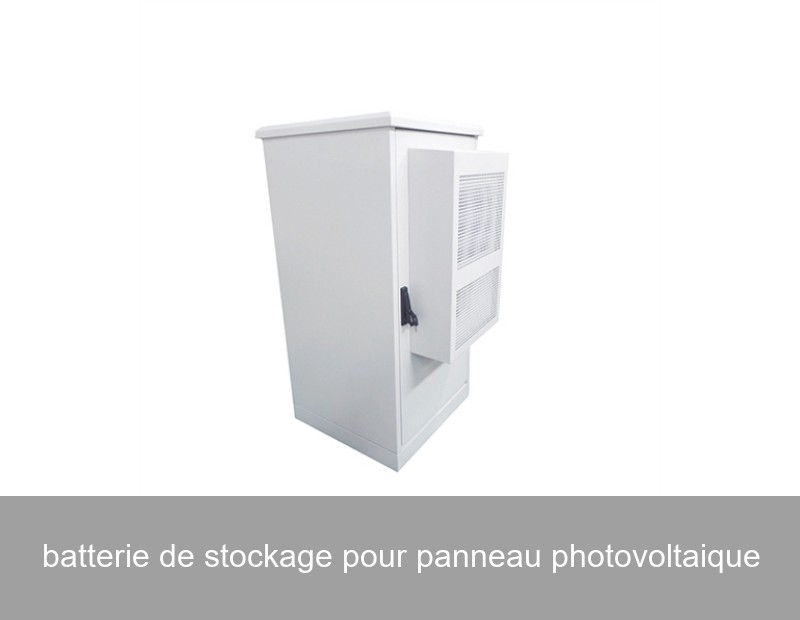
You've made the smart choice to install solar panels. You're generating clean energy, reducing your carbon footprint, and watching your electricity bills drop. But have you ever watched the sun set and wondered, "Where did all that extra energy my panels made today just go?" The answer, often, is back to the grid for a minimal feed-in tariff. What if you could capture that sunshine in a box and use it on your terms, day or night? This is where a batterie de stockage pour panneau photovoltaique (solar panel battery storage system) transforms from a luxury add-on into the essential heart of a modern, resilient, and efficient home energy system. Let's explore how this technology works, why it's becoming indispensable, and how it can empower your energy independence.
What is a Solar Battery Storage System?
In simple terms, a solar battery storage system is a device that stores the excess electricity generated by your photovoltaic (PV) panels. Instead of sending surplus kilowatt-hours back to the utility grid, you direct them into a battery bank. Later—when the sun isn't shining, during peak evening hours when grid rates are highest, or even during a power outage—you can draw electricity from your personal energy reserve.
Think of it like this: your solar panels are a fantastic income stream (sunshine converted to electricity). Without a battery, you're forced to "spend" that income immediately or sell it back at a low price. A solar battery storage system acts as a high-tech savings account, allowing you to bank your energy wealth and use it when it provides the maximum financial and practical benefit for your household.

Image Source: Unsplash - A modern, wall-mounted home battery system.
Why Solar Storage Matters Now: More Than Just Backup
The conversation around solar energy is rapidly shifting from just generation to intelligent management. Two powerful trends are driving the surge in battery storage adoption across Europe and North America:
- Changing Energy Economics: Feed-in tariffs (what you get paid for solar exports) are decreasing in many regions, while retail electricity prices continue to climb. For instance, in 2023, average electricity prices for households in the EU were around €0.28 per kWh, with peaks significantly higher. Storing your cheap solar energy to avoid buying expensive grid power is now a compelling financial calculation.
- Grid Resilience and Independence: From heatwaves in California to winter storms in Texas and fluctuating grid stability in parts of Europe, homeowners are seeking control. A battery provides seamless backup power, keeping essential loads running during outages.
The data underscores this shift. According to the International Energy Agency (IEA), global energy storage capacity is set to multiply by a factor of six by 2030, with behind-the-meter (i.e., home and business) systems accounting for a major share of this growth.
The Highjoule Approach: Intelligent Storage Solutions
At Highjoule, with nearly two decades of experience since 2005, we've evolved beyond simply providing batteries. We deliver integrated energy intelligence. Our systems, like the Highjoule HES-Series for homes and the more robust CIS-Series for commercial applications, are built around a smart energy manager. This hub doesn't just store energy; it learns your consumption patterns, weather forecasts, and utility rate schedules to autonomously optimize when to charge, when to discharge, and when to export—maximizing your savings and self-consumption without you lifting a finger.
Key Components of a PV Battery System
Understanding the key parts demystifies the technology. A complete system typically includes:
| Component | Role | Highjoule's Solution |
|---|---|---|
| Battery Modules | The physical storage units, using lithium-ion chemistry (like LiFePO4) for safety, longevity, and depth of discharge. | Our modular battery units use stable LiFePO4 cells, are scalable, and come with a industry-leading warranty, ensuring performance for decades. |
| Hybrid Inverter or AC Coupler | The "brain" that manages DC (solar/battery) and AC (home/grid) power conversion. A hybrid inverter integrates solar and storage; an AC coupler adds storage to existing solar. | We offer both pathways. Our Hybrid Power Stations are an all-in-one solution for new installs, while our Smart AC Coupling kit seamlessly retrofits with most existing solar systems. |
| Energy Management System (EMS) | The software intelligence that controls the system based on algorithms and user preferences. | The Highjoule Energy OS provides real-time monitoring, customizable modes (e.g., "Max Self-Consumption," "Backup Priority," "Time-of-Use Optimization"), and remote control via a user-friendly app. |
| Backup Gateway | A critical safety device that automatically isolates your home from the grid during an outage, allowing the battery to power designated circuits safely. | Integrated into our systems, this gateway ensures safe, automatic transition to backup power in less than a heartbeat. |
A Real-World Case: The German Bakery Project
Let's move from theory to practice. Consider a mid-sized artisan bakery in Bavaria, Germany. They had a 50 kW rooftop solar array but operated mostly in the early mornings and evenings (before sunrise and after sunset), missing their own solar production peak. Their high grid consumption during peak hours was eroding their savings.
The Solution: Highjoule deployed a commercial battery storage system (CIS-50) with a capacity of 100 kWh, integrated with their existing PV. The system was programmed for time-of-use shifting and demand charge management.
The Data-Driven Results (12-month period):
- Self-Consumption Rate Increased: From 35% to over 80%.
- Grid Peak Demand Reduced: By 40%, slashing monthly capacity charges.
- Energy Bill Savings: Total electricity costs reduced by approximately €11,500 annually.
- ROI: Projected payback period of under 7 years, with a system lifespan of 15+ years.
This case, documented in a Fraunhofer ISE study on PV and storage, illustrates the tangible economic logic for businesses. For homeowners, the principles of maximizing self-use and avoiding peak tariffs are identical.

Image Source: Unsplash - Commercial operations like bakeries have unique, high-power energy profiles ideal for storage.
Choosing the Right System for Your Needs
Selecting a batterie de stockage isn't one-size-fits-all. Key considerations include:
- Capacity (kWh): How much energy do you want to store? This depends on your daily consumption and desired backup duration. Highjoule advisors use detailed energy audits to recommend the perfect size.
- Power Rating (kW): How much power can it deliver at once? This determines how many appliances you can run simultaneously on battery power.
- Depth of Discharge (DoD): The usable portion of the battery's capacity. Highjoule batteries offer a high DoD, meaning you can use more of what you pay for without harming the battery.
- Integration & Scalability: Can it work with your existing solar? Can you add more batteries later? Our modular design answers "yes" to both.
Highjoule's Residential Suite: The HES-Series
For homeowners, the Highjoule HES-Series embodies simplicity and power. Available in configurations from 5 kWh to 30 kWh, it's a sleek, wall-mounted unit that pairs perfectly with new or existing solar. Its integrated EMS actively manages energy flows, and with the Highjoule app, you can track your energy independence in real-time, set preferences, and receive maintenance alerts.
The Future of Home Energy is Integrated
The next frontier is the fully integrated smart home ecosystem. Imagine your battery system communicating with your EV charger, scheduling to fill your car with surplus solar at noon. Or it pre-charges your home before a storm warning is issued, based on a weather API. It could even participate in a Virtual Power Plant (VPP)—where, with your permission, your battery community supports the local grid during stress, earning you additional revenue. This isn't science fiction; Highjoule is piloting such VPP programs in select markets, turning networked home batteries into pillars of community resilience.

Image Source: Unsplash - The vision of an integrated, smart home energy system.
The journey to true energy autonomy starts with a simple question: Are you ready to stop watching your solar energy go to waste and start commanding it? With the right solar panel battery storage system, your home becomes not just a consumer of power, but an intelligent, self-sustaining hub. What's the first appliance you'd want to power with your own stored sunshine tonight?
 Inquiry
 Online Chat