


The Rise of Energy Islands: Why Your Choice of Supplier of Island Grid Solutions Matters More Than Ever
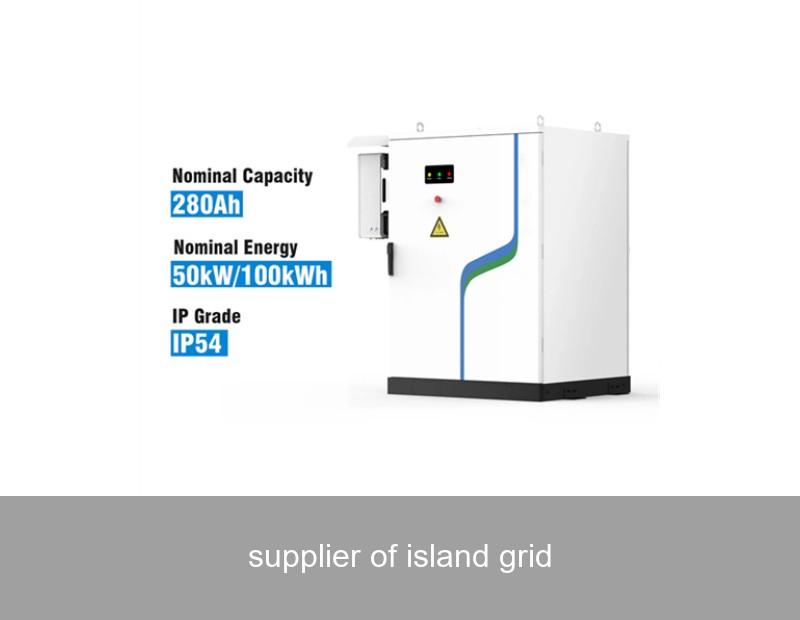
Imagine a community, a factory, or even a whole island where the lights stay on reliably, independent of a distant, aging central grid. This isn't a futuristic dream—it's the reality being built today by forward-thinking communities and businesses. The quest for energy resilience and independence is driving a global shift towards self-sufficient power systems. At the heart of this revolution is a critical partner: the supplier of island grid solutions. But this isn't just about selling equipment; it's about delivering energy sovereignty.
What Exactly is an Island Grid?
Let's demystify the term. An "island grid" or "microgrid" is a localized energy system that can disconnect from the traditional main grid and operate autonomously. Think of it as a self-contained energy ecosystem. It typically integrates:
- Local Generation: Solar PV, wind turbines, diesel or natural gas generators.
- Intelligent Storage: The heart of modern systems—advanced battery energy storage systems (BESS).
- Smart Management: A brain (control system) that balances supply and demand in real-time.
- Connected Loads: The homes, businesses, and facilities it powers.
While literal islands are perfect candidates, "energy islands" exist everywhere: remote industrial mines, university campuses, hospitals prioritizing uptime, and suburban neighborhoods seeking backup power. The common thread? A need for control over their energy destiny.
Key Challenges for Island Grid Stability
Going off-grid isn't as simple as plugging in a few solar panels. An effective supplier of island grid technology must engineer solutions for fundamental physics and economics challenges:
- Intermittency: The sun sets, and the wind calms. How do you keep power flowing?
- Frequency & Voltage Stability: In a small grid, a large motor starting can cause lights to flicker—or worse, a cascade failure. The system needs inherent stability.
- Diesel Dependency: Many remote sites rely on expensive, polluting diesel gensets. The goal is to minimize their runtime, not just add batteries.
- Cost Optimization: Capital expenditure (CAPEX) must be balanced with long-term operational savings (OPEX). The right design maximizes return on investment.
Overcoming these isn't optional; it's the baseline for any credible solution.
The Modern Solution: Intelligent Energy Storage as the Grid Anchor
This is where the game has changed. Advanced Battery Energy Storage Systems (BESS) are no longer passive containers. They are dynamic, grid-forming assets. A top-tier BESS from a leading supplier of island grid solutions can:
- Create a Grid (Black Start): It can boot up the local network from a complete blackout without external help.
- Provide Synthetic Inertia: It mimics the stabilizing rotational force of traditional power plants, crucial for small grids.
- Dispatch Power in Milliseconds: It instantly fills gaps from renewable intermittency or demand spikes.
- Optimize Economics: It stores cheap renewable energy and discharges it during expensive diesel-run periods.
The technology of choice for these demanding applications is increasingly lithium iron phosphate (LFP) chemistry, prized for its long life, safety, and stability—essential traits for remote, unattended operations.
Case Study: Powering Flores Island, Azores Towards a Green Future
The Azores archipelago in the Atlantic Ocean provides a compelling real-world example. Flores Island, with a population of about 3,400, aimed to increase its renewable penetration and reduce diesel consumption. The challenge was integrating existing hydro and new geothermal power without destabilizing the grid.
The solution involved a sophisticated, containerized BESS specifically designed for island grid applications. The results, as reported by the local utility EDP, speak for themselves:
| Metric | Impact |
|---|---|
| Renewable Energy Penetration | Increased to over 50% of annual consumption |
| Diesel Fuel Savings | Approximately 1,200 tons per year |
| CO2 Emissions Avoided | ~3,500 tons per year |
| Grid Stability | Enhanced, allowing seamless integration of variable sources |
This project underscores how the right technology partnership can transform an island's energy and environmental landscape. 
Choosing the Right Supplier of Island Grid Solutions
Selecting a partner is your most critical decision. Look beyond the spec sheet for a provider with:
- Deep System Integration Expertise: They must understand how generation, storage, and controls interact as one organism.
- Proven Grid-Forming Technology: Can their BESS truly create a stable, standalone grid? Ask for references.
- Remote Monitoring & Support: For an island site, on-site engineers may be scarce. 24/7 global remote management is non-negotiable.
- Lifecycle Partnership: They should be there for the 15-20 year lifespan of the project, not just the installation.
The Highjoule Approach: Beyond the Battery Box
At Highjoule, with nearly two decades of experience since 2005, we understand that being a trusted supplier of island grid solutions means being a long-term energy partner. Our approach is holistic:
We provide Highjoule HPS Series containerized storage systems, engineered specifically for harsh, remote environments. These aren't repurposed EV batteries; they are built from the ground up for grid resilience, featuring our proprietary GridSync™ inverter technology that delivers true grid-forming capabilities. For larger community or industrial microgrids, our HES Megapack solutions offer utility-scale power in a modular, scalable format.
But our service goes further. We work with your developers and engineers from day one on feasibility studies and system design. Our AI-driven Energy Management System (EMS) doesn't just react—it forecasts weather and demand, optimizing every kilowatt-hour for cost and carbon savings. And with our JouleWatch™ platform, your island grid's performance is visible and manageable from anywhere in the world, backed by our global support network. 
Future Horizons for Islanded Networks
The technology continues to evolve. We're looking at the integration of green hydrogen as a long-duration storage partner to batteries, and the use of advanced predictive analytics for even smarter grid orchestration. The island grid of the future will be a fully automated, maximally renewable, and economically optimized asset.
So, whether you're planning a new off-grid community, securing a critical industrial facility, or transforming a literal island's energy supply, the core question remains: Does your chosen partner have the depth of experience, the robust technology, and the commitment to be your guide for the long journey ahead?
What's the first step towards energy independence for your project?
 Inquiry
 Online Chat