


Navigating the Global Solar Market: A Guide to Tier 1 Solar Panel Suppliers in China
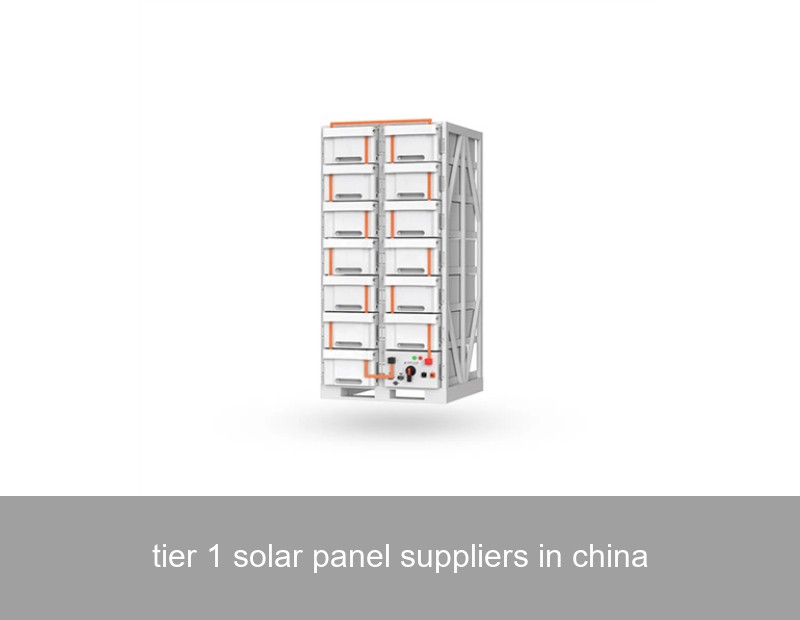
If you're planning a solar project in Europe or the United States, you've likely encountered a critical component decision: which solar panels to choose. In your research, the term "Tier 1 solar panel suppliers in China" has almost certainly come up. This classification is more than just a ranking; it's a key indicator of bankability, reliability, and long-term performance. But what does it truly mean, and how do you leverage this knowledge to build a superior, future-proof energy system? As a product and technology expert at Highjoule, I see this question daily. The panel is just the beginning; its integration into a complete, intelligent storage solution is where true energy independence is forged.
Table of Contents
- What Does "Tier 1" Really Mean? Beyond the Marketing Hype
- Key Criteria for Identifying Genuine Tier 1 Suppliers
- Spotlight on Leading Tier 1 Solar Panel Suppliers in China
- The Critical Step Beyond the Panel: System Integration and Storage
- From Panel to Power Security: A Real-World Case Study
- Making the Informed Choice for Your Project
What Does "Tier 1" Really Mean? Beyond the Marketing Hype
First, let's demystify the term. "Tier 1" is not an official certification like IEC or UL. It was originally coined by BloombergNEF (BNEF) as a bankability rating. Essentially, it indicates that the manufacturer's panels have been used in projects financed by at least six different non-development banks. This matters because banks are notoriously risk-averse. Their due diligence is rigorous, so a Tier 1 label signals that a manufacturer has proven financial stability, robust vertical integration (controlling more of the production process), and a track record of quality and reliability.
Think of it this way: you wouldn't build a house on an unstable foundation. For large-scale commercial, industrial, or residential community projects, choosing panels from a Tier 1 supplier in China is about mitigating financial and performance risk over the system's 25-30 year lifespan.
Key Criteria for Identifying Genuine Tier 1 Suppliers
While the bankability list is a great starting point, a savvy project developer or homeowner should look deeper. Here are the pillars of a true Tier 1 player:
- Financial Health & Vertical Integration: Companies that produce their own silicon wafers, cells, and panels typically have better quality control and cost resilience.
- Independent Certification & Testing: Look for panels that not only meet but exceed standard certifications. Reports from independent labs like PV Evolution Labs (PVEL) and their Product Qualification Program (PQP) scorecard are gold standards.
- Warranty & Degradation Rates: Top suppliers offer 25+ year linear power output warranties with degradation rates as low as 0.45% per year. This directly impacts your lifetime energy yield.
- Technology Roadmap: Are they leaders in PERC, TOPCon, or HJT cell technology? Continuous R&D investment is a sign of a company built for the long term.

Credit: Photo by American Public Power Association on Unsplash
Spotlight on Leading Tier 1 Solar Panel Suppliers in China
The Chinese solar market is dynamic, but several names consistently top global shipments and bankability lists. Companies like JinkoSolar, LONGi Solar, JA Solar, and Trina Solar are industry behemoths. They have massive manufacturing capacity, global supply chains, and relentless focus on technological innovation. For instance, LONGi has repeatedly broken world records for monocrystalline silicon cell efficiency. Choosing panels from these manufacturers gives you access to cutting-edge technology at a competitive levelized cost of energy (LCOE).
However, here's the insight we at Highjoule always emphasize: The world's best panel is only as good as the system it's connected to. A premium panel mismatched with a subpar inverter or an inadequate storage system will never deliver its full potential.
The Critical Step Beyond the Panel: System Integration and Storage
This is where the real magic happens. Solar generation is intermittent. To truly maximize your investment in Tier 1 panels, you need to capture and use every kilowatt-hour produced. This is where advanced energy storage systems (ESS) become non-negotiable.
At Highjoule, we've spent nearly two decades solving this exact problem. Our role isn't to manufacture panels, but to ensure the power they produce is used in the smartest, most efficient way possible. Our intelligent battery storage systems, like the Highjoule H-Series Commercial ESS, are designed to seamlessly integrate with top-tier solar arrays from any major supplier.
What does this integration look like?
- Maximized Self-Consumption: Store excess solar energy during the day for use at night, drastically reducing your reliance on the grid.
- Enhanced ROI: By increasing your on-site consumption of solar power, you improve the payback period of your entire system—panels included.
- Grid Services & Stability: For commercial and industrial applications, our systems can provide peak shaving, demand charge reduction, and even grid support functions, creating additional revenue streams.
- Full System Intelligence: Our proprietary energy management system (EMS) acts as the brain, constantly optimizing the flow between your Tier 1 panels, storage batteries, and facility loads.
Think of us as the force multiplier for your premium solar investment.
From Panel to Power Security: A Real-World Case Study
Let's make this concrete with a European example. A mid-sized dairy processing plant in Germany installed a 500 kW rooftop solar system using panels from a leading Tier 1 Chinese supplier. Their goal was to reduce energy costs and carbon footprint. However, due to production schedules, their energy consumption peaked in the early morning and evening—outside of prime solar hours.
The Phenomenon: High grid import during low-solar periods was eroding financial savings.
The Data: Data logging showed only 35% direct self-consumption of solar generation. Over 60% was being exported to the grid at a lower feed-in tariff, while they simultaneously bought expensive power from the grid at night.
The Highjoule Solution: The plant integrated a 240 kWh Highjoule containerized battery storage system with a 250 kW inverter. The system was configured for time-of-use optimization and demand charge management.
The Result (Post-Integration):
| Metric | Before Highjoule ESS | After Highjoule ESS |
|---|---|---|
| Solar Self-Consumption | ~35% | >85% |
| Grid Import During Peak Hours | ~80% of need | <15% of need |
| Monthly Demand Charges | €4,200 (avg.) | €1,100 (avg.) |
| Projected ROI for Total System | 9 years | 6.5 years |
The Tier 1 panels provided the high-quality, reliable fuel. The Highjoule storage system unlocked its full value, transforming the plant's energy profile and delivering tangible financial results.
Making the Informed Choice for Your Project
So, your path forward is clearer. Start with the solid foundation of Tier 1 solar panel suppliers in China for their proven quality and bankability. But immediately pivot your thinking to the complete system architecture. The panel is a component, not the entire solution.
Ask yourself and your EPC partner: How will we store and manage this energy? How will we ensure resilience during outages or peak pricing periods? How can we make this asset work hardest for our specific load profile?

Credit: Photo by ThisisEngineering RAEng on Unsplash
This is the conversation we at Highjoule are passionate about. We partner with developers, EPCs, and businesses to design the intelligence layer that turns premium solar generation into unwavering power security and superior economics. Our global experience across the US and European markets means we understand the unique grid codes, incentive structures, and commercial challenges you face.
 Inquiry
 Online Chat