


Top 5 Lithium Batteries for Solar: Powering Your Home and Business Efficiently
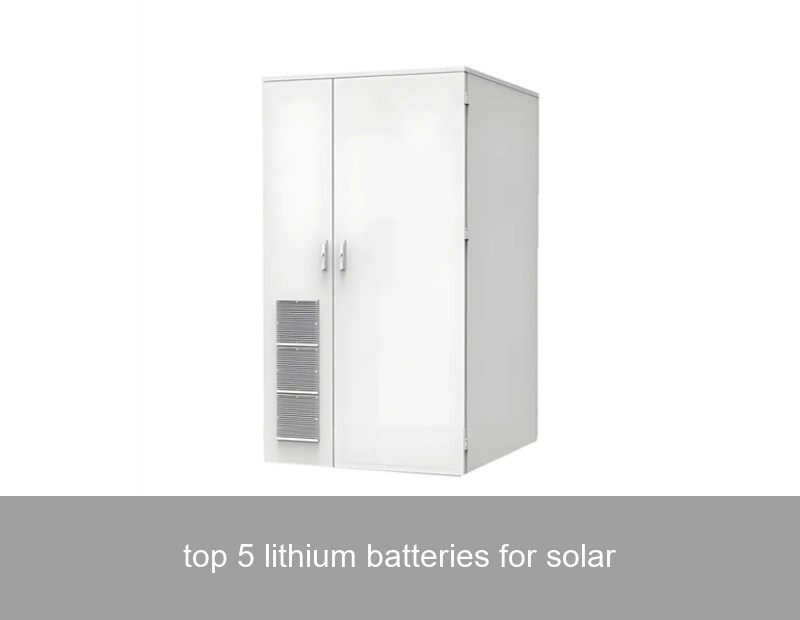
So, you've made the smart decision to go solar. The panels are up, soaking in the sun, but you quickly realize a crucial piece of the puzzle is missing: how to use that clean energy when the sun isn't shining. This is where the right lithium battery steps in, transforming your solar array from a daylight-only system into a 24/7 power station. Choosing among the top lithium batteries for solar can be overwhelming, but it's the single most important factor in maximizing your energy independence and return on investment. As a global leader in advanced energy storage since 2005, Highjoule understands that the best battery isn't just about specs on a page; it's about seamless integration, intelligent management, and long-term reliability for your specific needs, whether for your home, business, or a community microgrid.
Table of Contents
The Solar Storage Phenomenon: More Than Just Backup
Gone are the days when solar batteries were just for emergency blackouts. Today, they are sophisticated energy managers. With volatile energy prices across Europe and the US, and the rise of time-of-use tariffs, the modern solar battery's primary job is energy arbitrage: storing cheap, self-produced solar energy to use during expensive peak hours. According to the U.S. Department of Energy, pairing storage with solar can increase the value of solar energy by 30-50% for homeowners. The right system doesn't just store power; it intelligently decides when to charge, when to discharge, and when to sell back to the grid, optimizing every kilowatt-hour.

Image source: Unsplash. A modern home energy system combining solar and storage.
Beyond the Brand: Key Metrics That Actually Matter
When evaluating the top lithium batteries for solar, look beyond marketing. Focus on these core technical and practical metrics:
- Usable Capacity (kWh): The actual energy you can use. Some batteries list a larger total capacity but reserve a portion for system protection.
- Power Rating (kW): How much power it can deliver at once. Crucial for running multiple high-wattage appliances simultaneously.
- Round-Trip Efficiency (%): The percentage of energy put into the battery that you can get out. Higher means less waste. Top systems exceed 94%.
- Depth of Discharge (DoD): The percentage of the battery's capacity that can be safely used. A 10kWh battery with 90% DoD gives you 9kWh of usable energy.
- Cycles & Warranty: A warranty guaranteeing 70-80% capacity after 10 years or a specific number of cycles (e.g., 10,000) is industry-standard for quality.
- Chemistry: Most are Lithium Iron Phosphate (LFP/LiFePO4), known for superior safety, longevity, and thermal stability compared to older NMC blends.
The Top 5 Lithium Battery Contenders for Solar
Based on performance, innovation, market presence in Europe and the US, and overall system intelligence, here is a detailed comparison of leading solutions.
| Battery System | Key Chemistry | Usable Capacity | Continuous Power | Notable Feature | Ideal For |
|---|---|---|---|---|---|
| Highjoule Hyperion | LFP (LiFePO4) | Modular 5-30kWh+ | 5kW per unit, stackable | AI-driven grid services & microgrid ready | Future-proof homes, commercial, microgrids |
| Tesla Powerwall 3 | LFP (LiFePO4) | 13.5 kWh | 11.5 kW continuous | Integrated solar inverter | All-in-one simplicity for homes |
| Enphase IQ Battery 5P | LFP (LiFePO4) | 5 kWh modular | 3.84 kW continuous | Fully integrated microinverter system | Safety-focused, scalable residential |
| FranklinWH Home Power | LFP (LiFePO4) | 13.6 kWh (aPower) | 10 kW continuous | Separate "gateway" for whole-home backup | Whole-home backup without subpanels |
| Generac PWRcell | NMC (some LFP now) | 9-36 kWh modular | Up to 12 kW continuous | High power output, legacy brand | Large homes with high simultaneous loads |
1. Highjoule Hyperion Series: The Intelligent Grid Partner
Highjoule's Hyperion series stands out for its grid intelligence and commercial-grade architecture. While it's a top-tier choice for demanding homes, its true strength lies in scalability and software. The Hyperion's AI-driven energy management system doesn't just optimize for self-consumption; it can participate in utility demand response programs (where available), generating revenue by providing grid stability services. Its modular design allows for seamless expansion from 5kWh to over 30kWh, and its robust hardware is designed for the high cycle life required in commercial and industrial applications. For businesses or communities looking to build resilient microgrids, Highjoule provides complete turnkey solutions, from design to ongoing performance monitoring.
2. Tesla Powerwall 3: The Integrated All-Rounder
The latest Powerwall integrates a solar inverter directly into the unit, simplifying installation for new solar+storage projects. Its high continuous power output (11.5kW) can handle most whole-home backup needs. Tesla's strong brand and sleek app interface are major draws. However, its capacity is fixed, and its compatibility with existing non-Tesla solar systems can sometimes be a consideration.
3. Enphase IQ Battery 5P: The Safe and Scalable Ecosystem
Enphase champions a "microinverter" philosophy applied to storage. Each IQ Battery has its own built-in microinverter, enhancing safety and reliability. The system is incredibly modular and scalable in 5kWh increments, and it integrates flawlessly with existing Enphase solar systems. Its power output per unit is lower, making careful system design key for high-power homes.
4. FranklinWH Home Power System: The Backup Powerhouse
FranklinWH's unique architecture separates the battery (aPower) from a central control unit (the Gateway). This allows the Gateway to manage whole-home backup intelligently without always needing a complex critical loads subpanel. It's a compelling solution for those whose primary concern is seamless and comprehensive backup power during outages.
5. Generac PWRcell: The High-Power Veteran
Generac, a trusted name in backup generators, brings that high-power mentality to batteries. The PWRcell system is known for its very high continuous and surge power ratings, making it suitable for large homes with well pumps, air conditioners, and other large motors starting simultaneously. It offers strong modular capacity expansion.
From Specs to Savings: A German Case Study
Let's move from theory to real-world impact. Consider a mid-sized family home in Bavaria, Germany, with a 10kW solar array. The household faces high electricity prices (~€0.35/kWh) and a time-of-use tariff structure.
Scenario: They install a 15kWh Highjoule Hyperion system. The intelligent software is configured to maximize self-consumption and avoid drawing from the grid during peak hours (4-9 PM).
- Solar Self-Consumption Rate Increased: From 35% to over 85%.
- Grid Import Reduction: Reduced peak-hour grid purchases by 95%.
- Annual Savings: Approximately €1,800 saved on electricity bills.
- Additional Value: The system's frequency regulation capability, participating in a local grid service pilot, added an estimated €150 in annual revenue.
This case, reflective of many across Europe, shows how the right battery is a financial asset, paying back its investment while providing peace-of-mind energy security.

Image source: Unsplash. Data visualization of energy flow with storage.
How to Choose Your Ideal Solar Battery
Your perfect match depends on your priorities. Ask yourself these questions:
- Is whole-home backup during outages your absolute top priority? (Look at FranklinWH, Generac, Tesla).
- Do you value maximum scalability and future expansion for an EV or heat pump? (Modular systems like Highjoule Hyperion or Enphase excel).
- Are you part of a community or have a business where energy resilience and potential revenue from grid services are key? (Highjoule's grid-interactive and microgrid solutions are purpose-built for this).
- Do you already have a specific solar inverter brand? (Compatibility and seamless integration are crucial for performance).
Always consult with a certified installer who can analyze your energy usage patterns and local utility rules. A study by the National Renewable Energy Lab (NREL) emphasizes that proper sizing and installation are as critical as the hardware choice itself.
The Future is Integrated, Not Just Installed
The evolution of the top lithium batteries for solar is moving from simple storage units to integrated energy hubs. The next generation will seamlessly communicate with your EV charger, heat pump, and smart appliances, creating a truly autonomous home energy system. Companies like Highjoule are at the forefront, developing platforms where your battery becomes a node in a smarter, more resilient local grid. This isn't just about saving money on your bill; it's about actively participating in the clean energy transition.
As you weigh your options among these top performers, consider this: Which system not only meets your needs today but also gives you the platform and flexibility to adapt to the energy landscape of tomorrow? What role do you see your home or business playing in the wider energy network?
 Inquiry
 Online Chat