


Finding the Best Battery Solar Storage for Your Energy Independence
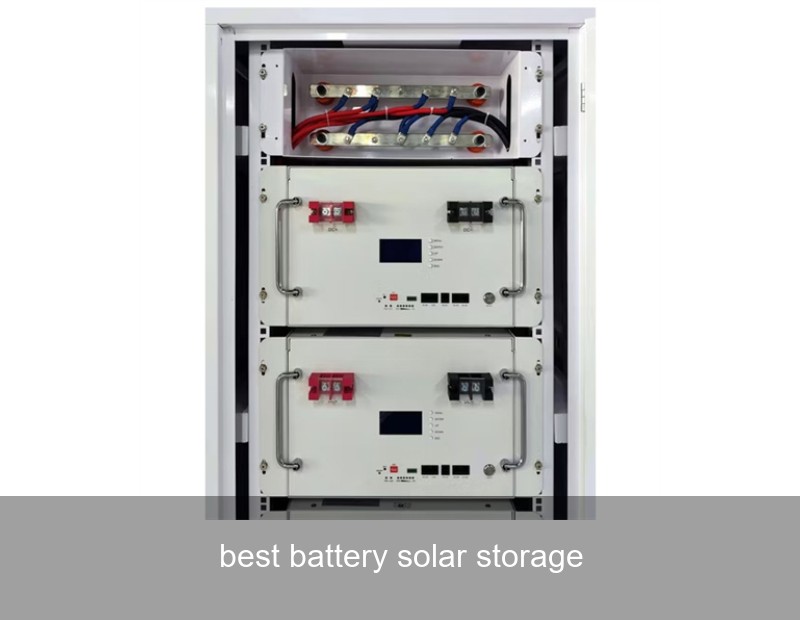
Have you ever watched your solar panels generate excess energy on a sunny afternoon, only to buy electricity back from the grid at night? This common frustration is the very reason homeowners and businesses across Europe and the U.S. are turning to solar battery storage. But with so many options, how do you choose the best battery solar storage system? It's not just about the battery itself; it's about a smart, integrated system that maximizes your investment, enhances resilience, and truly unlocks energy freedom. This guide will walk you through the key considerations, backed by data and real-world examples, to help you make an informed decision.
Table of Contents
- The Core Challenge: Why Solar Alone Isn't Enough
- Key Metrics: What Makes the "Best" Battery?
- A Real-World Case: The German Bakery Story
- Beyond the Battery: The Power of Intelligent Software
- Future-Proofing Your Investment
- Your Next Step Towards Energy Independence
The Core Challenge: Why Solar Alone Isn't Enough
The phenomenon is clear: solar generation peaks during midday, while energy consumption typically spikes in the morning and evening. Without storage, this mismatch forces a reliance on the grid. The data is compelling. According to the U.S. Department of Energy, high levels of solar penetration can create grid management challenges, highlighting the need for localized storage to balance supply and demand.
This is where pairing your photovoltaic (PV) system with the best battery solar storage becomes transformative. Think of it as a sophisticated energy savings account. You "deposit" excess solar production and "withdraw" it when you need it most, avoiding high time-of-use rates and protecting yourself from outages.
The Financial and Resilience Equation
The decision often boils down to two drivers: economics and resilience. Financially, a good storage system increases your self-consumption of solar energy from an average of 30-40% to over 70% or more, dramatically reducing your electricity bills. For resilience, it's your personal backup power plant during grid failures—keeping lights on, food cold, and, for businesses, operations running.
Key Metrics: What Makes the "Best" Battery?
Not all batteries are created equal. When evaluating systems, focus on these critical specifications:
- Usable Capacity (kWh): The actual amount of energy you can store and use. This is less than the total nameplate capacity due to built-in protective buffers.
- Power Rating (kW): How much electricity the battery can deliver at once. A higher rating can power more appliances simultaneously, like an AC unit and a refrigerator.
- Round-Trip Efficiency (%): The percentage of energy put into the battery that you can get back out. Higher efficiency (e.g., 95% vs. 85%) means less energy is lost as heat.
- Depth of Discharge (DoD %): The percentage of the battery's capacity that can be safely used. A 100% DoD means you can use the full usable capacity without harming the battery.
- Cycles & Warranty: The expected number of charge/discharge cycles and the duration of the product guarantee. A 10-year warranty covering 10,000 cycles is a strong indicator of longevity.
| Feature | Why It Matters | What to Look For |
|---|---|---|
| Chemistry | Determines safety, lifespan, and performance. | Lithium Iron Phosphate (LFP) is renowned for thermal stability and long cycle life. |
| Modularity | Allows you to expand capacity as your needs grow. | Systems that let you add battery modules seamlessly over time. |
| Grid Services | Potential for future revenue by supporting grid stability. | Software that enables participation in virtual power plants (VPPs). |
A Real-World Case: The German Bakery Story
Let's move from theory to practice with a concrete example from Bavaria, Germany. A family-run bakery with a 50 kW rooftop solar system faced a classic problem: high energy consumption for ovens and refrigeration starting pre-dawn, well before the sun was up. They were exporting most of their solar energy at a low feed-in tariff and buying expensive grid power during peak hours.
Their solution was a Highjoule HES-30 commercial storage system with 60 kWh of usable capacity. The results, measured over one year, were significant:
- Self-Consumption Increase: Rose from 35% to 82%.
- Grid Import Reduction: Cut peak-time grid electricity purchases by 90%.
- ROI Timeline: Achieved a return on investment in under 6 years, factoring in German subsidy programs.
- Resilience Bonus: During a planned grid outage, the bakery maintained full refrigeration, preventing thousands of euros in inventory spoilage.

This case illustrates that the best battery solar storage isn't just a commodity; it's a tailored energy management solution that addresses specific load profiles and business risks.
Beyond the Battery: The Power of Intelligent Software
The hardware stores the energy, but the software is the brain that maximizes its value. A truly advanced system uses AI and weather forecasting to optimize charging and discharging cycles. For instance, if a storm is predicted tomorrow, the system might conserve a full charge to ensure backup power. If peak grid rates are expected at 6 PM, it will intelligently dispatch stored solar energy at that exact time.
This is where Highjoule's Neuron OS platform excels. It doesn't just manage your battery; it integrates with your entire energy ecosystem—solar inverters, EV chargers, and smart home devices. For our European and North American customers, this means the system can be configured to capitalize on local dynamic tariffs or participate in grid response programs, creating an additional revenue stream. The right software transforms a storage system from a passive backup into an active financial asset.
Integration is Key
Seamless integration with your existing or new solar array is non-negotiable. The best systems are "hybrid-ready" or work with a wide range of inverters, ensuring a smooth installation and optimal communication between components. Highjoule designs its Residential HES-Series and Commercial HES-M Series with universal compatibility in mind, providing installers with flexible, future-proof solutions that simplify the design process and reduce balance-of-system costs.
Future-Proofing Your Investment
The energy landscape is evolving rapidly. When choosing a system today, consider its ability to adapt to tomorrow's needs.
- Electric Vehicle (EV) Charging: Can your storage system prioritize solar power for your EV, turning your car into a true "sun-powered" vehicle?
- Virtual Power Plants (VPPs): Can your system aggregate with others to form a VPP, selling power back to the grid during times of high demand? This is a growing opportunity in markets like California and the UK.
- Modular Expansion: As your energy needs grow—maybe you're adding a home extension or buying an EV—can you simply add more battery modules?
Highjoule's architecture is built on this principle of open, scalable growth. Our systems are not just products but platforms for long-term energy independence, designed to integrate with the smart grid initiatives actively being rolled out across the U.S. and EU.

Your Next Step Towards Energy Independence
Choosing the best battery solar storage is a significant decision that hinges on your unique energy profile, goals, and local market dynamics. It's about more than just kilowatt-hours; it's about partnering with a technology provider that offers robust hardware, intelligent software, and proven reliability.
As a global leader with nearly two decades of experience, Highjoule is committed to delivering smart, efficient, and sustainable power solutions. From our compact residential units to our containerized large-scale microgrid solutions, we engineer systems that perform reliably for years to come.
So, we leave you with this question to ponder: What does true energy independence look like for your home or business—is it total self-sufficiency, maximum financial return, or unwavering resilience during an outage? Defining your priority is the perfect first step on this journey.
 Inquiry
 Online Chat