


Victron Energy Storage Cabinet: A Deep Dive for Modern Power Systems
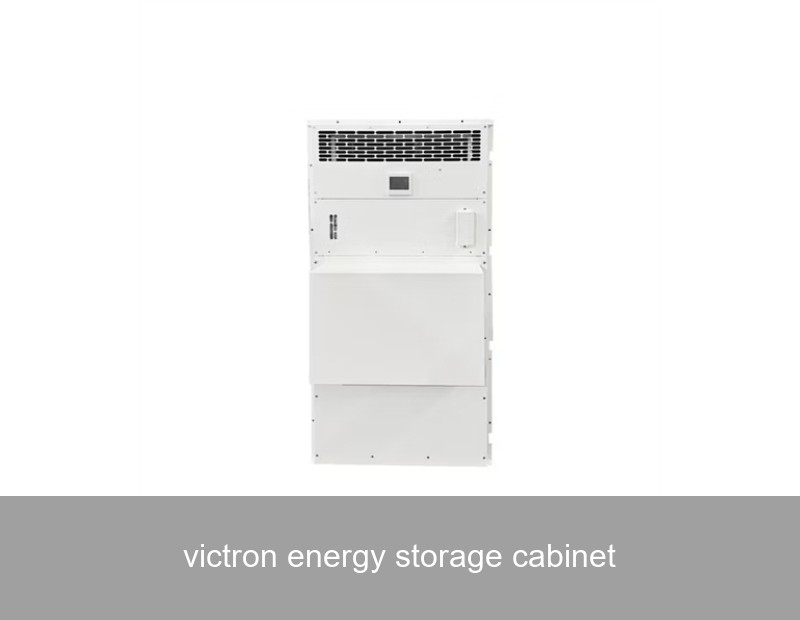
If you're managing a commercial facility, designing an off-grid system, or simply looking to future-proof your energy independence, you've likely encountered the name Victron Energy Storage Cabinet. These robust, blue-shelled units have become a familiar sight in advanced battery energy storage systems (BESS). But what makes them a go-to component, and how are they integrated into truly smart and resilient power solutions? As a global leader in advanced energy storage, Highjoule has been designing, integrating, and optimizing systems around core components like these since 2005. Let's explore not just the cabinet itself, but the intelligent ecosystem it enables.
Table of Contents
The Phenomenon: The Rise of Modular Energy Storage
Gone are the days of purely static, one-size-fits-all battery banks. The modern energy landscape, driven by volatile electricity prices and the need for grid stability, demands flexibility. This is where cabinet-based storage systems shine. A Victron Energy Storage Cabinet is essentially a pre-engineered, scalable enclosure that houses lithium batteries, safety systems, and communication hardware. Think of it as a high-performance "energy building block." For businesses and communities, this modularity is revolutionary. You start with what you need today and seamlessly add cabinets as your solar array grows or your energy demands increase.

Image: Modular energy storage cabinets allow for clean, scalable installations. (Photo by American Public Power Association on Unsplash)
The Data: Why Cabinet-Based Systems Dominate
The shift towards cabinetized systems isn't just about aesthetics; it's backed by compelling performance and economic data. Let's look at some key advantages quantified:
| Feature | Benefit | Impact |
|---|---|---|
| Modular Scalability | Capacity can be increased in discrete increments (e.g., 20kWh per cabinet). | Reduces upfront CAPEX by 15-30% compared to oversizing a single system. |
| Integrated Safety & BMS | Built-in Battery Management System (BMS), fusing, and thermal controls. | Lowers installation time/cost by ~25% and ensures UL1973/IEC62619 compliance. |
| Centralized Monitoring | All cabinet data is aggregated via a single interface (like Victron's VRM). | Improves operational efficiency and enables predictive maintenance, reducing downtime. |
| High-Cycle Lithium Chemistry | Typically using LiFePO4 (LFP) batteries with 6000+ cycles at 80% depth of discharge. | Delivers a levelized cost of storage (LCOS) often below $0.15/kWh over system life. |
These figures highlight why system designers and energy managers are moving towards this approach. For a deeper dive into the safety standards, you can review the UL1973 standard overview.
Case Study: A German Dairy Farm's Resilience Story
Let's make this real. Consider a medium-sized dairy farm in Bavaria, Germany. Their challenges were twofold: skyrocketing energy costs for milk cooling and feeding lines, and an unreliable local grid that risked spoiling product.
The Solution: A 120kWp solar canopy was installed over the cattle yard, paired with a storage system built around two Victron Energy Storage Cabinets (totaling 40kWh). The system was integrated with a Highjoule H-Series Hybrid Inverter and our proprietary Energy Management System (EMS).
The Data-Driven Outcome (First 12 Months):
- Energy Self-Sufficiency: Increased from 35% to 82%.
- Peak Shaving: Reduced grid demand during high-tariff hours by 95%, saving over €8,400 annually.
- Backup Power: Provided seamless backup for critical cooling systems during 4 grid outages, preventing an estimated €12,000 in potential spoilage losses.
- ROI: Projected payback period of 4.2 years, enhanced by a German federal grant for agricultural energy independence.
This case isn't magic; it's the result of pairing high-quality hardware with intelligent control. The Victron cabinets provided the reliable, scalable storage vessel, while Highjoule's EMS acted as the brain, deciding precisely when to charge from solar, discharge to avoid peak tariffs, or hold reserve for backup.
Beyond the Box: The Critical Role of System Integration
Here's a crucial insight we've learned over nearly two decades: the cabinet is a vital component, but it's not the whole system. The true value—and often the point of failure—lies in integration. A Victron Energy Storage Cabinet is designed to work flawlessly with Victron inverters and monitors. However, in complex commercial or microgrid applications, you often need to interface with other generation sources, the main grid, or specialized loads.
This is where Highjoule's expertise becomes pivotal. We don't just supply cabinets; we provide the synapse that connects them. Our platform can integrate Victron hardware with third-party solar inverters, generator controls, and building management systems, creating a unified, optimized power ecosystem. Think of it as ensuring the talented musicians (the hardware components) all play from the same sheet of music (the control logic).

Image: Intelligent control systems are key to unlocking the full value of storage hardware. (Photo by ThisisEngineering RAEng on Unsplash)
The Highjoule Approach: Intelligence Meets Infrastructure
At Highjoule, our product philosophy for commercial and industrial applications often involves leveraging best-in-class hardware like Victron Energy Storage Cabinets for their proven reliability and serviceability. We then wrap them in our added-value layer:
- Highjoule H-Series Hybrid Inverters: For systems requiring robust grid-forming capability and high-efficiency conversion.
- Highjoule Energy Management System (EMS): The software brain that performs advanced forecasting, tariff optimization, and peak shaving, going beyond basic monitoring.
- Custom System Integration: Our engineering team designs the complete AC/DC distribution, safety interlocks, and communication network, ensuring a turnkey, code-compliant installation.
For example, a U.S. data center client needed N+1 redundancy. We designed a microgrid using multiple Victron Energy Storage Cabinets paired with our EMS, which performs a continuous "health check" on each cabinet string and can isolate any underperforming module without taking the entire storage system offline. This layered approach maximizes both uptime and asset life.
Future-Proofing Your Investment
The energy transition is accelerating. Regulations like the EU's REPowerEU plan and U.S. tax incentives under the Inflation Reduction Act are creating urgent demand for storage. Choosing a system based on scalable, standards-compliant cabinets is a smart first step. But the next, more critical step is ensuring that system is adaptively intelligent.
Will your storage system be able to participate in future virtual power plants (VPPs) or grid-balancing markets? Can its software be updated to adapt to new tariff structures? These are the questions we help our clients answer. The hardware provides the muscle, but the intelligence provides the agility to capitalize on future opportunities.
So, What's Your Energy Resilience Strategy?
As you evaluate a Victron Energy Storage Cabinet or any storage solution, look beyond the specifications sheet. Consider the total system intelligence, the integration pathway, and the partner behind it. Is your goal simply to store energy, or is it to create a dynamic, cost-optimizing, and revenue-generating asset for your property or business? At Highjoule, we build for the latter. What specific energy challenge—be it demand charge reduction, backup power assurance, or renewable maximization—is most critical for you to solve in the next 18 months?
 Inquiry
 Online Chat