


Renewable Energy Commercialization: How Storage is Turning Green Power into a Bankable Asset
For decades, the conversation around renewable energy centered on idealism and environmental necessity. Today, the dialogue has decisively shifted. The core question is no longer "Can we build it?" but rather "How do we make it a reliable, predictable, and profitable cornerstone of our energy economy?" This pivotal shift marks the era of true renewable energy commercialization. It's a transition from relying on subsidies to competing on pure economic merit, and it's fundamentally changing how businesses, utilities, and communities view their power supply.
The Phenomenon: From Niche to Necessity
Walk through any major industrial district in Europe or drive across the sun-drenched landscapes of the American Southwest, and you'll see the physical manifestation of this shift: vast solar farms and towering wind turbines are now common fixtures. This isn't just corporate greenwashing; it's a calculated financial decision. Companies are aggressively pursuing Power Purchase Agreements (PPAs) for renewables, not solely for ESG reports, but to lock in long-term, stable energy costs and hedge against the volatility of fossil fuel markets. The commercialization of renewable energy is here, driven by boardrooms and balance sheets as much as by environmental policy.
The Data: The Economics Are Now Unbeatable
The numbers tell a compelling story. According to the International Renewable Energy Agency (IRENA), the cost of electricity from utility-scale solar photovoltaics fell by a staggering 89% between 2010 and 2022. Onshore wind power costs dropped by 69% in the same period. In many regions, building new solar or wind farms is now cheaper than operating existing coal or gas plants. This cost parity is the first, crucial pillar of commercialization. However, low generation cost is only part of the equation. The real challenge—and the final frontier for full-scale renewable energy commercialization—lies in matching supply with demand, every minute of every day.

Image Source: Unsplash - A modern solar farm, representing the dramatic decrease in generation costs.
The Bottleneck: Intermittency and Grid Integration
Here's the rub: the sun sets, and the wind stops blowing. This intermittency creates a fundamental mismatch. A solar plant might produce a surplus of cheap power at noon when demand is moderate, but generate nothing at 7 PM when everyone arrives home and demand peaks. This creates two major commercial headaches:
- Grid Instability: Too much unpredictable power can overwhelm traditional grid infrastructure, leading to frequency fluctuations and potential blackouts.
- Price Cannibalization: On extremely sunny or windy days, an oversupply of renewable power can cause wholesale electricity prices to plummet, sometimes even turning negative. This erodes the revenue and business case for the very renewable assets we need.
So, how do we transform these intermittent sources into firm, dispatchable power that a modern economy can bank on? The answer lies not just in generation, but in intelligent storage and management.
The Solution: Advanced Energy Storage as the Commercial Catalyst
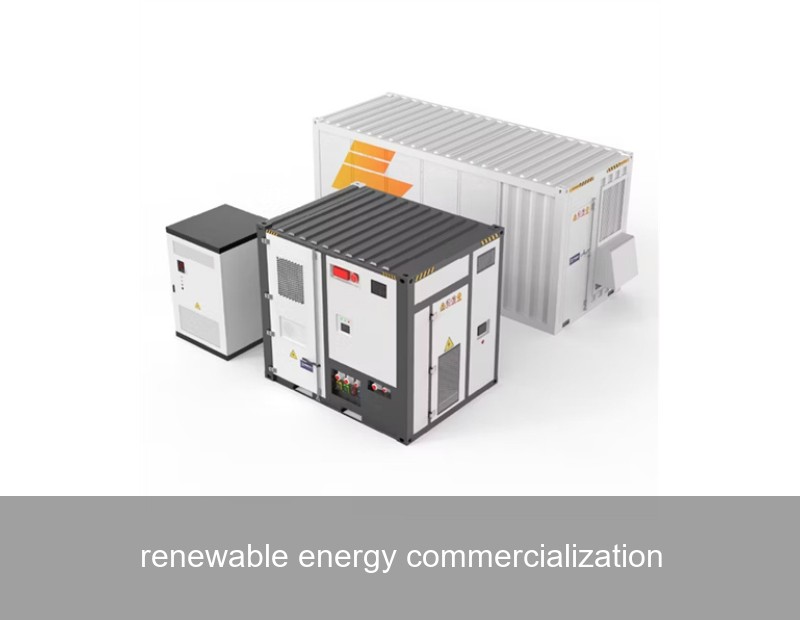
Think of advanced Battery Energy Storage Systems (BESS) as the shock absorber and timing engine for the renewable grid. They are the critical enabling technology that bridges the gap between generation and consumption, unlocking the full commercial value of renewables. Here’s how storage catalyzes commercialization:
| Commercial Challenge | How Storage Provides the Solution | Business Outcome |
|---|---|---|
| Intermittent Generation | Stores excess energy during peak production and discharges during peak demand or low generation. | Firm, dispatchable power supply; ability to fulfill 24/7 PPAs. |
| Grid Congestion & Curtailment | Acts as a local buffer, absorbing power when lines are full and releasing it later, preventing renewable "waste." | Maximized asset revenue; reduced curtailment losses. |
| Energy Price Volatility | Enables energy arbitrage—buying/store cheap power (e.g., midday solar), selling/dispatching expensive power (e.g., evening peak). | New revenue streams and enhanced ROI for renewable projects. |
| Grid Services Need | Provides rapid frequency response, voltage support, and black-start capabilities more efficiently than traditional plants. | Access to lucrative ancillary service markets; improves grid stability for all. |
Case Study: A German Industrial Park's Journey to Commercial Viability
Let's ground this in reality. Consider a mid-sized industrial park in North Rhine-Westphalia, Germany. The park operators installed a 5 MW rooftop solar array, aiming to reduce costs and carbon footprint. Initially, they faced a familiar problem: 40% of the solar energy was either being exported to the grid at low feed-in tariffs or curtailed because the park's midday consumption couldn't keep up.
Their path to true renewable energy commercialization involved integrating a 2.5 MW / 5 MWh battery storage system. The results, monitored over one year, were transformative:
- Self-Consumption Rate Increased: From 60% to over 85%, drastically cutting electricity bills.
- Revenue from Grid Services: The system participated in the German primary control reserve market, generating approximately €35,000 in ancillary service revenue annually.
- Peak Shaving: The battery reliably reduced the park's peak demand charges from the grid by 30%, a direct and significant cost saving.
- ROI: The combined value streams reduced the project's simple payback period to under 7 years, turning a sustainability project into a sound financial asset.
This case exemplifies the commercial model: pairing generation with intelligent storage creates a synergistic system whose value is greater than the sum of its parts.

Image Source: Unsplash - An engineer monitoring a modern battery energy storage system, a key component for commercial viability.
The Future: Intelligent Systems and New Business Models
The next stage of commercialization moves beyond hardware to intelligence. Advanced energy management systems (EMS) and AI-driven forecasting are becoming essential. These platforms can predict solar/wind output and energy prices with high accuracy, optimizing battery charge/dispatch cycles not just for today, but for the coming week, maximizing financial return across multiple value streams. Furthermore, we're seeing the rise of virtual power plants (VPPs), where hundreds of distributed storage systems are aggregated to act as a single, grid-scale resource, opening up even larger commercial opportunities.
Highjoule's Role in Powering Commercial Viability
At Highjoule, we've been at the forefront of this commercial transition since 2005. We understand that successful renewable energy commercialization requires more than just a battery container; it requires a holistic, intelligent power solution. Our integrated approach is designed to de-risk and monetize renewable investments:
- Highjoule H-Series Commercial BESS: Our flagship product line offers industry-leading cycle life, safety, and energy density. Built with lithium iron phosphate (LFP) chemistry, it provides the durability and thermal stability required for daily, high-throughput cycling in demanding commercial and industrial applications.
- Orion Energy Management Software: This is the brain of the operation. Orion doesn't just control the battery; it performs continuous economic optimization. It integrates weather data, market prices (like day-ahead and intraday markets in Europe), and onsite load patterns to autonomously make the most profitable decision every second of the day.
- End-to-End Project Development: From initial feasibility studies and financial modeling to system design, grid connection support, and long-term performance monitoring, our team ensures your project is bankable, compliant, and optimized for its specific market context in Europe or North America.
Our systems are currently enabling a solar+storage microgrid at a remote agricultural processing facility in California to operate independently from the grid, and helping a Danish wind cooperative store excess energy to sell during high-price periods, directly translating green generation into green profits.
Ready to Discuss Your Commercial Project?
The data is clear, the technology is proven, and the economic imperative is stronger than ever. The journey from renewable generation to full renewable energy commercialization is navigated with intelligent storage. What specific energy challenge—be it price volatility, demand charges, or sustainability goals—is your business or community looking to solve with a bankable, clean energy solution?
 Inquiry
 Online Chat