


Maximizing Output: A Deep Dive into 2 MW Solar Plant Unit Generation
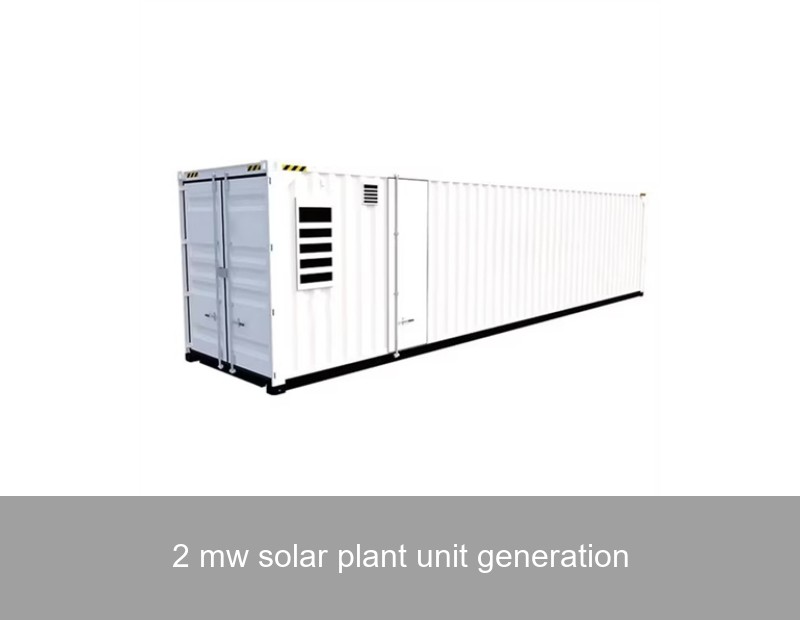
So, you're planning, operating, or simply curious about a 2 MW solar plant. It's a significant and increasingly common scale, powering everything from large factories to entire communities. But the nameplate "2 MW" only tells part of the story. The real question on every stakeholder's mind is: how do you maximize the actual generation of your 2 MW solar plant unit? Beyond the panels, the key to unlocking true potential lies in the intelligent system that manages, stores, and optimizes every kilowatt-hour. Let's explore how modern technology transforms a static array into a dynamic, high-yield power asset.
Table of Contents
The Generation Gap: Rated vs. Real-World Output
A 2 MW DC (Direct Current) solar array is designed with a peak output under ideal laboratory conditions: perfect sunlight angle, cool temperatures, and immaculate panels. The real world, however, introduces a "generation gap." Factors like intermittent cloud cover, seasonal sun angle shifts, panel soiling, and most notably, inverter clipping and grid curtailment, can significantly reduce actual AC (Alternate Current) output delivered to your facility or the grid.
Industry data suggests that while a well-located plant might achieve a 20-25% capacity factor (the ratio of actual output to maximum possible output), there is substantial room for improvement. For a 2 MW unit, this gap can represent hundreds of megawatt-hours of lost energy and revenue annually. The challenge isn't just generating power; it's capturing, stabilizing, and utilizing it at the optimal time.
Beyond Panels: The System Components That Define Yield
To bridge the generation gap, we must look at the plant as an integrated system. Each component plays a critical role in determining the final yield of your 2 MW solar plant unit.
- Advanced Inverters: These are the brains of the operation, converting DC to AC. Modern inverters with high efficiency ratings (e.g., 99%) and wide operating voltage ranges minimize conversion losses, especially during low-light conditions.
- Smart Monitoring & AI O&M: Real-time monitoring platforms detect underperformance instantly—be it a faulty string, a dirty panel section, or a shading issue. Predictive analytics can schedule maintenance proactively, avoiding extended downtime.
- Plant Design & Balance of System (BoS): Optimal wiring, transformer selection, and even the racking system's orientation impact resistive losses and overall system reliability. A poorly designed BoS can erode generation before it even leaves the site.
This is where expertise matters. At Highjoule, we approach every project, including 2 MW solar installations, as a holistic energy ecosystem. Our Intelligent Energy Platform (IEP) integrates solar generation with advanced control systems, ensuring each component operates at its peak synergy. We don't just supply parts; we deliver optimized performance.
The Game Changer: Energy Storage's Role in Maximizing 2 MW Yield
This is the most transformative element for modern solar plants. Pairing your 2 MW array with a Battery Energy Storage System (BESS) effectively "closes" the generation gap. Here’s how:
| Challenge | Storage Solution | Generation Impact |
|---|---|---|
| Inverter Clipping (midday peak sun) | Store excess DC power before inversion. | Captures 100% of produced energy, eliminating clipping losses. |
| Grid Curtailment (grid congestion) | Store energy when grid says "stop," discharge when it says "go." | Monetizes energy that would otherwise be wasted. |
| Intermittency (passing clouds) | Provide instantaneous power to smooth output. | Ensures stable, grid-compliant power, avoiding voltage issues. |
| Time-Shift (sun sets at 6 PM) | Store daytime energy for evening peak demand. | Effectively increases plant's usable output hours beyond daylight. |
Highjoule's H-Series BESS, built with lithium iron phosphate (LFP) chemistry for safety and longevity, is specifically engineered for this integration. Our systems feature sophisticated energy management software that autonomously decides when to charge, hold, or discharge based on weather forecasts, energy prices, and consumption patterns. For a 2 MW plant, adding a tailored 1-2 MWh storage unit can increase the utilization of generated power by over 30%, fundamentally changing the project's economics. 
Case Study: A 2 MW Plant's Journey to 24/7 Reliability
Let's examine a real-world application. A medium-sized dairy processing plant in Bavaria, Germany, installed a 2 MW ground-mounted solar array in 2020 to power its refrigeration and packaging lines. While it covered ~40% of its daytime energy needs, it faced two major issues: 1) The local grid operator frequently curtailed output during sunny midday periods due to network congestion, and 2) The plant's highest energy demand occurred in the early morning and late evening, when solar generation was zero.
The Solution: In 2023, the facility partnered with Highjoule to integrate a 1.5 MWh H-Series BESS and our IEP software. The system was configured with two primary goals: avoid curtailment and shift solar energy to peak demand times.
The Data-Driven Outcome (First 12 Months):
- Curtailment Recovery: The system stored 100% of curtailed energy, recovering an estimated 185 MWh that would have been lost.
- Peak Shaving: By discharging during high-price evening hours, the plant reduced its grid draw during peak tariffs by over 70%.
- Overall Self-Consumption: The plant's use of its own solar generation jumped from 68% to 94%, dramatically reducing its operational energy costs and carbon footprint.
- ROI: The integrated storage system is projected to pay for itself in under 7 years, a timeline accelerated by Germany's dynamic energy market.
This case underscores that the value of a 2 MW solar plant unit generation is not fixed; it's a variable that intelligent storage and software can optimize continuously. For more on grid integration challenges, see this report by the International Renewable Energy Agency (IRENA).
Future-Proofing Your 2 MW Investment
The energy landscape is shifting towards flexibility and resilience. For a commercial or industrial entity, a 2 MW solar plant must be more than a cost-saving measure; it should be a strategic energy asset. This means designing for:
- Microgrid Capability: Can your plant island itself during a grid outage? With the right storage and controls, yes. Highjoule's systems are designed for seamless transition to backup power, ensuring critical operations continue.
- Market Participation: In many European and U.S. markets, stored solar energy can provide valuable grid services like frequency regulation. Our IEP can enable such revenue streams, turning your plant into an active grid participant.
- Scalability: Energy needs grow. Our modular BESS design allows for capacity expansion as your needs evolve, protecting your initial investment.
Ultimately, maximizing your 2 MW solar plant's generation is about embracing a system-wide perspective. It's about moving from simply harvesting sunlight to actively managing a sophisticated, responsive, and profitable energy asset. 
Your Next Step: From Concept to Optimized Reality
Whether you are in the planning phase of a new 2 MW project or seeking to elevate the performance of an existing array, the integration of smart storage and software is the definitive next step. What specific energy challenge—be it curtailment, peak demand charges, or resilience—is currently limiting the return on your solar investment? We invite you to share your scenario; let's explore how to transform your 2 MW unit's generation from a daylight-dependent source into a 24/7 pillar of your energy strategy.
 Inquiry
 Online Chat