


Choosing the Right Wind Turbine Suppliers for a Stable Renewable Future
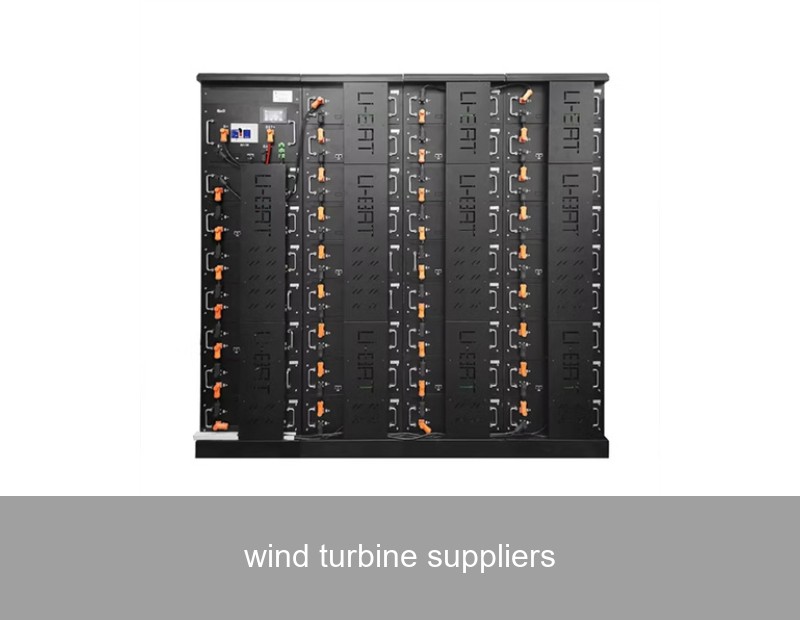
As the global push for decarbonization accelerates, wind energy has emerged as a cornerstone of the clean energy transition. However, the intermittent nature of wind—its tendency to blow strongest when demand might be low—presents a significant challenge. This is where the choice of your wind turbine suppliers becomes more than just a procurement decision; it's a strategic move towards energy resilience. The most forward-thinking projects now consider not just the turbine itself, but the entire ecosystem, including the critical partner that ensures its power is available on demand: the advanced energy storage provider.
Table of Contents
- The Grid Stability Phenomenon
- The Data: A Curtailment Crisis
- Case Study: A German Wind Farm's Solution
- Beyond the Turbine: The Integrated System Approach
- Key Considerations for Wind Turbine Suppliers and Developers
- The Highjoule Advantage: Intelligent Storage for Wind Integration
- Future Horizons for Wind Energy
The Grid Stability Phenomenon
Imagine a particularly windy night. Turbines are spinning at full capacity, generating vast amounts of clean electricity. But what if the regional demand is at its lowest? Traditionally, grid operators have few tools to manage this surplus, often leading to a phenomenon called "curtailment"—where wind farms are paid to switch off. This isn't just wasted energy; it's wasted investment and a slowed return on your project. The problem shifts dramatically during peak demand periods on calmer days, where the grid scrambles to meet needs, often firing up fossil-fuel-powered "peaker" plants. This volatility underscores a critical truth: a turbine is only as valuable as the controllability of its output.
The Data: A Curtailment Crisis
The scale of this issue is backed by hard numbers. In the United States, the Department of Energy reports that curtailment rates in some high-wind penetration regions like Texas (ERCOT) have historically exceeded 10% during peak generation periods. In Europe, a 2022 study by Ember Climate highlighted that grid constraints led to significant clean energy waste. This data paints a clear picture: without a solution for flexibility, the full potential of wind energy remains locked.

Source: Unsplash - Wind farms require smart integration to maximize their grid value.
Case Study: A German Wind Farm's Solution
Let's look at a real-world example from Schleswig-Holstein, Germany, a region with one of the highest densities of wind turbines in Europe. A 50 MW onshore wind farm operator was facing increasing curtailment directives and volatile market prices, eroding project revenues.
Their solution wasn't to change their wind turbine suppliers, but to integrate a 20 MWh battery energy storage system (BESS) directly at the point of interconnection. Here's what happened:
- Revenue Stacking: The BESS stores excess wind power during high-generation, low-price periods.
- Market Participation: It then discharges during evening peaks or when prices are high, participating in the day-ahead and intraday markets.
- Grid Services: The system also provides frequency regulation services (FCR/aFRR) to the grid operator, creating an additional income stream.
The Result? Within the first 18 months of operation, the project increased its overall revenue capture by over 22%, while significantly reducing curtailment events. The battery system paid for itself in under 7 years, transforming a constrained asset into a flexible, multi-revenue power plant. This case exemplifies the modern paradigm: the most successful renewable projects are those built as integrated power systems.
Beyond the Turbine: The Integrated System Approach
This leads us to a vital insight for developers and EPCs. When evaluating wind turbine suppliers, the conversation must evolve. It's no longer just about turbine efficiency, tower height, and maintenance contracts. The new criteria for partnership should include:
| Traditional Focus | Modern, Integrated Focus |
|---|---|
| Turbine Power Rating (MW) | System Power Profile & Forecast Integration |
| Availability Guarantee | Grid Service Capability & Market Access Support |
| Technical Specifications | Open-Platform Compatibility with Storage & Controls |
| Capital Cost per MW | Levelized Cost of Energy (LCOE) & Total Lifetime Value |
The most progressive turbine manufacturers are now forming strategic alliances with storage technology leaders to offer bundled or easily integrable solutions. This holistic view is what separates a mere energy generator from a reliable, grid-supportive asset.
Key Considerations for Wind Turbine Suppliers and Developers
So, what should you discuss with potential wind turbine suppliers to future-proof your investment?
- Grid Code Compliance & Future-Proofing: Do their turbines have advanced grid-forming capabilities that work seamlessly with storage to support grid stability, especially in weak grids?
- Data & Control Architecture: Can their SCADA system and power plant controller easily integrate with a third-party BESS for unified, optimized dispatch?
- Hybrid Project Design Support: Do they offer engineering support or partnerships for co-locating storage from the initial design phase, optimizing cable routes, grid connection, and footprint?

Source: Unsplash - Centralized control is key for hybrid wind-storage plants.
The Highjoule Advantage: Intelligent Storage for Wind Integration
This is precisely where Highjoule's expertise becomes a game-changer. Since 2005, we have specialized in providing the intelligent glue that binds renewable generation to reliable grid supply. For wind farm developers and operators partnering with leading wind turbine suppliers, our solutions close the loop on energy certainty.
Our H-Series Commercial & Industrial Battery Energy Storage Systems are engineered for the rigorous demands of wind integration. Featuring industry-leading cycle life, superior round-trip efficiency, and built-in advanced energy management software (EMS), they transform wind power from an intermittent resource into a dispatchable one. Our EMS uses sophisticated algorithms to forecast wind generation, analyze market prices in real-time, and automatically decide the most profitable action: store, sell, or provide grid services.
For larger wind farms or microgrid applications, our Containerized Megawatt-scale Solutions offer a plug-and-play approach. Pre-assembled and tested, they reduce on-site installation time and complexity. Highjoule doesn't just sell hardware; we provide a full suite of services including feasibility studies, system design, grid compliance support, and long-term performance monitoring. Think of us as the essential partner that ensures the power your turbines produce delivers maximum value, 24/7.
Future Horizons for Wind Energy
The future of wind energy is undeniably hybrid. As grid demands grow more complex, the synergy between sophisticated turbines and intelligent storage will define the success of renewable projects. The question is no longer *if* storage is needed, but *when* and *how* to integrate it optimally.
Are you currently in discussions with wind turbine suppliers for a new project, or looking to enhance the profitability and grid contribution of an existing wind farm? What specific grid challenge or market opportunity is driving your consideration for a more resilient energy strategy?
 Inquiry
 Online Chat