


Choosing the Right IP54 Supplier for Reliable Outdoor Battery Energy Storage
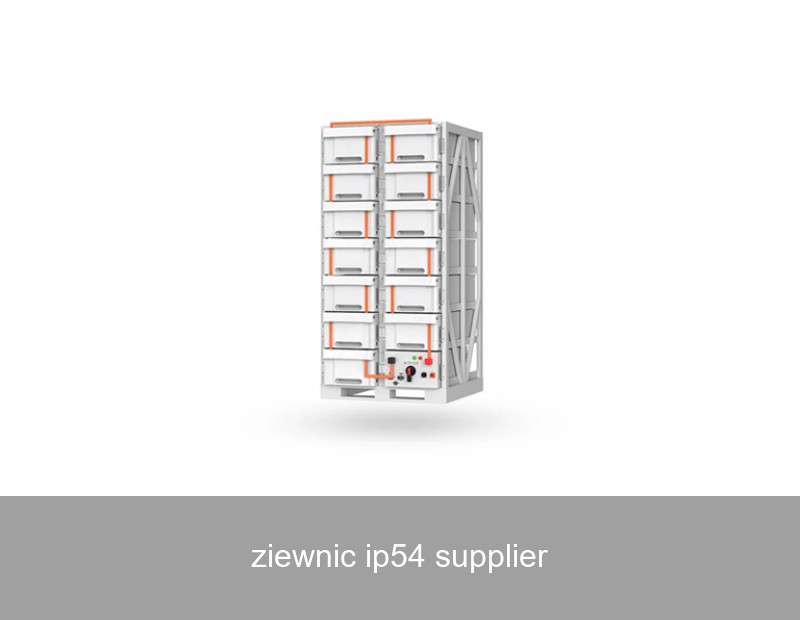
You've decided to take control of your energy costs and resilience with a battery storage system. The plan is to install it outside to save valuable indoor space—a smart move. As you research, one specification keeps popping up: IP54. Suppliers proudly list it, but what does it truly guarantee for a critical asset like your battery? Is every "IP54 supplier" offering the same level of protection? The truth is, the IP rating is just the starting point. Choosing a partner who deeply understands the engineering behind the enclosure and the real-world stresses on a battery system is what separates a reliable investment from a potential liability.
What Does IP54 Rating Actually Mean?
Let's demystify the code. IP stands for "Ingress Protection" (or sometimes "International Protection"). It's a globally recognized standard (defined by the International Electrotechnical Commission) that classifies the degree of protection provided by an enclosure against solids and liquids.
The two digits are key:
- First Digit (5 - Solids): This means the unit is "dust protected." It's not fully dust-tight (that would be a 6), but dust ingress is limited enough not to interfere with the safe operation of the equipment. For most outdoor environments, this is perfectly sufficient.
- Second Digit (4 - Liquids): This is where careful attention is needed. A "4" rating means protection against water splashed from any direction. It's tested with a oscillating spray or a nozzle for a minimum of 10 minutes. This covers rain, sleet, and typical weather exposure.
However—and this is crucial—IP54 does not mean waterproof against jets of water (IP65) or immersion (IP67/68). Placement matters; an IP54 unit shouldn't be installed where it could face direct, high-pressure washing or be in a flood-prone area.

Image Source: Unsplash (Representative image of outdoor electrical equipment)
Why IP54 is a Game-Changer for Battery Storage Deployment
The move towards IP54-rated battery energy storage systems (BESS) isn't just a technical detail; it's a strategic enabler. Here’s why this specification is transforming installations across Europe and North America:
- Space Liberation: It frees up expensive indoor floor space for core business activities, turning underutilized exterior walls or concrete pads into productive assets.
- Installation Flexibility & Speed: Outdoor-rated systems often arrive as pre-assembled, containerized, or wall-mounted solutions. This significantly reduces on-site construction complexity and commissioning time.
- Enhanced Safety: For some businesses, installing a large battery system in a separate outdoor location addresses ventilation and safety perceptions, aligning with local fire codes and risk management plans.
- Scalability: Need to expand your storage capacity? Adding another outdoor unit is often simpler than retrofitting indoor electrical rooms.
Beyond the Label: How to Choose a True IP54 Supplier
When evaluating an IP54 supplier, looking beyond the marketing datasheet is essential. A reputable provider will be transparent about the holistic design that makes the rating meaningful for a 15+ year asset.
| Consideration | Basic Supplier | Expert Supplier (like Highjoule) |
|---|---|---|
| Thermal Management | May rely on passive ventilation, risking internal condensation and cell temperature imbalance. | Integrates an active, sealed thermal management system (heating & cooling) independent of the IP54 enclosure to maintain optimal cell temperature year-round. |
| Material & Corrosion | Standard painted steel; may corrode in coastal or industrial atmospheres over time. | Uses powder-coated, galvanized, or aluminum alloys specifically chosen for corrosion resistance in the target environment. |
| Sealing Integrity Over Time | Gaskets and seals may degrade quickly under UV exposure and thermal cycling. | Employs automotive-grade or UV-stable seals designed to maintain elasticity and performance across a wide temperature range for decades. |
| Internal Protection | Focuses solely on the external enclosure. | Designs internal layouts and components to be robust against humidity and temperature variations that may still occur over the system's lifetime. |
Real-World Proof: A German Logistics Center Case Study
Let's look at a concrete example. A major logistics hub in Bremen, Germany, wanted to reduce its grid dependency and leverage its large solar PV canopy. The challenge: no indoor space was available for a battery. They needed a solution that could withstand North Germany's cold, damp winters and mild, rainy summers—all while delivering reliable daily cycling.
They partnered with a true IP54 supplier (Highjoule) to deploy a 250 kWh / 275 kVa outdoor battery system. The system was installed on a concrete plinth adjacent to the main warehouse.
- Data Point - Uptime: Over 24 months of operation, the system has maintained 99.7% availability, seamlessly shifting between solar storage, peak shaving, and backup power functions.
- Data Point - Performance: Even during a notably cold snap where temperatures dropped to -15°C, the integrated thermal management system kept the battery cells within their optimal 15-25°C operating range, with no loss in capacity or round-trip efficiency, which remained above 94%.
- Outcome: The logistics center now covers over 40% of its nighttime operations with stored solar energy and has successfully eliminated costly peak demand charges. The IP54-rated exterior has required zero maintenance beyond routine visual inspections.

Image Source: Unsplash (Representative image of a logistics warehouse with solar)
The Highjoule Approach: Engineered for Real-World Resilience
At Highjoule, our philosophy is that an outdoor battery system must be more than just a collection of cells in a rated box. Since 2005, we've engineered our Outdoor Resilient Series (ORS) battery storage solutions from the ground up for lifetime performance in harsh environments. When you choose Highjoule as your IP54 supplier, you're investing in a system where every component is selected for synergy:
- Proactive Climate Control: Our IP54 enclosures house a patented, low-energy climate system that manages humidity and temperature independently of the outside air, preventing condensation—the silent killer of electronics.
- Corrosion-Resistant Architecture: We use marine-grade aluminum for our enclosures in coastal regions, ensuring longevity even in salt-laden air.
- Grid-Forming Intelligence: Beyond physical protection, our systems come with advanced, self-monitoring software that can predict maintenance needs and autonomously manage energy flows, providing value that far exceeds simple storage. This intelligence is crucial for commercial, industrial, and microgrid applications seeking true energy independence.
Our role as a global IP54 supplier is to provide a complete, intelligent, and sustainable power solution that you can install and forget, with the confidence it will perform for decades.
The Future of Outdoor Storage: Beyond IP54
The industry continues to evolve. We are now seeing demand for even higher ingress protection (like IP55 or IP65) for specific applications, as well as a stronger focus on the system's ability to withstand extreme thermal events—a concept sometimes called "IP54+". Furthermore, standards like UL 9540 for overall system safety are becoming paramount. The leading IP54 suppliers are those investing in these comprehensive safety and performance certifications, not just enclosure ratings.
So, as you evaluate your options for an outdoor battery storage system, what specific environmental challenge at your site—be it driving rain, salt spray, dust storms, or extreme temperature swings—will be the ultimate test for your chosen supplier's IP54 claim?
 Inquiry
 Online Chat