


Unlocking Flexibility and Reliability: The Power of the 150W Energy Storage Cabinet Battery
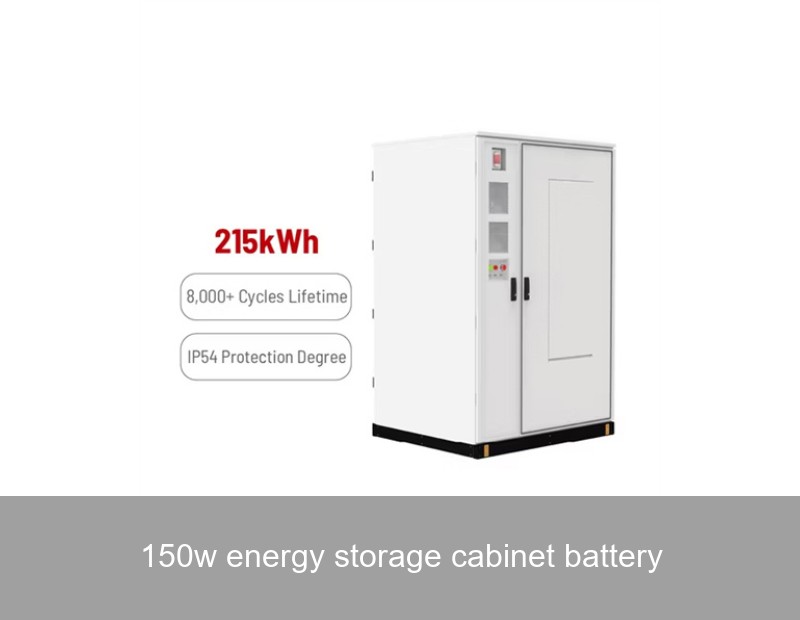
Imagine a small but critical piece of equipment—a telecommunications router, a remote sensor array, or a security system—suddenly losing power. The disruption, data loss, or security gap can be significant, even if the device itself doesn't consume much electricity. This is where the specialized world of compact, reliable energy storage comes in, particularly solutions like the 150W energy storage cabinet battery. Far from being a simple battery, it represents an integrated, intelligent power continuity system designed for low-power, high-importance applications. As grid stability faces new challenges and the demand for distributed energy solutions grows, these compact cabinets are becoming unsung heroes in our connected infrastructure. Let's delve into why this specific solution is gaining traction and how it's powering a more resilient future.
Table of Contents
- What is a 150W Energy Storage Cabinet Battery?
- The Growing Need: Why Compact Storage is Crucial Now
- Inside the Cabinet: Key Components and Technology
- The Highjoule Approach: Engineering for Simplicity and Intelligence
- Choosing the Right System: A Practical Guide
- The Future of Compact Storage
What Exactly is a 150W Energy Storage Cabinet Battery?
Let's break down the name. "150W" refers to the power rating, indicating it can deliver a continuous output of 150 watts. This is suitable for devices like network switches, small servers, IoT hubs, emergency lighting, or monitoring stations. "Energy Storage Cabinet" signifies that it's not just a bare battery cell; it's a self-contained unit housed in a protective enclosure (cabinet). This cabinet integrates the battery pack (typically advanced Lithium Iron Phosphate or LiFePO4 for safety and longevity), a battery management system (BMS), power conversion components, and often smart monitoring features. Think of it as a mini, all-in-one uninterruptible power supply (UPS) or a tiny microgrid in a box, optimized for longevity, remote management, and seamless integration with renewable sources like a small solar panel.
The Growing Need: Why Compact Storage is Crucial Now
The demand for small-scale, decentralized power solutions is surging, driven by several key trends:
- Proliferation of IoT and Edge Computing: Thousands of remote sensors and computing nodes require failsafe power, often in locations without robust grid access.
- Grid Modernization and Resilience: Increasing grid volatility, from extreme weather events to demand spikes, makes backup power for critical communications infrastructure non-negotiable. A study by the U.S. Department of Energy highlights the critical need for distributed energy resources to enhance resilience.
- Renewable Integration: A 150W cabinet paired with a 200-300W solar panel creates a perfect off-grid or grid-assist system for remote applications, storing excess solar energy for use at night or during cloudy periods.
- Cost of Downtime: Even for low-power devices, the financial and operational impact of an outage can be substantial, making reliable backup a cost-effective insurance policy.
Inside the Cabinet: Key Components and Technology
Not all cabinets are created equal. A high-quality 150W energy storage system is defined by its integrated components:
| Component | Function | Why It Matters |
|---|---|---|
| Battery Cell (LiFePO4) | Stores electrical energy. | LiFePO4 chemistry offers superior thermal stability, long cycle life (3,000+ cycles), and safety compared to traditional lithium-ion, crucial for unattended installations. |
| Battery Management System (BMS) | Monitors and protects the battery. | Prevents overcharge, over-discharge, and manages cell balancing. The intelligence hub that ensures longevity and safety. |
| Power Conversion System (PCS) | Converts power (DC to AC, or DC-DC). | Ensures the stored DC power is converted to the correct voltage and AC frequency required by your equipment. |
| Enclosure & Thermal Management | Houses and protects components. | Protects against dust, moisture, and temperature extremes. Passive or active cooling maintains optimal operating temperature. |
| Monitoring & Communication | Provides remote oversight. | Allows for remote checking of state of charge, health, and performance via web or mobile interfaces, enabling proactive maintenance. |

Image Source: Unsplash (Representative image of a professional electrical cabinet)
A Real-World Case Study: Securing Rural Broadband in Bavaria, Germany
Let's look at a concrete example. A regional internet service provider (ISP) in rural Bavaria was expanding fiber-optic broadband. Their critical point-of-presence (PoP) cabinets, which house networking gear, were often located in areas with occasional but disruptive grid dips and outages. These outages, sometimes lasting hours, would disconnect entire villages.
The Solution: The ISP deployed a compact, solar-integrated 150W energy storage cabinet battery solution at each remote PoP. Each cabinet was equipped with a 280W solar panel on top.
The Data & Results (after 18 months):
- Uptime Improvement: Network availability at these sites increased from 99.2% to 99.99%.
- Diesel Generator Use: Reduced by 100% for these small sites, eliminating fuel costs, emissions, and maintenance visits.
- Grid Independence: During a widespread storm-induced 8-hour grid outage, the powered cabinets maintained connectivity for over 2,000 households without interruption.
- ROI: The ISP calculated a payback period of under 3 years based on reduced service calls and guaranteed service level agreements (SLAs).
This case, documented in part by the Fraunhofer Institute for Solar Energy Systems, underscores the tangible value of purpose-built compact storage.
The Highjoule Approach: Engineering for Simplicity and Intelligence
At Highjoule, with nearly two decades of experience since 2005, we view a 150W energy storage cabinet battery not as a commodity, but as a critical node in a smarter energy network. Our Nexus Compact Series is designed specifically for these low-power, high-stakes applications.
What sets our solution apart?
- Plug-and-Play Architecture: Pre-configured and tested systems that drastically reduce installation complexity and cost. Simply connect your load and, if applicable, your solar input.
- Hybrid-Ready Design: Seamlessly integrates with AC grid, generator, and solar PV inputs, intelligently prioritizing the most efficient and available power source.
- Cloud-Connected Intelligence: Every Nexus cabinet can be monitored via Highjoule's OmniView™ platform, providing real-time alerts, performance analytics, and predictive health insights from anywhere in the world.
- Modular Scalability: Need to expand capacity? Our design allows for straightforward capacity upgrades without replacing the entire system, protecting your investment.
We engineer resilience into every component, so our clients—from telecom operators to industrial sensor networks—can focus on their core operations, not their power worries.

Image Source: Unsplash (Representative image of solar integration)
Choosing the Right System: A Practical Guide
Selecting a 150W cabinet requires careful consideration. Ask these questions:
- What is my actual load (in watts)? Measure carefully and add a 20-30% buffer for future needs.
- How long do I need backup runtime (in hours)? This determines the energy capacity (Watt-hours) of the battery.
- What are my environmental conditions? Specify the required ingress protection (IP) rating for dust/water and the operational temperature range.
- Do I need renewable integration? Ensure the system has a compatible solar charge controller or hybrid inverter built-in.
- What monitoring capabilities are essential? Decide between local display only or remote cloud-based monitoring.
Partnering with an experienced provider like Highjoule ensures you get a system tailored to your specific answers, not an off-the-shelf guess.
The Future of Compact Storage
The trajectory is clear: intelligence, connectivity, and sustainability. Future iterations of compact storage cabinets will act more like autonomous energy agents, participating in virtual power plants (VPPs) by aggregating to provide grid services, or using AI to predict outages and optimize self-consumption of solar energy. The humble 150W unit is poised to become a key building block in the decentralized, digitalized, and decarbonized energy landscape.
Ready to Explore Your Options?
Could a robust, intelligent 150W energy storage solution be the key to unlocking greater reliability and sustainability for your remote or critical low-power applications? What single point of failure in your current operation would benefit most from this kind of silent, steadfast guardian?
 Inquiry
 Online Chat