


Unlocking Grid Resilience: The Critical Role of Solar Energy Transmission and Distribution
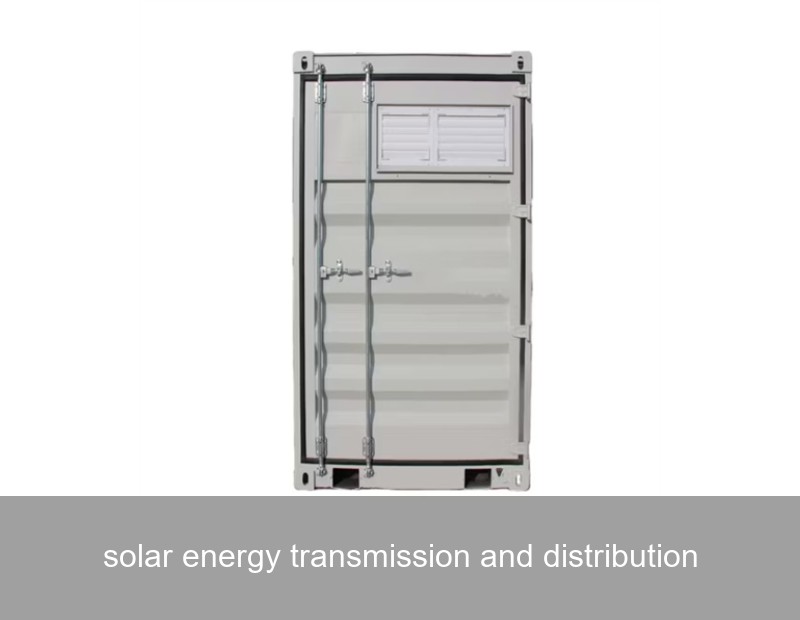
Imagine a vast solar farm, its panels glistening under the midday sun, generating enough clean power for thousands of homes. Now, imagine that power struggling to reach those homes efficiently. This isn't a hypothetical scenario; it's a central challenge in our clean energy transition. The journey of solar energy transmission and distribution—the critical arteries that carry electricity from generation points to end-users—is becoming the defining bottleneck for a sustainable future. As we integrate more variable renewable sources, our aging grid infrastructure faces unprecedented stress. This article explores the complexities of moving solar power, the innovative solutions emerging, and how advanced energy storage is the key to a stable, modern grid.
Table of Contents
- The Grid Bottleneck: When the Sun Shines but Power Doesn't Flow
- The Data Reality: Congestion, Curtailment, and Cost
- Case Study: California's Duck Curve and the Storage Solution
- Modernizing the Flow: Technological and Strategic Solutions
- Highjoule's Role: Intelligent Storage for Grid Stability
- The Future Grid: A Question of Intelligence and Investment
The Grid Bottleneck: When the Sun Shines but Power Doesn't Flow
Our electrical grids, particularly in Europe and the United States, were engineered for a different era. They were designed for centralized, predictable power plants (like coal or nuclear) sending electricity one-way to consumers. Solar power turns this model on its head. It's decentralized, variable, and often generated in remote areas or directly on rooftops. The existing solar energy transmission and distribution networks simply weren't built for this bidirectional, fluctuating flow. The result? Grid congestion, where power lines reach their capacity, and utilities are forced to "curtail" or waste perfectly good solar energy because it can't be transported or absorbed. It's like having a superhighway that suddenly narrows to a single lane during rush hour.
The Data Reality: Congestion, Curtailment, and Cost
The numbers paint a stark picture. In California, the CAISO grid saw over 2.4 million megawatt-hours of renewable energy curtailed in 2022 alone—enough to power nearly 250,000 homes for a year [Source: CAISO]. In Germany, grid congestion management costs exceeded €1.4 billion in 2021, largely due to the need to redispatch power when northern wind and solar can't be transmitted south [Source: Bundesnetzagentur]. These aren't just operational headaches; they represent massive economic waste and a direct slowdown in decarbonization efforts. The core issue is temporal and spatial mismatch: solar generation peaks at midday, while demand often peaks in the early evening. The sunniest locations aren't always near population centers.

Image Source: Unsplash (Photographer: American Public Power Association)
Case Study: California's Duck Curve and the Storage Solution
Perhaps the most famous illustration of the solar integration challenge is California's "Duck Curve." This graph, charted by CAISO, shows the deep dip in net electricity demand during sunny afternoons (when solar floods the grid) followed by a steep, rapid ramp-up in demand as the sun sets. This "neck of the duck" requires fossil-fuel "peaker" plants to spin up quickly, which is inefficient, costly, and carbon-intensive.
So, what's the fix? California is aggressively deploying battery energy storage systems (BESS) to flatten the duck. By storing excess midday solar and discharging it during the evening ramp, BESS acts as a shock absorber for the grid. A landmark project, like the 300 MW / 1,200 MWh Moss Landing energy storage facility, exemplifies this. It doesn't just store power; it provides critical grid services like frequency regulation, helping to maintain the precise balance of the solar energy transmission and distribution system. The results are tangible: in 2023, batteries supplied over 5,000 MW to the CAISO grid during peak evening hours, directly offsetting natural gas use and mitigating curtailment.
How Battery Storage Transforms the Duck Curve:
| Time of Day | Grid Challenge Without Storage | Solution With Battery Storage |
|---|---|---|
| Midday (Solar Peak) | Potential over-generation, voltage issues, curtailment. | Batteries CHARGE, absorbing excess solar, stabilizing the grid. |
| Evening (Demand Ramp) | Steep, fast demand increase requiring fossil "peaker" plants. | Batteries DISCHARGE, providing clean power, reducing peaker plant reliance. |
| Overnight | Lower solar output, base load demand. | Batteries can provide ancillary services (frequency regulation) 24/7. |
Modernizing the Flow: Technological and Strategic Solutions
Beyond large-scale storage, modernizing solar energy transmission and distribution requires a multi-pronged approach:
- Grid-Scale Battery Energy Storage Systems (BESS): As seen in California, these are the cornerstone for time-shifting solar energy and providing grid stability.
- Advanced Inverters: Modern solar and storage inverters can provide "grid-forming" capabilities, helping to maintain voltage and frequency, essentially acting as anchors for the grid.
- Demand Response & Smart Grids: Intelligently managing when non-essential loads (like EV charging or water heating) operate can align demand with solar supply.
- Transmission Line Upgrades & HVDC: Building new lines and using High-Voltage Direct Current technology for long-distance, efficient power transfer from remote solar resources.
- Distributed Energy Resources (DERs): Rooftop solar paired with home batteries creates virtual power plants, reducing strain on distribution networks.
Highjoule's Role: Intelligent Storage for Grid Stability
This is where Highjoule's expertise becomes pivotal. Since 2005, we've been at the forefront of designing intelligent storage solutions that directly address the pain points of solar energy transmission and distribution. Our systems are engineered to do more than just store energy.

Image Source: Unsplash (Photographer: American Public Power Association)
For utility and large-scale commercial clients, our GridMax BESS platform is a powerhouse for grid services. It's designed for:
- Renewable Integration & Curtailment Mitigation: Capturing excess solar at the point of generation or on the grid edge, preventing waste.
- Peak Shaving & Capacity Deferral: Reducing demand charges for businesses and delaying the need for costly grid infrastructure upgrades by discharging during peak periods.
- Frequency Regulation: Responding in milliseconds to grid fluctuations, a service critical as solar penetration increases.
For commercial and industrial (C&I) sites, our EnerLogic IQ series integrates seamlessly with onsite solar. Our proprietary energy management system (EMS) doesn't just react—it forecasts solar production and energy consumption, optimizing charge/discharge cycles to maximize self-consumption, reduce demand charges, and even participate in grid service programs. For microgrids and remote communities, Highjoule provides turnkey, resilient power systems that combine solar, storage, and advanced controls to create self-sufficient energy hubs, reducing dependence on long, vulnerable transmission lines.
The Future Grid: A Question of Intelligence and Investment
The path forward is clear. The future of solar energy transmission and distribution is not just about bigger wires; it's about a smarter, more flexible, and decentralized network. It's a grid where millions of solar panels and storage units communicate and collaborate to balance supply and demand in real-time. The technology exists today. The question is one of scale, investment, and regulatory will. Are we ready to build the intelligent grid backbone that our solar-powered future demands? What role could your business or community play in this decentralized energy landscape?
We invite you to explore how intelligent storage can be the linchpin for your solar and grid strategy. What is the single biggest challenge you face in managing or integrating solar power into your operations?
 Inquiry
 Online Chat