


Unlocking Energy Independence: A Deep Dive into the Sako 2.5 kWh Lithium Battery
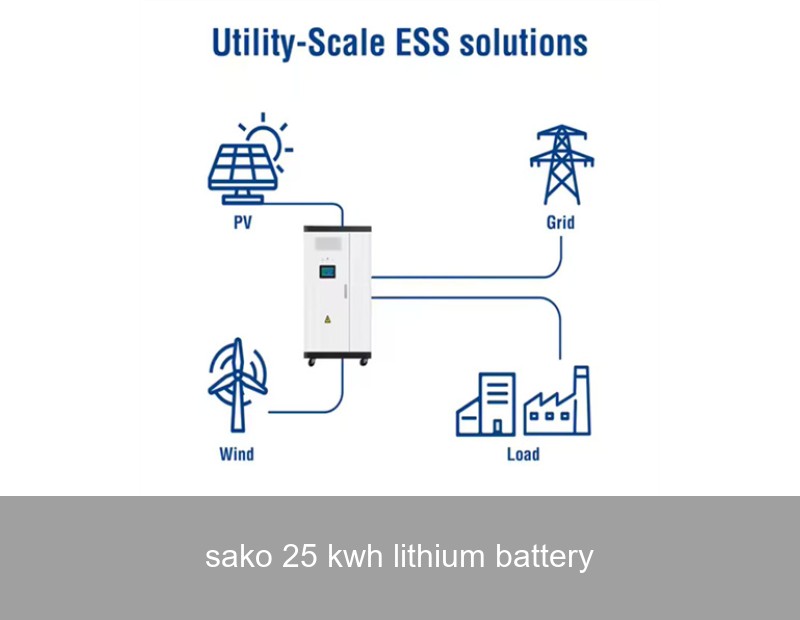
Have you ever watched your electricity meter spin and wondered, "There has to be a better way"? For homeowners and businesses across Europe and the US, rising energy costs and an increasing desire for sustainability aren't just trends—they're pressing realities. The quest for reliable, clean power is leading many to a powerful solution: the compact and capable Sako 2.5 kWh lithium battery. This modular energy storage unit is more than just a battery; it's a cornerstone for modern energy management. In this article, we'll explore why this specific capacity is becoming a game-changer, how it integrates into broader systems, and what you should consider for your own energy independence journey.
Table of Contents
- The Rise of Modular Storage: Why 2.5 kWh?
- The Lithium Advantage: More Than Just Long Life
- From Specification to Solution: Real-World Application
- Case Study: Peak Shaving in a German Bakery
- Thinking Beyond the Battery: The System is Key
- The Highjoule Approach: Intelligent Energy Orchestration
- Making the Choice: Is a 2.5 kWh Module Right for You?
The Rise of Modular Storage: Why 2.5 kWh?
The energy landscape is shifting from centralized, one-way power flows to decentralized, intelligent networks. At the heart of this shift are modular lithium-ion batteries like the Sako 2.5 kWh unit. But why this specific size? Think of it as the building block of a custom energy solution. A 2.5 kWh module is substantial enough to power essential home loads (like refrigeration, lighting, and internet) for several hours during an outage, yet it's also scalable. Need more capacity? You simply add more modules in parallel. This flexibility is crucial, as energy needs vary dramatically from a small apartment to a large family home or a commercial facility. It allows for a "start small and expand" approach, making energy storage accessible and financially manageable.

Image: Modular battery systems offer flexible, scalable energy storage. (Source: Unsplash)
The Lithium Advantage: More Than Just Long Life
When we talk about the Sako 2.5 kWh lithium battery, the chemistry is key. Compared to older lead-acid technology, lithium-ion (specifically Lithium Iron Phosphate or LFP, a common and very safe chemistry) offers distinct benefits:
- Higher Depth of Discharge (DoD): You can safely use 90% or more of the battery's capacity without damaging it, whereas lead-acid often restricts you to 50%.
- Longer Cycle Life: A quality LFP battery can deliver 6,000+ charge/discharge cycles while retaining most of its capacity. That translates to well over 15 years of daily use.
- Higher Efficiency: Lithium systems boast round-trip efficiency of 95% or more, meaning you lose very little energy when storing and using it.
- Compact Size & Weight: They offer a much higher energy density, so a 2.5 kWh lithium battery is significantly smaller and lighter than a lead-acid battery of equivalent usable capacity.
This combination of longevity, efficiency, and usability is what makes lithium the undisputed choice for modern stationary storage. For more detailed comparisons on battery chemistries, resources like the U.S. Department of Energy provide excellent, authoritative overviews.
From Specification to Solution: Real-World Application
So, what can you actually do with a 2.5 kWh battery module? Its applications are versatile:
- Residential Solar Self-Consumption: Store excess solar energy generated during the day to use at night, drastically increasing your solar power's value.
- Backup Power: Provide critical backup for essential circuits during grid outages.
- Peak Shaving (Commercial): For businesses, discharging the battery during periods of high, expensive grid demand can slash utility demand charges.
- Microgrid Components: Multiple modules can form the storage backbone of a community or industrial microgrid.
Case Study: Peak Shaving in a German Bakery
Let's look at a concrete example from our target market. A family-run bakery in Bavaria, Germany, faced steep "leistungspreis" (demand charge) fees on its electricity bill. Their ovens, mixers, and cooling systems would all start simultaneously in the early morning, creating a sharp, costly peak in power draw from the grid.
The Solution: Highjoule engineers designed a system using eight Sako 2.5 kWh lithium battery modules, creating a 20 kWh storage bank, coupled with a smart inverter. The system was programmed to predict the bakery's daily operation and discharge the battery during the known peak usage window (5 AM - 8 AM), supplementing grid power.
The Data & Outcome: Within the first quarter of operation, the bakery's measured peak demand was reduced by 40%. This translated to an annual savings of approximately €2,300 on demand charges alone. Furthermore, the system stored excess solar energy from the bakery's small rooftop array, further reducing energy costs. The investment payback period was calculated at under 5 years, and the system provided the added benefit of short-term backup power for refrigeration. This case illustrates how a modular, scalable battery solution can directly address a specific financial pain point with clear, quantifiable results.
Thinking Beyond the Battery: The System is Key
A common mistake is to focus solely on the battery specs. The Sako 2.5 kWh lithium battery is a high-quality component, but its performance is maximized only within a well-designed system. The brain of the operation is the inverter and the energy management system (EMS). A sophisticated EMS, like the one integrated into Highjoule's solutions, doesn't just react—it learns and forecasts. It considers weather predictions for solar production, your historical consumption patterns, and even real-time utility rate signals (where available) to make intelligent decisions on when to charge, when to discharge, and when to simply pass grid power through.
| Component | Role | Why It Matters |
|---|---|---|
| Battery Modules (e.g., Sako 2.5 kWh) | Energy Storage | Raw capacity, cycle life, safety. The "fuel tank." |
| Hybrid Inverter | Power Conversion & Management | Converts DC (battery/solar) to AC (home). The "engine." |
| Energy Management System (EMS) | Intelligent Control | Optimizes for cost, efficiency, or backup. The "brain." |
| System Integration & Design | Architecture & Safety | Ensures all components work seamlessly and safely together. |

Image: A complete home energy system includes storage, inverter, and intelligent monitoring. (Source: Unsplash)
The Highjoule Approach: Intelligent Energy Orchestration
At Highjoule, our expertise goes beyond supplying hardware. Since 2005, we've evolved into a provider of complete, intelligent power solutions. We understand that a successful installation is about matching technology to a client's unique energy profile and goals. Our product suites, which can incorporate scalable modules like the Sako 2.5 kWh lithium battery, are built around our proprietary energy orchestration platform.
This platform allows residential and commercial users to set preferences—"maximize self-consumption," "minimize cost," or "ensure full backup"—and then autonomously manages the system to that end. For our commercial and microgrid clients, this can involve sophisticated grid-interactive functions. Our systems are designed to UL and IEC standards, ensuring safety and reliability for markets in North America and Europe. We partner with installers to provide not just products, but the design support, training, and long-term performance monitoring that turns a battery investment into a lasting energy asset.
Making the Choice: Is a 2.5 kWh Module Right for You?
Choosing an energy storage system is a significant decision. Start by asking the right questions: What are your primary goals? Is it backup for storms, which are increasing in frequency in places like California or the Midwest US (NOAA reports a rising trend)? Or is it purely economic, to capture solar or avoid peak rates? Next, analyze your electricity bill to understand your consumption patterns and rate structure. Finally, consult with a qualified professional who can model different scenarios.
A modular system based on units like the Sako 2.5 kWh lithium battery offers a future-proof path. You can start with what you need today and add capacity as your needs evolve—whether that's buying an electric vehicle, adding a heat pump, or expanding a business.
As you contemplate taking more control of your energy future, what single question about energy storage has been the biggest barrier to your decision-making process?
 Inquiry
 Online Chat