


The Ultimate Guide to a 10kW Solar Battery Off-Grid System
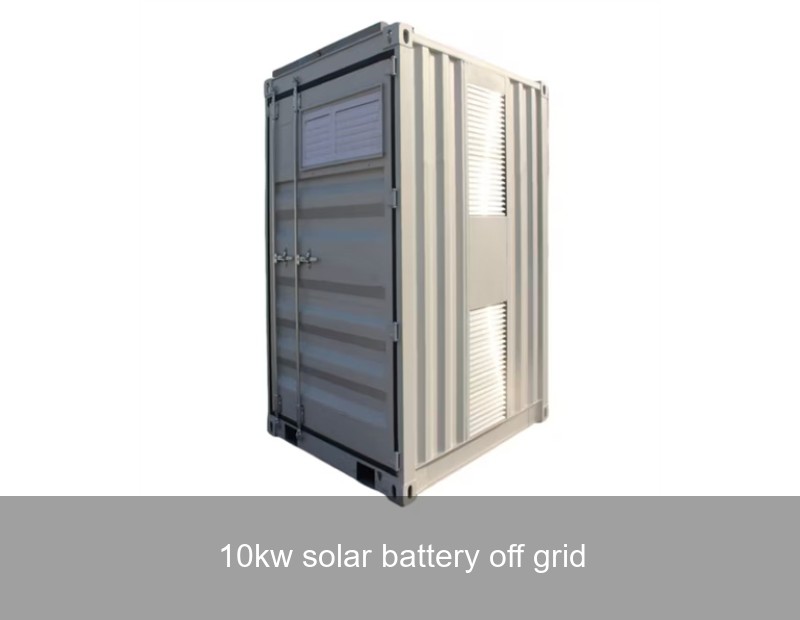
Imagine a life where your power is truly your own—unaffected by grid outages, rising electricity rates, and fossil fuel dependency. For homeowners and small business owners across Europe and the US, this vision is increasingly powered by a specific, powerful solution: the 10kW solar battery off-grid system. This setup represents a sweet spot for complete energy independence, capable of running a typical household or small enterprise. But what does it really take to go off-grid, and is a 10kW battery the magic key? Let's dive into the realities, the data, and the smart technology that makes true energy freedom possible today.
Table of Contents
- The Phenomenon: Why Off-Grid is No Longer a Niche Dream
- Breaking Down the 10kW Off-Grid Powerhouse
- The Real-World Test: A Case Study from California
- Beyond the Battery: The Intelligent Heart of Modern Off-Grid Systems
- How Highjoule Powers Reliable Off-Grid Independence
- Key Considerations Before You Go Off-Grid
The Phenomenon: Why Off-Grid is No Longer a Niche Dream
The trend is clear. Driven by energy security concerns, a desire for sustainability, and the decreasing cost of solar technology, more people are exploring a complete disconnect from the utility grid. According to the International Energy Agency (IEA), global solar PV capacity is set to dominate electricity growth, with decentralized systems playing a huge role. In the US, markets like California and Texas see frequent grid instability, pushing residents to seek backup and off-grid solutions. In rural Europe, where grid connection fees can be exorbitant, off-grid solar with battery storage often proves more economical from the start.
This isn't about roughing it. A modern off-grid home expects to run all the comforts: refrigeration, lighting, computers, well pumps, and even HVAC systems. That's where sizing your system correctly becomes critical. Underestimate, and you face frustrating blackouts. Overestimate, and you waste significant capital. The 10kW battery capacity has emerged as a robust benchmark for achieving this modern comfort level off the grid.
Breaking Down the 10kW Off-Grid Powerhouse
Let's clarify the terminology. "10kW" in the context of a solar battery system can refer to two key metrics, and understanding both is vital.
- Battery Capacity (kWh): This is the "fuel tank" size. A 10 kWh battery can deliver 10 kilowatts of power for one hour, 5 kW for two hours, and so on. It defines your energy storage.
- Battery Power Rating (kW): This is the "engine" size. A battery with a 10 kW power rating can deliver a continuous 10,000 watts at any moment. This determines what appliances you can run simultaneously.
An ideal 10kW solar battery off-grid system balances both. It typically includes a battery bank with a usable capacity of 20-30 kWh (to cover nights and cloudy days) and an inverter capable of a continuous 10 kW or more output to handle peak loads. This is paired with a sufficiently large solar array—often 12-15 kWp—to recharge the batteries reliably.
| Appliance | Average Power (W) | Daily Use (Hours) | Daily Energy (kWh) |
|---|---|---|---|
| Refrigerator | 150 | 24 | 3.6 |
| LED Lighting | 100 | 5 | 0.5 |
| Water Pump | 800 | 2 | 1.6 |
| Laptop & Router | 100 | 8 | 0.8 |
| Electric Stove (use) | 2000 | 1 | 2.0 |
| HVAC (Heat Pump) | 3000 | 4 | 12.0 |
| Total (Example Day) | -- | ~20.5 kWh | |
As the table shows, heating and cooling are the major energy consumers. A well-designed system must account for these peaks, which is where the 10kW power rating proves its worth, and sufficient battery capacity (like a 25 kWh bank) ensures you have the energy to last.
The Real-World Test: A Case Study from California
Let's look at a real example. A family in Sonoma County, California, decided to go off-grid after experiencing 12+ Public Safety Power Shutoffs (PSPS) in two years. Their goal: uninterrupted power for a 2,200 sq ft home with two adults working remotely.
- System Installed (2022): 14.4 kW solar array, a 28 kWh lithium iron phosphate (LFP) battery bank, and a 12 kW smart hybrid inverter.
- Outcome: In the first year, the system met 100% of their energy needs. During a 5-day winter storm with low solar insolation, the battery state of charge never dropped below 40%. Their critical data? The system's peak draw hit 8.7 kW (when the heat pump, water pump, and stove cycled simultaneously), comfortably within the inverter's 12 kW limit.
This case highlights that a properly sized system in the 10kW solar battery off-grid class isn't just theoretical; it's a proven, reliable solution for modern living. The key was not just the hardware but the intelligent energy management that prioritized loads and maximized solar self-consumption.

Image Source: Unsplash (Photographer: Andreas Gücklhorn)
Beyond the Battery: The Intelligent Heart of Modern Off-Grid Systems
The battery is the star, but the inverter and system controller are the brains. For a robust off-grid system, you need a hybrid inverter that seamlessly manages three power sources: solar panels, batteries, and sometimes a backup generator. It must perform rapid islanding (disconnecting from a non-existent grid) and regulate voltage and frequency to protect your appliances.
Advanced features like programmable load shedding are crucial. If the battery level drops too low, the system can automatically disconnect non-essential loads (like the hot tub) to preserve power for refrigeration and lighting. This intelligence is what separates a system that "works" from one that provides peace of mind.
How Highjoule Powers Reliable Off-Grid Independence
This is where Highjoule's expertise, honed since 2005, becomes pivotal. We understand that an off-grid system is more than a product—it's a mission-critical power plant. Our solutions are engineered for the demands of complete energy autonomy.
For the dedicated off-gridder, our Highjoule Fortis Series energy storage systems are a perfect fit. Built with durable, long-life LFP chemistry, they offer high cycle life and safe operation. When paired with our Atlas Hybrid Inverters, which feature a continuous 10kW+ output rating and sophisticated battery management, you get a fully integrated, intelligent power platform.
Our Energy Operating System (EOS) is the true differentiator. This software provides intuitive monitoring and control, allowing you to see your energy flow in real-time, set usage preferences, and receive maintenance alerts. For instance, EOS can be programmed to coordinate a backup generator, starting it only when necessary to top up the batteries, thereby minimizing fuel use and noise. This level of smart integration is what makes a Highjoule-powered 10kW solar battery off-grid system not just robust, but also remarkably easy and efficient to live with.

Image Source: Unsplash (Photographer: American Public Power Association)
Key Considerations Before You Go Off-Grid
Embracing off-grid life requires careful planning. Here are the essential steps:
- Conduct a Detailed Load Audit: Don't guess. Measure or calculate the wattage and daily usage of every appliance. Pay special attention to "surge" loads from motors (well pumps, AC compressors) that can be 3-5 times their running power.
- Right-Size Your Solar Array: Your panels must generate enough energy in your worst-month (e.g., December in Germany, January in Maine) to recharge the batteries and meet daily needs. Oversizing the solar is often cheaper than oversizing the battery.
- Plan for Redundancy: Most reliable off-grid systems include a backup propane or diesel generator for extended periods of poor weather. It's a safety net that allows for a smaller, more cost-effective battery bank.
- Understand Maintenance: While lithium batteries are largely hands-off, system monitoring, panel cleaning, and generator maintenance are ongoing responsibilities.
Choosing a partner with deep system integration experience is perhaps the most critical step. As the National Renewable Energy Lab (NREL) notes, system performance and longevity are heavily dependent on proper design, component compatibility, and installation quality.
Is a 10kW Off-Grid System Right for You?
The journey to energy independence is exhilarating, but it starts with honest questions. Are you prepared to be mindful of your energy consumption, viewing it not as a limitation but as a new form of empowerment? Does your property have the solar resource and space for the necessary equipment? Most importantly, are you ready to invest in a holistic system designed for 24/7/365 reliability, rather than just buying components off a shelf?
At Highjoule, we believe the future of energy is decentralized, intelligent, and resilient. Whether you're building a remote cabin, securing a rural homestead, or simply want absolute control over your power, the technology to live powerfully off-grid is here. What would you power first with your own independent energy supply?
 Inquiry
 Online Chat