


The 6000 Cycle Lithium Battery: Unlocking True Long-Term Value in Energy Storage
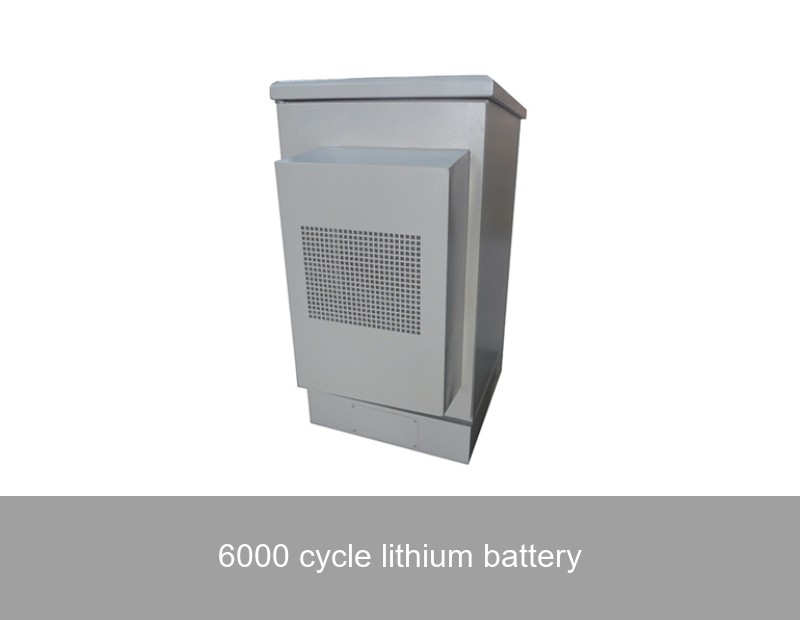
You're considering a battery energy storage system (BESS). You've likely seen the upfront cost, but have you calculated the cost over its entire lifetime? The industry's game-changer isn't just raw power; it's longevity. This is where the promise of a 6000 cycle lithium battery fundamentally changes the economics of solar-plus-storage for homes and businesses. Let's explore why cycle life isn't just a number—it's the key to decades of reliable, sustainable power.
Table of Contents
What Are Battery Cycles & Why 6000 Matters
Think of a battery cycle as one complete discharge and recharge. If you use 50% of your battery's capacity one day and recharge it, that's half a cycle. Do it again the next day, and you've completed one full cycle. Most early lithium-ion batteries for storage were rated for 3000-5000 cycles. A 6000 cycle lithium battery rating means it's engineered to maintain a high capacity (often 60-80% of its original capacity) through six thousand of these cycles.
Why is this a breakthrough? Simple math. With one cycle per day, a 3000-cycle battery might last about 8.2 years. A 6000-cycle battery doubles that theoretical daily use lifespan to over 16 years. This isn't just about durability; it's about drastically reducing the levelized cost of storage (LCOS)—the true metric of a battery's value, calculated by dividing the total cost over its life by the total energy it delivered. More cycles mean more energy delivered for the same initial investment.
The Lifetime Economics: 6000 Cycles vs. Conventional Batteries
Let's move from theory to hard numbers. The initial price tag of a high-cycle battery might be higher, but the total cost of ownership tells a different story.
| Metric | Conventional BESS (4000 cycles) | Advanced BESS (6000 cycles) |
|---|---|---|
| Useable Energy | 10 kWh | 10 kWh |
| System Cost (example) | $8,000 | $9,500 |
| Total Energy Delivered Over Life* | 40,000 kWh | 60,000 kWh |
| Levelized Cost of Storage (LCOS) | $0.20 per kWh | $0.158 per kWh |
*Assumes full depth of discharge per cycle. Real-world usage varies.
As you can see, the advanced system delivers 50% more energy over its lifetime for only a 19% higher initial cost. The savings compound further when you factor in reduced replacement frequency and long-term energy bill savings. This is the core value proposition that companies like Highjoule are built on. Since 2005, Highjoule has focused on designing intelligent, efficient, and sustainable storage solutions that maximize lifetime value, precisely by pioneering such high-cycle-life technology for commercial, industrial, and residential applications.
The Technology Behind High-Cycle Life Lithium Batteries
So, how is a 6000-cycle rating achieved? It's not magic; it's materials science and intelligent engineering. The foundation is the lithium iron phosphate (LFP) chemistry, renowned for its safety and longevity. But Highjoule takes it further:
- Advanced Cell Engineering: Using top-grade LFP cells with optimized electrode design to minimize degradation during each charge/discharge phase.
- Precision Battery Management System (BMS): The true brain of the system. Highjoule's proprietary BMS doesn't just monitor voltage and temperature. It performs active cell balancing, manages charge/discharge rates to avoid stress, and operates within a conservative state-of-charge window (e.g., 20-90%) for daily use, dramatically extending cycle life.
- Thermal Management: A stable, climate-controlled environment is critical. Integrated liquid or advanced air cooling ensures the battery operates in its ideal temperature range, preventing accelerated aging from heat or cold.

Image Source: Unsplash (Representative image of battery technology)
This holistic approach ensures that the 6000 cycle lithium battery rating is a reliable promise, not just a laboratory best-case scenario. It's this engineering philosophy that powers Highjoule's H-series residential units and MegaLine industrial storage systems, providing clients with a predictable and profitable energy asset.
Real-World Impact: A Commercial Case Study
Let's look at a real application in our target market. A mid-sized dairy farm in Bavaria, Germany, faced high peak-demand charges and wanted to maximize self-consumption from its 250 kW rooftop solar array. Their goal: reduce grid dependence and stabilize energy costs for 20+ years.
The Solution: A Highjoule MegaLine C&I battery storage system with a 6000-cycle design life was installed. The 500 kWh system stores excess solar generation during the day and powers the milking parlors, cooling facilities, and processing equipment in the evening and early morning.
The Data & Results (After 3 Years):
- Cycles Accumulated: ~1,100 cycles (on track for the long-term target).
- Capacity Retention: 99.2% of original capacity (measured annually).
- Financial Savings: Achieved a 75% reduction in peak demand charges and increased solar self-consumption from 35% to over 80%.
- ROI Projection: Payback period is projected at 6.5 years, with over 13 years of additional, near-free operation within the performance warranty period.
This case, documented in a Fraunhofer ISE report on storage economics, illustrates the tangible benefits. The farm manager noted, "We didn't just buy a battery; we invested in a long-term energy partner. The 6000-cycle rating gave us the confidence to base our 20-year business plan on this technology."
Choosing a System Built for Decades, Not Just Years
When evaluating storage options, look beyond the spec sheet's peak power and instant capacity. Ask these critical questions:
- What is the warranted cycle life and end-of-life capacity (e.g., 6000 cycles at 60% retention)?
- What is the degradation profile? Does the manufacturer provide transparent data, like Highjoule's publicly available performance white papers based on NREL testing methodologies?
- Is the BMS truly advanced, or just basic? It's the key to unlocking the cell's potential lifespan.
- Does the provider offer a comprehensive, long-term performance guarantee that backs their cycle life claims?
Image Source: Unsplash (Representative image of home energy storage)
Highjoule's products, from the residential H-Series to utility-scale MicroGrid Solutions, are engineered with these questions in mind. Our systems are designed to be the last battery you'll need to buy for a very, very long time, turning a capital expense into a resilient, long-term energy asset.
A Final Thought to Power Your Decision
The energy transition is a marathon, not a sprint. In a world of evolving tariffs, grid pressures, and the imperative for sustainability, can you afford to invest in storage technology that might need replacing in half the time? The 6000 cycle lithium battery represents a maturity in energy storage technology where longevity and total value finally take center stage.
What will your energy cost profile look like 15 years from now, and is your storage solution designed to be a cornerstone of that future?
 Inquiry
 Online Chat