


Battery Pack Manufacturing: The Engine Behind the Energy Storage Revolution
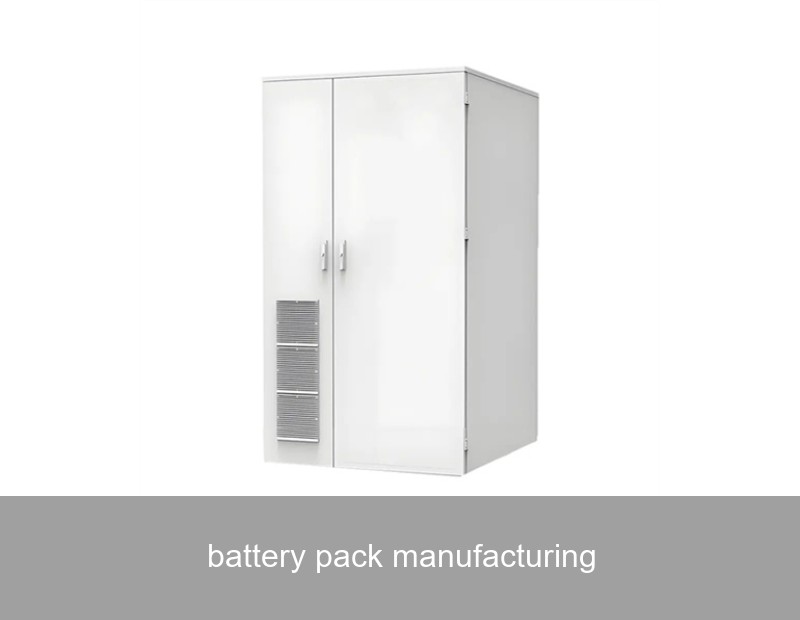
You've likely heard about the surge in renewable energy and electric vehicles. But have you ever stopped to think about what powers this shift at its core? The answer lies in a sophisticated, rapidly evolving process: battery pack manufacturing. This isn't just about assembling cells; it's the critical engineering discipline that transforms raw electrochemical cells into safe, reliable, and intelligent energy storage systems. For businesses and homeowners looking to harness solar power or ensure energy resilience, the quality of this manufacturing process directly determines the performance, lifespan, and safety of the entire storage solution. At Highjoule, with nearly two decades of experience since 2005, we've seen how excellence in pack manufacturing separates a truly sustainable investment from a mere commodity.
Table of Contents
- What is Battery Pack Manufacturing? Beyond Simple Assembly
- The Key Stages of Advanced Pack Manufacturing
- How Manufacturing Dictates Safety and Efficiency
- Case Study: Manufacturing for a Californian Microgrid
- The Future of Pack Manufacturing: Sustainability and AI
- Choosing the Right Manufacturing Partner for Your Project
What is Battery Pack Manufacturing? Beyond Simple Assembly
Think of a single lithium-ion cell as a single, powerful muscle. A battery pack is the entire athletic body – a complex system of muscles, tendons, a nervous system (the BMS), and a protective skeleton, all working in perfect harmony. Battery pack manufacturing is the process of designing, integrating, and building this complete system. It involves:
- Cell Selection & Sorting: Not all cells are created equal. High-quality manufacturing starts with rigorous testing and grouping of cells with nearly identical performance characteristics to ensure balance.
- Module Assembly: Cells are connected mechanically and electrically into modules, incorporating thermal management pathways and initial voltage/temperature monitoring.
- Battery Management System (BMS) Integration: The "brain" of the pack is installed. A sophisticated BMS, like those engineered into every Highjoule system, continuously monitors each cell, managing charge/discharge, state-of-health, and safety protocols.
- Final Pack Integration: Modules, BMS, thermal systems (liquid or air cooling), safety disconnects, and structural housing are assembled into a final, robust product ready for deployment.
This holistic approach is where companies like Highjoule add immense value. We don't just source cells and box them up; we design and manufacture the entire system architecture with reliability for 10+ years of daily cycling in mind.
The Key Stages of Advanced Pack Manufacturing
To understand the value of a well-made pack, let's walk through the manufacturing ladder. Each rung is essential for reaching the top tier of performance.
1. Design & Prototyping
It all begins with digital twins and simulation. Engineers design for specific use cases—be it a home needing daily solar load-shifting or an industrial facility requiring peak shaving. Factors like energy density, charge rate (C-rate), and environmental conditions are baked in from the start.
2. Sourcing & Incoming Quality Control (IQC)
This is the foundation. Reputable manufacturers audit cell suppliers and conduct 100% testing on incoming batches. At Highjoule, our IQC process includes checking capacity, internal resistance, and self-discharge rates to filter out any cells that could compromise pack longevity.
3. Automated & Precision Assembly
Precision is non-negotiable. Laser welding of busbars, automated screw fastening, and consistent application of thermal interface materials are critical. Automation reduces human error and ensures each pack leaving our facility meets the same high standard. 
4. Comprehensive Testing & Validation
This is the most crucial phase. Every single pack undergoes electrical, functional, and safety testing. This includes capacity verification, BMS communication checks, and rigorous safety tests like thermal cycling and vibration testing, aligned with international standards such as UL 9540 and IEC 62619.
How Manufacturing Dictates Safety and Efficiency Over the Long Term
Why does this process matter so much to you, the end-user? Because the hidden details of manufacturing directly impact your return on investment and peace of mind.
| Manufacturing Aspect | Impact on Pack Performance | End-User Consequence |
|---|---|---|
| Cell Matching & BMS Calibration | Prevents cell imbalance, reduces degradation. | Higher usable capacity over 10+ years, better ROI. |
| Robust Thermal Management Integration | Maintains optimal temperature, prevents thermal runaway. | Enhanced safety, consistent performance in heat/cold. |
| IP-Rated Enclosure & Quality Connectors | Protects against dust, moisture, and corrosion. | Reliability in diverse environments (e.g., damp basements, outdoor installs). |
| Cybersecurity in BMS Software | Protects system from unauthorized access. | Data privacy and grid security for connected systems. |
Highjoule's manufacturing philosophy embeds these principles. Our IntelliPack series, for example, uses a proprietary module design with integrated liquid cooling plates. This isn't an afterthought; it's co-engineered during manufacturing to ensure perfect contact and heat dissipation, directly extending cycle life.
Case Study: Manufacturing Precision for a Californian Winery Microgrid
Let's look at a real-world application where battery pack manufacturing quality was paramount. A premium winery in Napa Valley, California, faced frequent public safety power shutoffs (PSPS) threatening their fermentation cooling and operations. They needed a resilient solar-plus-storage microgrid.
The Challenge: Provide 750 kWh of storage that could handle high, sustained loads during outages, integrate with existing solar, and operate flawlessly in a semi-outdoor setting with temperature fluctuations.
The Highjoule Solution: We deployed a custom configuration of our IntelliPack Industrial systems. The key differentiator was our manufacturing approach:
- Custom BMS Programming: The BMS was programmed during manufacturing for the winery's specific load profiles and grid interaction rules.
- Enhanced Cooling: The manufacturing line calibrated the liquid cooling system for a slightly higher flow rate to account for potential ambient heat during fall outage seasons.
- Robust Enclosure: The packs were manufactured with an IP55 rating as standard, protecting against irrigation moisture and dust.
The Result: During a 36-hour outage in 2023, the system maintained critical cooling and facility power with zero interruption. The winery reported not only saved product (valued at over $200,000) but also the ability to operate as a community hub during the crisis. The precise manufacturing of the battery packs ensured a 100% depth of discharge capability when needed, without compromising the system's warranty or long-term health. (U.S. Department of Energy on Microgrids).
The Future of Pack Manufacturing: Sustainability and AI
The industry is not standing still. The next frontier in battery pack manufacturing focuses on two key areas:
Sustainability in the Production Line
The conversation is expanding from green energy usage to circular economy principles. This includes designing for disassembly, using recycled materials in enclosures, and implementing manufacturing processes that minimize waste. Highjoule is actively investing in R&D for next-generation packs that are easier to refurbish and recycle, reducing the lifecycle environmental impact. (IEA Report on Battery Demand & Sustainability).
AI and Machine Learning Integration
Artificial intelligence is moving from the BMS into the factory. AI can optimize the cell sorting process, predict weld quality in real-time, and analyze test data to identify potential manufacturing process drifts before they affect quality. Imagine a manufacturing line that "learns" and continuously improves yield and reliability – that's the near future. 
Choosing the Right Manufacturing Partner for Your Project
Whether you're a developer building a grid-scale project or a homeowner considering storage, the manufacturer behind the battery pack is your most important partner. Here are key questions to ask:
- Do you design and manufacture the packs in-house, or are you a reseller? In-house control, like Highjoule's vertically integrated approach, typically means better quality consistency and faster issue resolution.
- What are the specific safety standards (UL, IEC) your manufacturing line and final products are certified to? Demand certifications, not just claims.
- How is the Battery Management System developed and integrated? A proprietary, deeply integrated BMS is a sign of advanced manufacturing capability.
- What does your testing protocol look like? Expect details on cycle testing, environmental stress screening, and real-world simulation.
The energy transition depends on storage we can trust. By prioritizing excellence in battery pack manufacturing, we build systems that aren't just products, but pillars of a more resilient and sustainable energy infrastructure for decades.
What specific challenge in your energy profile—be it demand charge spikes, renewable integration, or pure backup—makes you consider how the underlying battery pack is built, and what would you need to know to feel confident in that investment?
 Inquiry
 Online Chat