


Almacenamiento de Cargas Eléctricas: The Unsung Hero of a Stable, Renewable Grid
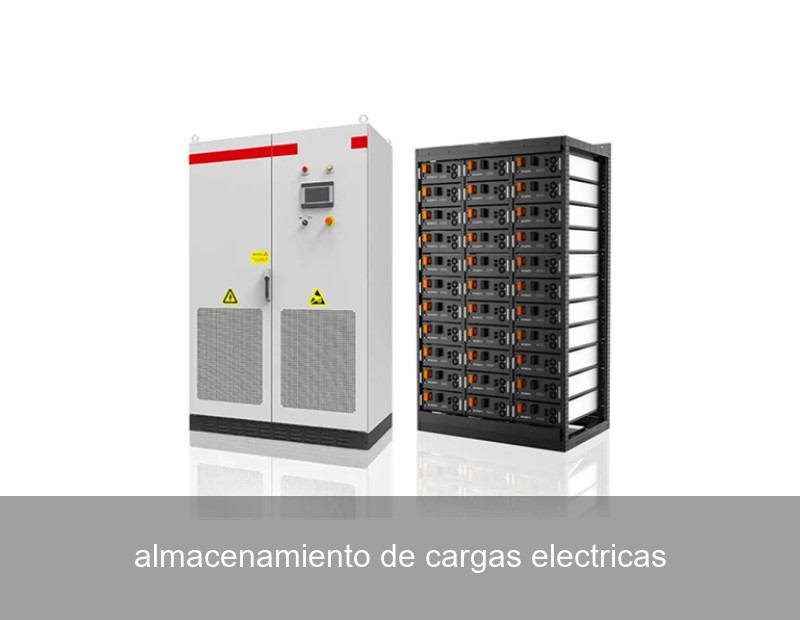
Have you ever wondered what happens to all the solar power generated on a bright, sunny afternoon when demand is low? Or how a grid powered by intermittent sources like wind and sun can keep the lights on when the wind stops and the sun sets? The answer lies in a critical, yet often overlooked, technology: almacenamiento de cargas eléctricas, or electrical energy storage. This isn't just about batteries; it's about intelligently managing energy flow to create a resilient, efficient, and sustainable power system. For businesses, communities, and entire nations aiming for energy independence, mastering electrical load storage is no longer optional—it's essential.
Table of Contents
- The Modern Energy Challenge: Abundance vs. Timing
- How Electrical Energy Storage Works: More Than Just a Battery
- Case Study: A Spanish Industrial Park's Journey to Resilience
- Highjoule's Role: Intelligent Storage for Complex Needs
- The Future of Load Storage: Smarter and More Integrated
The Modern Energy Challenge: Abundance vs. Timing
We are in the midst of a monumental energy transition. Renewable generation is skyrocketing—in 2023, the EU generated a record 44% of its electricity from renewables. However, this creates a new paradox: we often have too much power when we don't need it, and too little when we do. This mismatch between generation and consumption strains traditional grids, leading to curtailment (wasting clean energy), price volatility, and reliability concerns. Almacenamiento de cargas eléctricas acts as a buffer, seamlessly bridging this gap by storing excess energy and dispatching it when needed most.
How Electrical Energy Storage Works: More Than Just a Battery
Think of energy storage as a sophisticated "energy bank." You make deposits (charge) when energy is plentiful and cheap, and make withdrawals (discharge) when it's scarce and expensive. While lithium-ion battery energy storage systems (BESS) are the most common today, the ecosystem includes various technologies:
- Battery Energy Storage (BESS): The agile responder, ideal for short-to-medium duration storage (hours).
- Pumped Hydro: The large-scale veteran, using gravity and water.
- Thermal Storage: Storing energy as heat or cold for industrial or district heating.
The true intelligence lies not in the storage medium alone, but in the software and power conversion system that decides when to charge, when to discharge, and at what rate—a process known as energy arbitrage.

Image: A modern containerized BESS unit, a key component for industrial almacenamiento de cargas eléctricas. Source: Unsplash
The Data: Why Storage is a Game-Changer for Grids
The numbers speak volumes. The U.S. Energy Information Administration (EIA) projects that U.S. battery storage capacity will nearly double in 2024. Why this explosive growth? Let's break down the impact:
| Benefit | Impact | Example |
|---|---|---|
| Grid Stabilization | Responds to fluctuations in milliseconds, maintaining frequency. | Prevents blackouts during sudden generator drops. |
| Renewable Integration | Can increase the usable capacity of a solar farm by 30-50%. | Delivers solar power at 7 PM, not just at 1 PM. |
| Cost Savings | Reduces peak demand charges for businesses by 20-40%. | Manufacturers avoid high tariffs during operational peaks. |
Case Study: A Spanish Industrial Park's Journey to Resilience
Let's look at a real-world example from southern Spain. A large industrial park, home to several food processing and manufacturing plants, faced two major issues: exorbitant peak demand charges from the utility and vulnerability to grid instability, which risked costly production halts. Their goal was clear: achieve greater energy autonomy and cost predictability.
The solution was a coordinated almacenamiento de cargas eléctricas strategy. They deployed a 2.5 MW / 5 MWh on-site battery storage system integrated with their existing rooftop solar PV. The system was programmed with advanced algorithms to perform peak shaving—discharging the battery during the park's daily consumption spikes to cap power drawn from the grid.
The Results (18-month period):
- Peak Demand Charges Reduced by 35%: This translated to annual savings of over €180,000.
- Self-Consumption of Solar Increased to 85%: Up from 60%, drastically cutting energy bills.
- Backup Power: The system provides critical ride-through during short grid disturbances, preventing an estimated €500,000 in potential production losses.
This case exemplifies how strategic storage moves from being a cost to a core asset for financial and operational resilience.
Highjoule's Role: Intelligent Storage for Complex Needs
As a global leader in advanced energy storage since 2005, Highjoule specializes in transforming the principle of almacenamiento de cargas eléctricas into reliable, turnkey solutions. We understand that a storage system is only as good as its brain and its integration. That's why our offerings are built on intelligence and durability.
For commercial and industrial clients, our H-Series C&I BESS is a modular, containerized solution designed for peak shaving, energy arbitrage, and backup. Its proprietary energy management system (EMS) continuously analyzes weather forecasts, energy prices, and consumption patterns to optimize every kilowatt-hour.
For larger-scale applications like microgrids or utility support, our GridMax Utility-Scale Platform provides grid-forming capabilities, meaning it can help restart a grid ("black start") and operate independently. Our services encompass everything from initial feasibility studies and financial modeling to installation, grid compliance, and 24/7 remote monitoring—ensuring your investment delivers value for decades.

Image: A vision of the future: integrated solar, wind, and storage for a resilient microgrid. Source: Unsplash
The Future of Load Storage: Smarter and More Integrated
The evolution of electrical load storage is moving towards longer-duration technologies (8+ hours) and deeper software integration. Imagine a virtual power plant (VPP) where thousands of distributed home batteries, like those in Highjoule's residential portfolio, are aggregated to act as a single, large power plant, providing services to the main grid. The lines between consumer and producer are blurring.
Furthermore, innovations in battery chemistry, such as sodium-ion or solid-state, promise enhanced safety, lower cost, and reduced reliance on critical minerals. The future grid will be a dynamic network of generation, storage, and smart consumption, with almacenamiento de cargas eléctricas at its core, ensuring stability in an era of renewable abundance.
Ready to Explore Your Energy Storage Potential?
What would a 30% reduction in your facility's peak demand charges do for your bottom line? How much could you increase the value of your solar investment with the right storage partner? The journey to energy resilience and savings begins with a clear assessment of your load profile and goals. What's the first energy challenge you'd like storage to solve for you?
 Inquiry
 Online Chat