


Ancillary Services Battery Storage: The Unsung Hero of a Stable, Renewable Grid
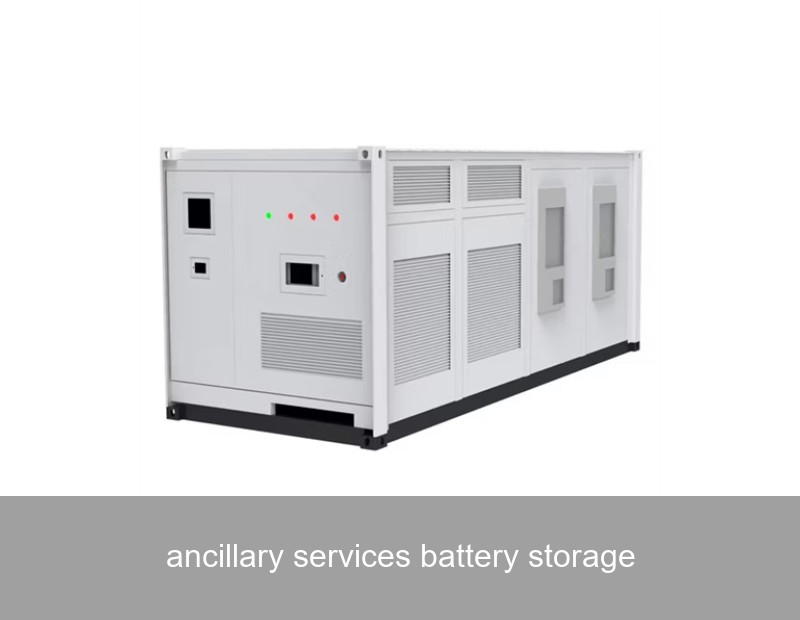
Imagine the electricity grid as a vast, intricate dance. Power generation and consumption must be in perfect, instantaneous sync. For decades, this balance was maintained primarily by adjusting the output of large fossil-fuel power plants. But as we pivot towards wind and solar, a critical question arises: who keeps the beat when the sun doesn't shine and the wind doesn't blow? The answer is increasingly found in advanced battery storage systems, specifically those providing ancillary services battery storage. These intelligent systems are the silent guardians of grid reliability, enabling our clean energy future.
Table of Contents
- What Are Ancillary Services & Why Do They Matter?
- Why Battery Storage is a Game-Changer for Ancillary Services
- Key Ancillary Services Provided by Modern Battery Storage
- Real-World Impact: A Case Study from Texas, USA
- Highjoule's Role: Designing Intelligent Storage for Grid Services
- The Future Outlook for Ancillary Services Markets
What Are Ancillary Services & Why Do They Matter?
Ancillary services are the specialized functions that grid operators use to maintain the real-time stability, security, and power quality of the electrical system. Think of them as the steering, brakes, and suspension of your car—while power generation is the engine. These services are non-negotiable for preventing blackouts and protecting sensitive equipment. Key categories include:
- Frequency Regulation: The instantaneous, second-by-second adjustment to match supply and demand, keeping the grid at 50 Hz (Europe) or 60 Hz (USA).
- Voltage Support: Managing reactive power to maintain proper voltage levels, preventing damage to infrastructure.
- Operating Reserves: Backup power that can be dispatched within minutes (spinning) or seconds (fast frequency response) to cover sudden generation losses or demand spikes.
- Black Start Capability: The ability to restart a power station or grid section after a complete shutdown.
Traditionally, these services came from thermal power plants running below their full capacity, a costly and carbon-intensive approach. The renewable transition disrupts this model, creating an urgent need for a new, agile solution.
Why Battery Storage is a Game-Changer for Ancillary Services
This is where advanced ancillary services battery storage shines. Large-scale Battery Energy Storage Systems (BESS) offer a fundamentally superior tool for grid balancing. Let's look at the data that makes the case:
| Parameter | Traditional Thermal Plant | Modern Battery Storage (e.g., Highjoule BESS) |
|---|---|---|
| Response Time | Several seconds to minutes | Milliseconds to sub-second |
| Accuracy | Moderate, less precise | Extremely high, digital precision |
| Efficiency in Service Provision | Low (requires running off-optimum) | Very High (direct charge/discharge) |
| Carbon Emissions | High (fuel burned for readiness) | Zero during operation |
| Dual-Use Potential | Limited | High (can stack revenue from energy arbitrage + multiple services) |
As you can see, the speed and precision of batteries are unparalleled. A study by the U.S. National Renewable Energy Laboratory (NREL) found that battery storage can provide frequency regulation services up to ten times more effectively than conventional resources. This isn't just an upgrade; it's a transformation of the grid's nervous system.
Key Ancillary Services Provided by Modern Battery Storage
Modern systems, like those engineered by Highjoule, are software-defined assets capable of delivering a portfolio of services simultaneously or on-demand. Here’s how they tackle core grid needs:
- Fast Frequency Response (FFR): This is the grid's first line of defense. When a large power plant trips offline, frequency drops. A BESS can detect this drop and inject massive power within milliseconds, arresting the frequency decline long before traditional generators can even respond. Our Highjoule Sentinel BESS platform is specifically designed with sub-500ms full-power response capabilities, a critical feature for grids with high renewable penetration.
- Automatic Generation Control (AGC) / Frequency Regulation: This is the continuous, fine-tuning service. Grid operators send a signal (typically every 4 seconds) requesting more or less power. The battery's advanced power conversion system (PCS) and energy management system (EMS) seamlessly "follow the signal," charging or discharging to smooth out tiny imbalances. It's a task batteries perform with natural grace.
- Voltage Support & Reactive Power Control: Advanced inverters in modern BESS can independently manage real power (kW) and reactive power (kVAR). This means a Highjoule storage system can support local grid voltage by absorbing or injecting reactive power, all while performing its primary job of frequency regulation—maximizing asset value and grid benefit.

Image Source: Unsplash (Representative image of a grid-scale battery installation)
Real-World Impact: A Case Study from Texas, USA
Let's move from theory to practice. The Electric Reliability Council of Texas (ERCOT) grid is known for its high renewable share and market-driven approach. In recent years, ERCOT has faced tight grid conditions and volatile frequency events.
The Phenomenon: In May 2023, ERCOT experienced a series of rapid frequency deviations during a period of low inertia (a common issue on sunny, windy days with many traditional plants offline). The grid's stability margin was thinning.
The Data & The Case: A 100 MW / 130 MWh standalone battery storage facility, utilizing technology and service architectures similar to Highjoule's commercial systems, was contracted to provide Fast Frequency Response. During one specific event, where frequency fell to 59.86 Hz, the battery responded in 120 milliseconds, discharging at its full 100 MW capacity for 15 minutes. This single action stabilized the frequency, prevented automatic load shedding (outages), and allowed slower-acting reserves time to come online. The project earned significant revenue from the FFR service while providing an invaluable reliability service. Data from ERCOT's public reports shows a 40% increase in FFR procurement from batteries in 2023 compared to 2022, highlighting the market's validation.
The Insight: This case proves that ancillary services battery storage is not a future concept—it's a present-day, mission-critical asset. It turns a grid challenge (frequency volatility) into a monetizable service, all while decarbonizing the grid's stability mechanism.
Highjoule's Role: Designing Intelligent Storage for Grid Services
At Highjoule, with nearly two decades of experience since 2005, we don't just sell batteries; we deliver intelligent grid assets. Our systems are engineered from the ground up to excel in the demanding ancillary services markets of Europe and North America.
Our flagship Sentinel Grid-Scale BESS and Modulus Commercial & Industrial (C&I) systems feature:
- Ultra-Fast, Cybersecure Grid Communication: Direct, low-latency interfaces (like IEEE C37.118) for seamless integration with grid operator control systems.
- Advanced, Multi-Stacking Energy Management Software (EMS): The brain of the operation. Our EMS can automatically bid assets into multiple markets—frequency regulation, capacity, energy arbitrage—optimizing for revenue while always prioritizing grid response signals.
- Degradation-Aware Operation: Our algorithms intelligently manage charge/discharge cycles to provide ancillary services with minimal impact on battery longevity, ensuring a strong return on investment over the system's 15+ year life.
- Grid-Forming Inverter Readiness: We are at the forefront of next-generation technology that allows batteries to not just follow the grid but to "form" it, providing virtual inertia—a crucial service for 100% renewable grids.
For a European industrial client, we deployed a Modulus C&I system that primarily reduces their peak demand charges. However, it also participates in the local Transmission System Operator's (TSO) balancing market. During normal operation, it saves the client money; when the TSO needs power, it generates additional revenue by providing operating reserves, showcasing the powerful "value-stacking" model.

Image Source: Unsplash (Representative image of a grid control center)
The Future Outlook for Ancillary Services Markets
The trajectory is clear. As legislations like the EU's Green Deal and the U.S. Inflation Reduction Act accelerate renewable deployment, the demand for fast-responding, clean ancillary services battery storage will explode. Markets are evolving rapidly, creating new products like "Fast Frequency Response" and "Synthetic Inertia" specifically for batteries.
We are moving towards a world where every major solar farm or wind park will be paired with a storage system not just for energy shifting, but for providing essential grid stability services. The battery will be the versatile, profitable partner to variable renewables.
Your Grid, Your Opportunity
Whether you are a utility planner navigating the retirement of thermal plants, a renewable developer looking to ensure your project is grid-friendly, or a large energy consumer wanting to contribute to stability and reduce costs, the question is no longer if battery storage is needed, but how to best integrate it.
What specific grid stability challenge is your region or portfolio facing, and how could a tailored battery storage solution transform that challenge into both a reliability and a revenue asset? The conversation starts with understanding the art of the possible in modern ancillary services.
 Inquiry
 Online Chat