


Appliances for Solar Powered Homes: Maximizing Your Renewable Energy Investment
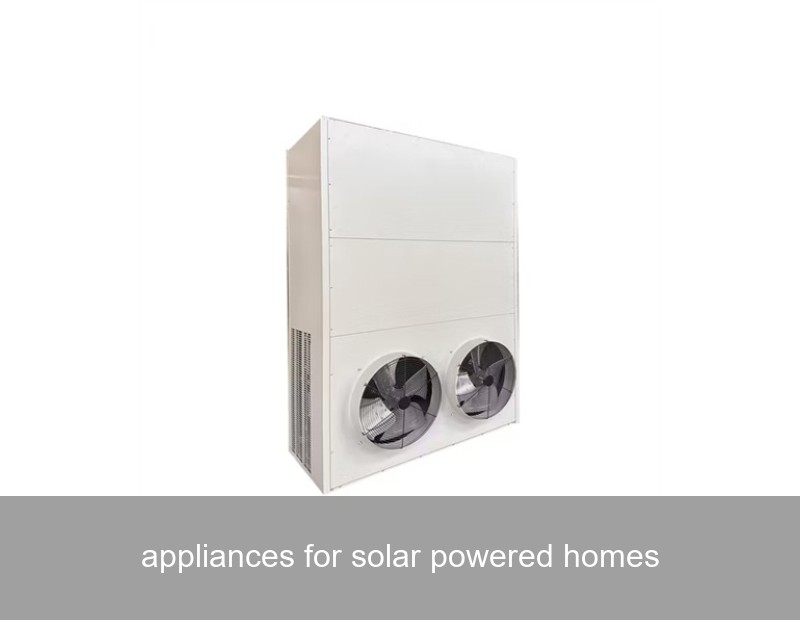
So, you've made the smart decision to install solar panels on your roof. The sun is shining, your meter is spinning backwards, and you're feeling good about your energy independence. But are you truly optimizing that clean, free power? The secret to unlocking the full potential of your solar investment isn't just on the roof—it's inside your home. This article dives into the world of appliances for solar powered homes, exploring how the right devices, paired with intelligent energy management, can transform your relationship with electricity.
Table of Contents
- The Phenomenon: Solar Energy's "Peak" vs. Your Home's "Peak"
- The Data: Where Your Home's Energy Really Goes
- The Smart Appliance Revolution: Timing is Everything
- The Critical Link: Energy Storage for 24/7 Solar Power
- Case Study: A Real-World Shift in California
- How Highjoule Enables the Solar-Powered Home
- Building Your Future-Proof Solar Home
The Phenomenon: Solar Energy's "Peak" vs. Your Home's "Peak"
Here's the fundamental mismatch every solar homeowner encounters: solar panels produce the most energy in the middle of the day, precisely when you're likely at work, school, or out running errands. Your home's energy demand, however, typically peaks in the early morning and evening—when the sun is low or down. This creates a surplus of energy you sell back to the grid at a low rate, only to buy it back hours later at a premium. The solution? Aligning your home's energy consumption with its production, starting with your appliances.

Image Source: Unsplash - A modern solar-optimized home.
The Data: Where Your Home's Energy Really Goes
To make strategic changes, you need to know the culprits. According to the U.S. Energy Information Administration (EIA), the major energy-consuming appliances in a typical home are:
| Appliance Category | Approximate % of Home Energy Use | Solar Optimization Potential |
|---|---|---|
| Heating & Cooling (HVAC) | 40-50% | Very High |
| Water Heating | 12-18% | Very High |
| Clothes Dryers & Ovens/Ranges | 5-10% | High |
| Refrigeration | 5-8% | Medium (with smart management) |
| Lighting | 5-10% | High (with LED & smart controls) |
This data reveals a clear opportunity. Appliances that generate heat (HVAC, water heaters, dryers) are the biggest energy hogs and, therefore, the biggest opportunities for solar optimization.
The Smart Appliance Revolution: Timing is Everything
Modern appliances for solar powered homes go beyond mere energy efficiency. They offer "smart" features that allow you to shift their operation to coincide with peak solar production. This is called "load shifting."
- Heat Pump Water Heaters & HVAC Systems: These are game-changers. They use electricity to move heat rather than generate it directly, making them 2-3 times more efficient. Their operation can be scheduled for midday.
- Smart Clothes Dryers & Dishwashers: Look for models with "delay start" or "eco" modes that connect to your home Wi-Fi. You can set your dishwasher to run at 1 PM, not 8 PM.
- Induction Cooktops: Not only are they incredibly energy-efficient and precise, but their electrical load is also short and can be better managed than a gas line.
- Smart Plugs & Controls: Even older appliances can be solar-optimized. Use smart plugs to schedule or remotely control devices like pool pumps or space heaters.
The Critical Link: Energy Storage for 24/7 Solar Power
Smart appliances are a powerful tool, but they can't solve the nighttime problem. This is where a home battery energy storage system (BESS) becomes the cornerstone of a true solar powered home. A system like the Highjoule Hive stores the excess solar energy you produce during the day and releases it when you need it most—during the evening peak, on cloudy days, or even during a grid outage.
Think of it this way: Your solar panels are your new power plant. Your smart appliances are your efficient factory schedule. And your Highjoule battery is your essential warehouse, storing the goods (energy) for when the factory needs to run at night. Without storage, a significant portion of your solar potential is wasted.

Image Source: Unsplash - Example of a modern home battery installation.
Case Study: A Real-World Shift in California
Let's look at a concrete example from Sacramento, California, a leader in residential solar. A 2022 study by the California Energy Commission analyzed homes with solar plus storage. One participating family, the Garcias, upgraded their all-electric home with a 10 kW solar array and a 13.5 kWh battery system (similar to Highjoule's mid-range Hive-13 model).
The Results:
- Self-Consumption of Solar: Increased from 35% to over 80%. They were using their own solar energy for most of their needs.
- Grid Dependence: Reduced peak (evening) grid electricity purchases by 95%.
- Appliance Strategy: They programmed their heat pump water heater and HVAC pre-cooling cycle to run on midday solar, and used the battery to power evening loads like cooking, lighting, and TV.
- Bill Impact: Their average monthly electricity bill dropped from a net $45 (with solar alone) to a net $5 (with solar + storage), despite being on a time-of-use rate plan.
This case shows the tangible synergy between smart appliances, solar production, and battery storage.
How Highjoule Enables the Solar-Powered Home
At Highjoule, we don't just provide batteries; we provide intelligent energy ecosystems. Our products are designed to be the brain and heart of your solar powered home.
- The Highjoule Hive Series: Our scalable lithium iron phosphate (LFP) battery systems, from compact to whole-home backup solutions, are built for safety, longevity (over 10,000 cycles), and seamless integration with any major solar inverter.
- Energy Management System (EMS): This is the true intelligence. Our EMS can connect with compatible smart appliances and learn your household patterns. It can automatically decide the most economical time to run devices, store energy, or draw from the grid, maximizing your savings and comfort.
- Microgrid Capability: For ultimate resilience, a Highjoule system can island your home from the grid during an outage, keeping your essential appliances—refrigerator, lights, communications—running on sunshine.
Our solutions for residential and commercial clients across Europe and North America are built on nearly two decades of innovation, ensuring your investment is future-proof.
Building Your Future-Proof Solar Home
Ready to transform your home into a model of efficiency? Start with this phased approach:
- Audit & Plan: Review your energy bill and identify your biggest loads. When planning a solar system, size it with both your current and future (like an EV) loads in mind.
- Prioritize Smart Upgrades: When an appliance needs replacing, choose a smart, efficient model. Start with water heating and HVAC—the biggest wins.
- Integrate Storage from the Start: If you're installing new solar, include a battery like the Highjoule Hive in your initial design. The economics are increasingly favorable, and the benefits in resilience and control are immediate.
- Connect and Optimize: Use your system's energy management software to create schedules and automations. Start simple (delay the dishwasher) and get more advanced over time.

Image Source: Unsplash - A family enjoying a solar-powered home.
Your Home's Energy Future
The journey to a fully optimized solar powered home is an exciting evolution, not a single purchase. It's about creating a responsive, resilient, and cost-effective energy environment. The technology—from intelligent appliances to sophisticated storage systems like those from Highjoule—is here and more accessible than ever.
What's the first appliance in your home you would schedule to run on pure sunshine, and how would that small change shift your perspective on energy?
 Inquiry
 Online Chat