


Beyond Panels: What a Modern Solar System Company Profile Should Reveal
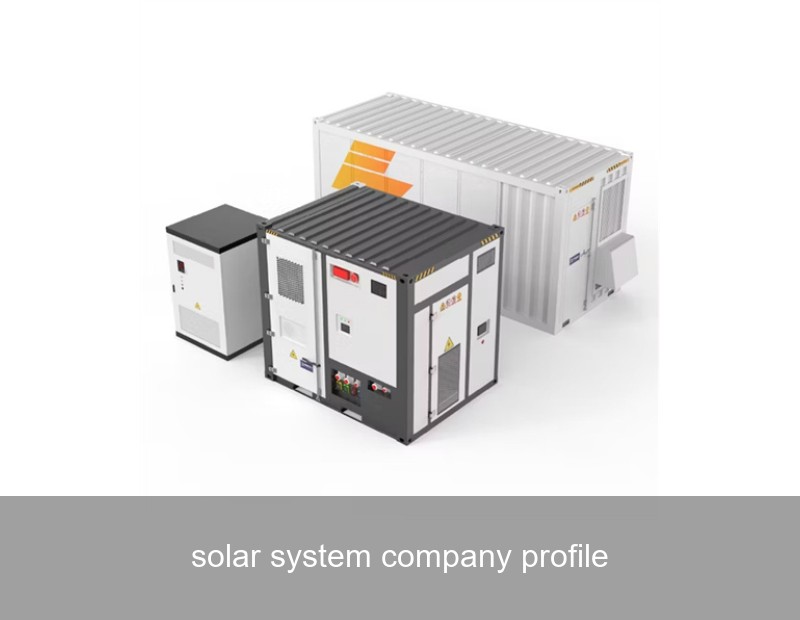
When you think of a "solar system company," the image that likely comes to mind is rows of gleaming panels on a rooftop. But in 2024, that picture is incomplete. The profile of a leading solar provider has evolved far beyond just installation. Today, it's about intelligent energy management, resilience, and maximizing every kilowatt-hour generated. This shift is driven by a simple phenomenon: the sun doesn't always shine, but your energy needs are constant. So, how do you bridge that gap? The answer lies not just in generation, but in storage and smart control—a holistic approach that defines the new generation of solar energy partners.
Table of Contents
The Data Gap: Why Solar Alone Isn't Enough
Let's talk numbers. According to the U.S. Department of Energy, solar can provide up to 40% of the nation's electricity by 2035. However, residential and commercial systems without storage typically only consume 20-50% of their own solar production on-site. The rest is exported to the grid, often at a lower value. This means you're generating clean power but not fully capitalizing on its potential for savings and security.
This "curtailment" issue is particularly pronounced in regions like California and parts of Europe, where grid congestion can lead to zero or negative pricing during peak solar hours. The phenomenon creates a pressing need for a solution that captures and time-shifts that excess energy. This is where the simple solar installer profile falls short, and the integrated energy solution provider comes to the fore.
The Modern Solar System: Core Components Beyond Panels
A true, modern solar energy system is a symphony of components working in unison. Here’s what you should look for in a company’s offering:
- High-Efficiency Photovoltaics (PV): The starting point. Look for tier-one panels with strong performance warranties.
- Smart Inverters: The brains of the generation side, converting DC to AC while providing critical grid-support functions.
- The Game-Changer: Battery Energy Storage System (BESS): This is the heart of energy independence. A quality BESS stores surplus solar for use at night, during outages, or during peak rate periods.
- Energy Management System (EMS): The conductor of the symphony. This software intelligently controls when to charge, discharge, or export, optimizing for self-consumption, cost, or carbon footprint.

Image: A modern energy setup featuring solar panels and a wall-mounted battery storage unit. Credit: Unsplash.
Highjoule: A Solar System Company Profile Focused on Integration
Since 2005, Highjoule has redefined the solar system company profile by placing intelligent storage and control at the core of its mission. We don't just sell components; we architect tailored power resilience solutions for commercial, industrial, residential, and microgrid applications.
Our profile is built on seamless integration. Our flagship product, the Highjoule Hive, is a modular battery storage system designed from the ground up to integrate with any solar array. Paired with our Harmony EMS platform, the system doesn't just store energy—it makes intelligent decisions. It can:
- Automatically switch to backup power during a grid outage in milliseconds.
- Perform time-of-use arbitrage, buying cheap grid power or using solar to charge, then discharging during expensive peak hours.
- Provide grid services in certain markets, creating a potential revenue stream for system owners.
For us, a solar system company's value is measured by the energy independence and financial optimization it delivers to the customer, not just the kilowatts of panel it installs.
Services That Complete the Picture
Our comprehensive service portfolio ensures performance for the long haul:
| Service | Description | Benefit |
|---|---|---|
| Energy Consultancy & System Design | Detailed analysis of energy usage, site specifics, and financial incentives to model the optimal system size and configuration. | Maximizes ROI and ensures the system meets both current and future needs. |
| Turnkey Installation | Professional installation of PV, storage, and all balance-of-system components by certified technicians. | Single-point accountability, safety, and compliance with all local codes. |
| Remote Monitoring & Proactive Maintenance | 24/7 system performance monitoring via the Harmony platform with predictive maintenance alerts. | Peak system uptime, longevity, and peace of mind. |
Case Study: From Grid Dependency to Energy Independence
Let's look at a concrete example from the German market. A mid-sized dairy processing plant in Bavaria faced two challenges: volatile energy costs impacting operational budgets and a critical need for uninterrupted cooling processes. Their existing 200 kW rooftop solar array covered only about 30% of their daytime load, and nothing at night.
The Solution: Highjoule designed and deployed a 500 kWh Hive battery storage system integrated with their existing solar and a new 50 kW PV extension. The Harmony EMS was configured for maximum self-consumption and peak shaving.
The Data-Driven Outcome (12 months post-installation):
- Self-Consumption of Solar: Increased from 35% to over 85%.
- Grid Energy Cost Reduction: Achieved a 68% reduction in demand charges and a 40% reduction in overall energy costs.
- Resilience: The system provides full backup for critical cooling lines for up to 8 hours, securing production against grid failures.
- Carbon Footprint: Scope 2 emissions from grid electricity reduced by an estimated 62 tonnes CO2e annually.
This case, documented in part with data from the Fraunhofer Institute for Solar Energy Systems, illustrates the transformative impact of moving from a solar-only to a solar-storage mindset.

Image: Industrial building with a large-scale rooftop solar installation. Credit: Unsplash.
Choosing Your Partner: Key Elements in a Company Profile
When evaluating a solar system company profile, dig deeper than marketing claims. Here are the critical questions to ask:
- Do you have in-house storage and software expertise? Avoid contractors who simply subcontract storage as an add-on.
- Can you provide detailed performance modeling and financial analysis? The proposal should show hour-by-day simulations of your energy flow with and without storage.
- What is your long-term service and warranty model? A 10+ year performance guarantee on storage is a must. Ask about remote diagnostics capabilities.
- Can you show relevant case studies with verified data? Real-world results in your sector or region are the best proof of concept.
As the International Energy Agency consistently highlights, the integration of renewables and storage is key to a secure, clean energy transition. Your choice of partner should reflect this integrated reality.
The Highjoule Difference
At Highjoule, our profile is defined by nearly two decades of focusing on the intersection of solar and storage. We engineer systems that are greater than the sum of their parts. Whether it's a home seeking backup power, a business targeting operational cost savings, or a community developing a microgrid, we provide the intelligence and infrastructure to make sustainable energy reliable and economical.
Is your current solar setup just exporting potential savings, and what would achieving 80% energy self-sufficiency mean for your home or business's bottom line and resilience?
 Inquiry
 Online Chat