


Ballard Power System Inc and the Critical Need for Intelligent Energy Storage
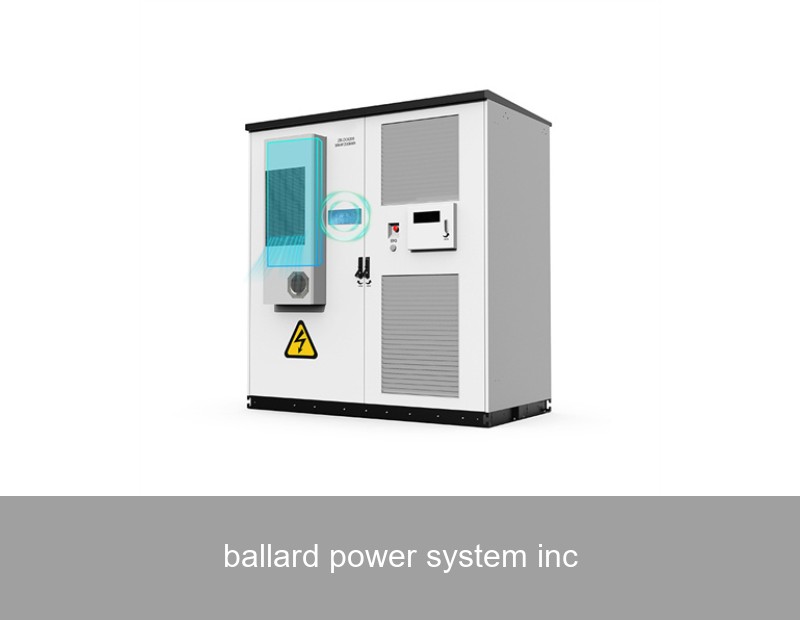
When we talk about decarbonizing heavy transport and industry, one name consistently surfaces: Ballard Power System Inc. As a global leader in proton exchange membrane (PEM) fuel cell technology, Ballard is synonymous with clean, efficient hydrogen power for buses, trucks, trains, and marine vessels. But here's a question we at Highjoule often ponder: What happens when the hydrogen supply isn't perfectly aligned with demand, or when the renewable energy powering electrolyzers is intermittent? The answer lies not just in advanced fuel cells, but in the intelligent energy storage systems that make the entire hydrogen value chain viable, reliable, and cost-effective.
The Hydrogen Imperative: Beyond the Hype
The energy transition is accelerating, and while batteries are revolutionizing passenger EVs and short-duration storage, sectors like long-haul trucking, shipping, and steel production require a different solution. They need a dense, clean energy carrier that can be refueled quickly. This is where green hydrogen—produced using renewable electricity—steps in. Companies like Ballard Power System Inc are crucial, as they provide the technology to convert that hydrogen back into electricity with only water as a byproduct. However, the journey from a solar panel or wind turbine to a fuel cell vehicle's wheels is not a straight line. It's a complex dance of generation, conversion, storage, and dispatch.
Ballard Power System Inc: A Pioneer in the Fuel Cell Arena
Founded in 1979, Ballard Power System Inc has been at the forefront of fuel cell innovation for decades. Their PEM fuel cells are prized for their high power density, rapid start-up, and durability—key attributes for demanding mobility applications. From powering buses across European cities to enabling zero-emission operations for global giants like major truck OEMs, Ballard's technology is a proven piece of the decarbonization puzzle. Yet, even Ballard's most advanced fuel cell module relies on a consistent, high-purity hydrogen supply. This dependency highlights a systemic challenge: the need for robust energy buffering at multiple points in the hydrogen economy.

Image Source: Unsplash - Representing the application of fuel cell technology in public transport.
The Unsung Hero: The Energy Storage Challenge for Hydrogen
Let's break down the chain. First, renewable energy (solar, wind) is variable. An electrolyzer, which produces hydrogen from water, operates most efficiently at a constant load. Second, hydrogen production might not match the refueling schedule of a fleet of trucks or ships. Third, what about the electricity needed for compression, purification, and the facility itself? This is where a holistic energy management strategy becomes non-negotiable.
Think of it this way: a hydrogen production hub is not just an industrial plant; it's a sophisticated microgrid. It needs to:
- Smooth Renewable Input: Buffer the intermittent solar/wind power to provide stable electricity to the electrolyzer.
- Ensure Grid Stability: Provide grid services (like frequency response) to support the local network, especially when drawing large amounts of power.
- Back Up Critical Loads: Guarantee that hydrogen purification and compression systems never experience an unexpected shutdown.
This is precisely the domain where companies like Highjoule excel. While Ballard provides the crucial end-use technology, Highjoule's advanced Battery Energy Storage Systems (BESS) provide the foundational stability that makes large-scale green hydrogen projects technically and economically feasible.
Highjoule's Role: Enabling a Resilient Hydrogen & Renewable Ecosystem
Since 2005, Highjoule has been designing and deploying intelligent storage solutions for the world's most demanding energy applications. For a hydrogen production facility or a heavy vehicle refueling station, our systems act as the central nervous system for power management.
Our H-Joule Quantum BESS, for instance, is engineered for high-cyclerate, grid-forming applications. In a hydrogen context, it can:
- Store excess solar energy during the day to extend electrolyzer operation into the night.
- Provide instantaneous power to balance grid fluctuations, preventing costly demand charges.
- Island the facility during grid outages, ensuring continuous and safe operation.
Furthermore, our Energy Management System (EMS) uses AI-driven forecasting to optimize the entire process: predicting renewable generation, scheduling electrolyzer runs during low-cost electricity periods, and deciding when to store power in batteries versus converting it to hydrogen. This integrated approach maximizes asset utilization and minimizes the levelized cost of hydrogen (LCOH)—a key metric for project developers and offtakers like transport companies relying on Ballard's fuel cells.
| Challenge | Ballard Fuel Cell Solution | Highjoule BESS & EMS Solution | Result |
|---|---|---|---|
| Zero-Emission Heavy Transport | Provides primary propulsion power for trucks/buses. | Stabilizes the grid at the hydrogen production/refueling site, reducing operational costs. | Lower total cost of ownership for fleet operators. |
| Intermittent Renewable Energy | Uses green hydrogen produced from renewables. | Smooths renewable input, enabling efficient, near-24/7 electrolyzer operation. | Higher capacity factor for electrolyzers, greener hydrogen. |
| Grid Congestion & Costs | N/A (End-user technology) | Provides peak shaving and grid services, reducing infrastructure strain and energy bills. | More viable project economics and better community grid relations. |
A Real-World Glimpse: Port of Antwerp's Hydrogen Ambitions
Consider the Port of Antwerp-Bruges in Belgium. It aims to become a European hydrogen hub, importing green hydrogen and using it to power port equipment, trucks, and ships. This involves large-scale hydrogen storage, distribution, and refueling stations. The power demand for compression, chilling, and auxiliary services is massive and variable.
In such a scenario, a multi-MW Highjoule BESS deployed alongside a refueling station would be instrumental. It would manage demand charges from the grid by discharging during peak compression cycles, integrate on-site solar canopies, and ensure uninterrupted power for safety-critical systems. This directly supports the deployment of hydrogen-powered vehicles using fuel cells from leaders like Ballard Power System Inc, by making the "fueling" part of the equation more reliable and affordable. Real data from similar industrial microgrid projects show that strategic battery storage can reduce peak demand charges by 20-30%, a significant operational saving that accelerates the return on investment for clean technology infrastructure.

Image Source: Unsplash - Representing the control and monitoring of a large-scale BESS.
The Integrated Future Energy Landscape
The path to net-zero is not a single technology race, but a symphony of integrated solutions. Ballard Power System Inc continues to push the boundaries of fuel cell performance and durability. Simultaneously, at Highjoule, we are advancing the intelligence and resilience of the power infrastructure that feeds the hydrogen economy. From commercial & industrial facilities adopting on-site hydrogen production to massive gigawatt-hour scale renewable hydrogen projects, the need for sophisticated energy storage and management is universal.
So, as you evaluate your organization's decarbonization roadmap, whether you're a logistics company looking at fuel cell trucks or a utility planning a hydrogen valley, we invite you to consider this: Have you assessed the full energy ecosystem required to make your hydrogen investment truly sustainable and resilient? The synergy between innovators like Ballard and Highjoule might just be the key to unlocking a reliable, clean energy future.
 Inquiry
 Online Chat