


Off-Grid Battery Bank: Your Complete Guide to Energy Independence
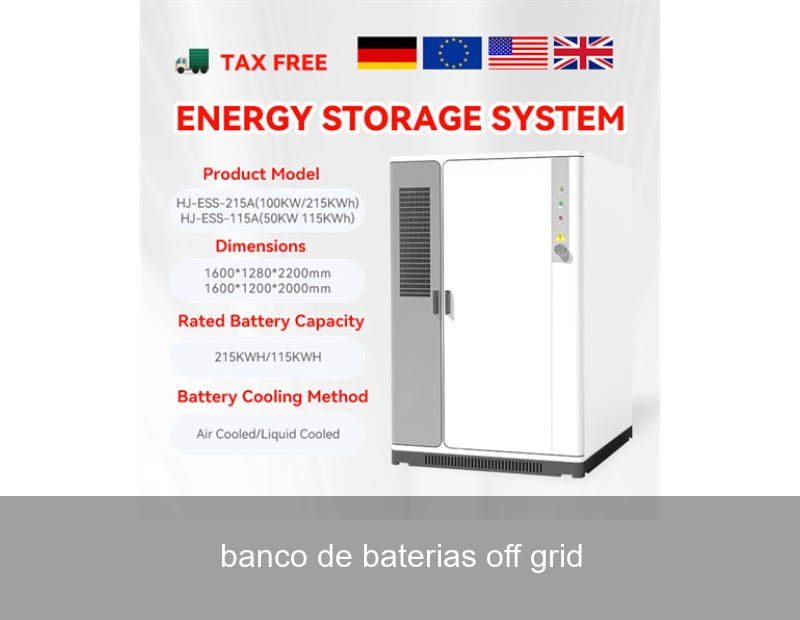
Imagine a home, farm, or business completely free from the grid. No power outages, no fluctuating bills, just clean, reliable electricity on your own terms. This isn't a futuristic dream; it's the reality made possible by a robust off-grid battery bank. For communities and properties in remote locations, or for anyone seeking ultimate energy resilience, these systems are the beating heart of a self-sufficient power setup. But how do they truly work, and what does it take to build a reliable one? As a leading provider in the energy storage sector, Highjoule has been engineering intelligent solutions since 2005. We'll demystify the technology and show you how the right system can transform your relationship with power.
Table of Contents
- What is an Off-Grid Battery Bank?
- Key Components of a Reliable System
- Why Sizing and Technology Matter
- A Real-World Case Study: Resilience in Practice
- The Highjoule Approach: Beyond the Battery Box
- Future Trends in Off-Grid Storage
What is an Off-Grid Battery Bank?
At its core, an off-grid battery bank is a sophisticated energy reservoir. Unlike grid-tied systems that supplement utility power, a true off-grid system has no physical connection to the public electricity network. It must generate, store, and manage all the electricity a property consumes. Think of it like a water well and storage tank for electricity: solar panels or a wind turbine are the "well," and the battery bank is the "storage tank" that ensures you have power even when the sun isn't shining or the wind isn't blowing.
This independence is crucial for remote cabins, agricultural operations, telecommunications infrastructure, and even entire microgrids for small communities. The global shift towards decentralization and resilience, especially in regions prone to wildfires or severe weather in the US and Europe, is driving more interest than ever in reliable off-grid solutions.
Key Components of a Reliable System
Building a resilient off-grid power system is like assembling a championship team. Each component has a critical role to play:
- The Battery Bank Itself: This is the star player, the energy storage unit. Modern systems typically use Lithium Iron Phosphate (LiFePO4) batteries for their long lifespan, safety, and depth of discharge.
- Charge Controller: The brain that manages energy flow from the solar panels to the batteries, preventing overcharging and damage.
- Inverter/Charger: The multitasker. It converts the DC power from the batteries into usable AC power for your appliances. A good one also includes a charger to top up batteries from a backup generator.
- Energy Source (e.g., Solar Panels): The primary fuel source, typically solar photovoltaic (PV) arrays.
- Backup Generator (often): A critical teammate for extended cloudy periods or unusually high energy demands, ensuring the system never fails.
- System Monitor & Controls: The coach, giving you real-time insights and control over your energy production and consumption.

This integrated approach is where companies like Highjoule excel. We don't just sell batteries; we provide engineered systems where every component is selected and calibrated to work in perfect harmony, maximizing efficiency and longevity.
Why Sizing and Technology Matter
One of the biggest mistakes in going off-grid is undersizing the battery bank. It's not just about today's needs; you must account for seasonal weather variations, future energy consumption increases, and the battery's own characteristics. For instance, a lead-acid battery bank can only safely use about 50% of its rated capacity, whereas a modern LiFePO4 bank can often use 90% or more. This means a 20kWh lithium system can effectively deliver nearly as much usable energy as a 36kWh lead-acid system!
The data is clear: according to the National Renewable Energy Laboratory (NREL), lithium-ion-based systems have become the dominant choice for new off-grid installations due to plummeting costs and superior performance metrics. The right technology choice directly impacts your system's footprint, maintenance needs, and total cost of ownership over 15-20 years.
A Real-World Case Study: Resilience in Practice
Let's look at a concrete example from the mountainous region of Colorado, USA. A family-run organic farm, located at the end of a vulnerable utility line, faced frequent winter outages that threatened their greenhouse operations and livestock watering systems. Their goal was 100% energy independence.
They partnered with an installer using Highjoule's integrated off-grid battery bank solution. The system was built around a 40kWh Highjoule HPS (High-Power Stack) lithium battery bank, paired with a 25kW solar array and a Highjoule hybrid inverter/charger. The intelligent system prioritizes solar charging and seamlessly activates a backup propane generator only during prolonged snow cover.
| Metric | Before System | After Highjoule System Installation |
|---|---|---|
| Annual Outage Hours | 120+ hours | 0 hours (full independence) |
| Greenhouse Temperature Reliability | Compromised, risk of crop loss | Fully maintained, year-round production secured |
| Estimated Fuel Cost (Generator) | $2,500/year (estimated for full load) | <$200/year (minimal generator use) |
| System Autonomy | 3-4 hours on small existing generator | 5+ days on battery bank alone |
This case highlights the transformative impact: it's not just about backup; it's about enabling a business to operate securely and sustainably, regardless of external grid conditions. The farm is now a model of resilience in their community.
The Highjoule Approach: Beyond the Battery Box
At Highjoule, we view an off-grid battery bank as the centerpiece of a broader energy ecosystem. Our products, like the HPS series for commercial/industrial scale or the more compact HRS for residential applications, are designed with off-grid robustness as a core principle. They feature built-in battery management systems (BMS) with advanced thermal controls and communication protocols that allow every module to work in perfect sync.
But our true differentiator is our GridLinkTM energy management system. This software platform turns a collection of hardware into an intelligent microgrid. It learns your consumption patterns, predicts weather-based solar generation, and automatically schedules the most efficient use of your resources—solar, battery, and backup generator. For our European customers, especially in regions like Scandinavia or the Mediterranean islands where off-grid needs vary widely, this smart management is key to optimizing return on investment and ensuring reliability.

Future Trends in Off-Grid Storage
The future of off-grid battery banks is even smarter and more integrated. We're seeing a move towards hybrid systems that can optionally connect to the grid for selling excess power where it's available, but with the primary focus remaining on self-consumption. Furthermore, the integration of other renewable sources like small-scale wind is becoming more plug-and-play. The International Renewable Energy Agency (IRENA) notes that continued innovation in storage is the key to unlocking the full potential of decentralized renewable energy worldwide.
For the end-user, this means systems that are easier to manage, more adaptable, and increasingly cost-effective over their long lifespan. The question is evolving from "Can I go off-grid?" to "How intelligently can I manage my own energy destiny?"
Is your business, community, or home ready to assess what true energy independence could look like, and what the ideal size and technology for your off-grid battery bank should be?
 Inquiry
 Online Chat