


On-Grid vs Off-Grid Solar Panels: Choosing the Right System for Your Energy Independence
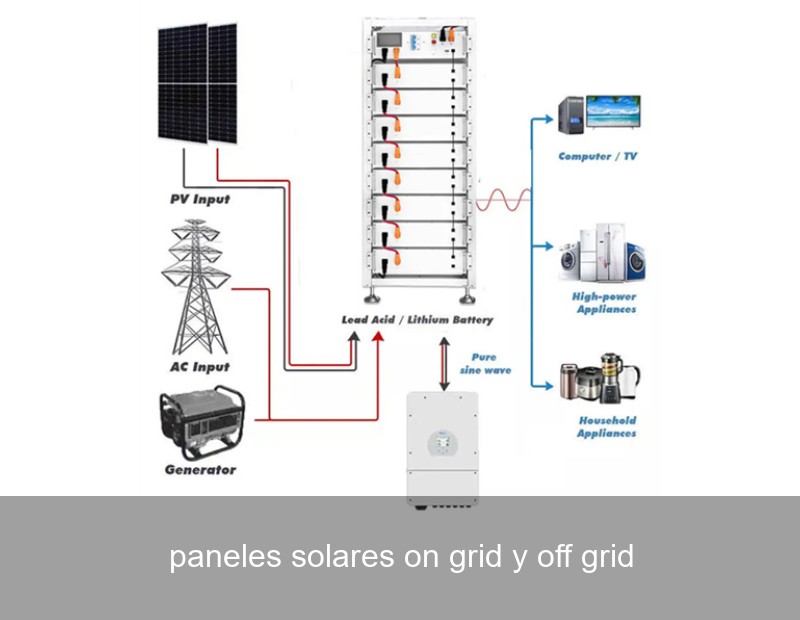
So, you've decided to harness the power of the sun. Congratulations! It's one of the smartest moves for your wallet and the planet. But as you dive into the world of paneles solares on grid y off grid, you might find yourself facing a fundamental choice: should you stay connected to the utility grid or cut the cord completely? This isn't just a technical detail; it's a decision that shapes your energy independence, resilience, and savings. Let's demystify these two solar pathways, using real-world data and clear explanations, to guide you toward the perfect solar setup for your home or business.
Table of Contents
- The On-Grid Solar System: Your Efficient Energy Partner
- The Off-Grid Solar System: Complete Energy Autonomy
- The Best of Both Worlds: Hybrid Solar Systems
- Case Study: A California Winery's Solar Journey
- Making the Right Choice: Key Factors to Consider
- How Highjoule Powers Your Solar Decision
The On-Grid Solar System: Your Efficient Energy Partner
Imagine your solar panels as a mini power plant on your roof. An on-grid (or grid-tied) system is directly connected to the public electricity grid. During sunny days, your panels generate electricity. This power is used first to run your home. Any excess isn't wasted; it's fed back into the grid.
This is where it gets interesting. In many regions in Europe and the US, utilities offer net metering programs. Your meter literally runs backwards, and you receive credits for the power you export. At night or on cloudy days, you seamlessly draw power from the grid, using up those credits. It's a beautifully efficient give-and-take relationship.
Key Components of an On-Grid System:
- Solar Panels: Convert sunlight into direct current (DC) electricity.
- Grid-Tied Inverter: The brain of the operation. It converts DC to usable alternating current (AC) for your home and synchronizes perfectly with the grid's frequency and voltage. Crucially, it has a safety feature that shuts down during a grid outage to protect utility workers.
- Bi-Directional Meter: Tracks both the electricity you import and export.
The Big Advantage: Cost-effectiveness. You avoid the high expense of battery storage, maximizing your return on investment through net metering. However, the trade-off is that when the grid goes down, your solar system shuts off too, even on a sunny day. You're efficient, but not resilient to outages.
The Off-Grid Solar System: Complete Energy Autonomy
Now, picture a self-contained energy fortress. An off-grid system has no physical connection to the public electricity grid. You are 100% responsible for generating and storing every watt-hour you consume. This is the choice for remote cabins, rural homesteads, or anyone seeking ultimate energy independence.
The core challenge here isn't just generating power—it's storing it and managing demand. You must size your system to handle consecutive cloudy days, known as "days of autonomy." This often means a larger solar array and a significant battery bank.
Key Components of an Off-Grid System:
- Solar Panels: A larger array to collect ample energy.
- Charge Controller: Protects batteries from overcharging.
- Battery Bank: The heart of independence. This is where your solar energy is stored for use at night or during poor weather. Lithium-ion batteries, like those Highjoule specializes in, are now the standard due to their longer lifespan, higher depth of discharge, and compact size.
- Off-Grid Inverter: Converts DC from the batteries to AC for your appliances, without needing grid synchronization.
- Backup Generator (often): A fuel-powered generator is common as a final backup for extended bad weather.
The Big Advantage: True independence and reliability in areas with no grid or frequent outages. The trade-offs are a higher upfront cost and the need for diligent energy consumption management. Every kilowatt-hour counts.

Image: Off-grid solar systems enable energy independence in remote locations. (Photo by Vivint Solar on Unsplash)
The Best of Both Worlds: Hybrid Solar Systems
What if you could have the financial benefits of the grid and the backup security of batteries? Enter the hybrid solar system, also known as a "battery-ready" or "grid-tied with storage" system. This is the fastest-growing segment in residential and commercial solar, and for good reason.
A hybrid system remains connected to the grid but incorporates a battery storage system, like Highjoule's HES Series for homes or C&I PowerStack for businesses. The intelligence lies in how the energy is managed:
- Solar power first charges the battery to a set level.
- Excess solar is then exported to the grid for credits.
- During a grid outage, the system automatically islandes, using solar and battery power to keep your critical loads running.
- You can also program the system to use stored energy during peak utility rate periods (peak shaving), slashing your bills further.
This approach future-proofs your investment, giving you control, resilience, and continued grid benefits. It's the pragmatic choice for a world with increasing weather volatility and variable electricity rates.
Case Study: A California Winery's Solar Journey
Let's look at a real example from Sonoma County, California—a region prone to seasonal wildfires and Public Safety Power Shutoffs (PSPS). A mid-sized winery initially installed a 250 kW on-grid solar array. It cut their energy bills by 60% through net metering, a fantastic result. However, during the 2020 PSPS events, the winery was forced to shut down for 5 days. Critical refrigeration for wine tanks failed, threatening millions of dollars in inventory and halting production.
The Solution: In 2022, they partnered with Highjoule to retrofit their system into a hybrid one. We integrated a 500 kWh Highjoule C&I PowerStack battery energy storage system (BESS) with advanced energy management software.
| Metric | Before Hybrid System | After Hybrid System |
|---|---|---|
| Grid Outage Resilience | 0 hours (full shutdown) | 72+ hours of critical load operation |
| Bill Savings (Post-Retrofit) | 60% reduction | 85% reduction (using battery for peak shaving) |
| CO2e Emissions Avoided | ~120 tons/year | ~145 tons/year |
This winery now uses its solar energy more intelligently, runs essential operations during outages, and has achieved a faster payback period due to enhanced savings. It's a perfect illustration of evolving from a simple on-grid to a resilient, intelligent hybrid system. For more on commercial solar+storage benefits, see this report by the Solar Energy Industries Association (SEIA).
Making the Right Choice: Key Factors to Consider
Choosing between paneles solares on grid y off grid (or the hybrid middle path) boils down to a few critical questions:
- Grid Reliability & Costs: Are outages common? Are electricity rates high or do they have time-of-use charges? (If yes, lean towards hybrid).
- Location & Grid Access: Is the grid connection available and affordable? Running a power line can cost tens of thousands of dollars, making off-grid the cheaper option in truly remote areas.
- Budget: On-grid is the least expensive upfront. Off-grid requires a major investment in batteries and often a generator. Hybrid sits in between.
- Energy Goals: Is your primary goal to save money, achieve total self-sufficiency, or ensure backup power? Your priority dictates the system type.
Remember, local regulations and incentives are huge factors. The U.S. Federal Investment Tax Credit (ITC), for instance, now includes standalone storage, making hybrid and off-grid systems more financially attractive.
How Highjoule Powers Your Solar Decision
At Highjoule, we don't just sell components; we provide intelligent, integrated energy solutions. Whether you're considering a grid-tied, off-grid, or hybrid system, our expertise ensures your system is optimized for your unique needs.
For the homeowner, our HES (Home Energy System) is a sleek, all-in-one hybrid solution that combines a high-efficiency inverter with scalable lithium-ion battery modules. Its AI-driven software learns your consumption patterns, automatically deciding when to store, use, or sell energy to maximize your savings and comfort.
For businesses and industrial applications, our C&I PowerStack and containerized Utility-Scale BESS deliver unmatched reliability and grid services capabilities. These systems are engineered for safety, longevity, and seamless integration with large-scale solar arrays, turning your energy infrastructure into a strategic asset.

Image: Industrial battery storage systems are key for commercial solar resilience. (Photo by American Public Power Association on Unsplash)
Our global team works with you from design through commissioning and ongoing monitoring, ensuring your journey to solar—whether on-grid, off-grid, or hybrid—is smooth, successful, and sustainable.
Ready to Define Your Energy Future?
The path to solar isn't one-size-fits-all. Your perfect system depends on the intersection of your location, goals, and challenges. As you contemplate paneles solares on grid y off grid, ask yourself this: In five years, when you look back at your energy system, what will matter more—the slight difference in initial cost, or the peace of mind and control you gained every single day?
What's the one critical load in your home or business that you absolutely cannot afford to lose power to, and how would a resilient solar+storage system change your approach to that risk?
 Inquiry
 Online Chat