


The Battery Energy Storage System Inverter: The Intelligent Brain Behind the Brawn
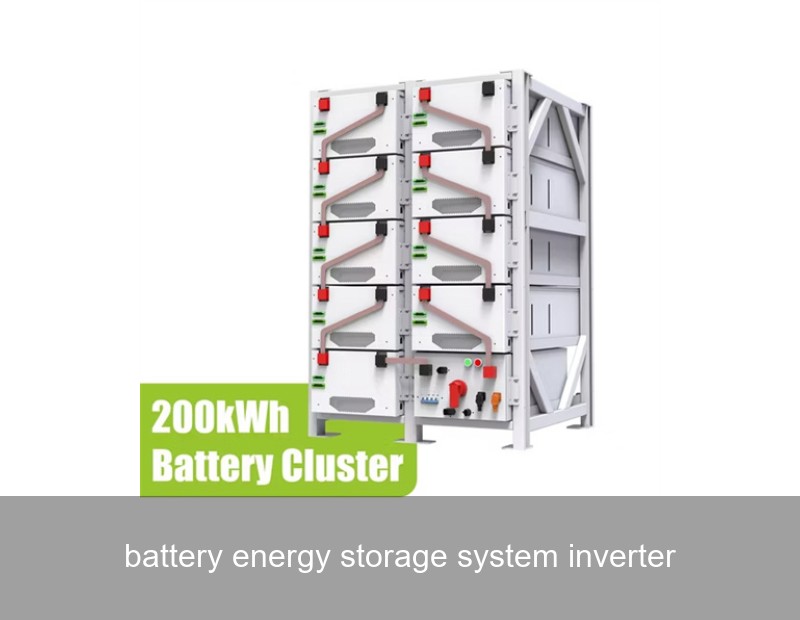
When people think about a battery energy storage system (BESS), the battery pack itself often steals the spotlight. It's understandable—those are the cells that physically hold the energy. But ask any seasoned energy engineer, and they'll tell you the true intelligence, the component that unlocks the system's full potential, is the battery energy storage system inverter. This critical device is far more than a simple converter; it's the sophisticated command center that determines how efficiently stored DC power becomes usable AC power, how swiftly it responds to grid demands, and how safely the entire system operates. For businesses and communities in Europe and the US looking to harness renewables, manage costs, and ensure resilience, understanding the inverter's role is the first step to a successful storage project.

Image Source: Unsplash - Representative image of advanced power conversion equipment
The Unsung Hero of Your Energy Storage: Why the Inverter Matters
Let's break down the fundamental phenomenon. Solar panels and batteries operate on Direct Current (DC)—electricity that flows in one constant direction. Our homes, factories, and the entire grid run on Alternating Current (AC), where the flow of electricity reverses direction periodically. The battery energy storage system inverter is the essential bridge between these two worlds. Its primary job is to convert stored DC from the batteries into clean, grid-compliant AC power when you need it. But a cheap, basic inverter does just that—conversion, often with significant energy loss and limited functionality.
The real magic happens with advanced inverters used in systems like those from Highjoule. These are bi-directional, smart inverters. They don't just convert DC to AC (discharging); they also convert AC to DC (charging) with exceptional efficiency. This bi-directional capability is the cornerstone of any functional storage system, allowing it to absorb excess solar energy during the day and dispatch it at night. However, the gap between a simple converter and a smart grid asset is vast. The latest generation of inverters incorporates high-speed processors and advanced software, enabling features like:
- Ultra-high Efficiency (up to 98.5%+): Minimizing energy loss during conversion, which directly translates to more usable power and a better return on investment.
- Grid-Forming Capabilities: The ability to "create" a stable voltage and frequency waveform, essentially acting as a standalone power source to kick-start a microgrid during a blackout.
- Advanced Grid Support Functions: Automatically providing services like frequency regulation, voltage support, and ramp rate control to help stabilize the wider electricity network.
Beyond Conversion: The Multifaceted Role of a Modern BESS Inverter
Think of the inverter as the brain and the battery as the muscle. The brain doesn't just tell the muscle to contract; it coordinates complex movements, reacts to the environment, and ensures safety. Similarly, a modern battery energy storage system inverter from a leader like Highjoule performs a symphony of critical functions:
- System Control & Energy Management: It executes the dispatch strategy, deciding precisely when to charge or discharge based on electricity prices, consumption patterns, or grid signals.
- Safety & Protection: It continuously monitors for faults—like islanding (operating while the grid is down unsafely), overcurrent, or voltage irregularities—and disconnects in milliseconds to protect both the system and personnel.
- Communication & Integration: It serves as the primary communication hub, connecting with battery management systems (BMS), external energy management software (EMS), and grid operators for seamless control.
This integrated intelligence is what transforms a collection of components into a reliable, revenue-generating asset. Highjoule's HyperFlex Inverter Series, for example, is engineered specifically for this multifaceted role. It's not an off-the-shelf component but a core part of Highjoule's integrated system design, optimized to work in perfect harmony with their battery packs and proprietary control software for maximized performance and longevity.
Key Technologies Powering Today's Advanced Inverters
The performance leap in recent years is driven by tangible technological advancements. The shift from traditional Insulated-Gate Bipolar Transistors (IGBTs) to Silicon Carbide (SiC) MOSFETs in many advanced inverters is a game-changer. SiC technology allows for higher switching frequencies, which leads to smaller, lighter magnetic components (like transformers) and significantly higher efficiency, especially at partial loads. This means less energy wasted as heat and more power delivered to your operations.
Furthermore, the software and controls—often called the "inverter firmware"—are where much of the differentiation lies. This is the logic that enables the inverter to provide grid services. For instance, an inverter can be programmed to respond in less than a second to a frequency dip from the grid by injecting power, a service that is increasingly valuable and compensated in markets like the PJM Interconnection in the US or National Grid in the UK.
| Feature | Basic String Inverter | Advanced BESS Inverter (e.g., Highjoule HyperFlex) |
|---|---|---|
| Primary Function | DC-to-AC Conversion | Bi-directional Conversion + Grid Intelligence |
| Efficiency Peak | ~96% | >98.5% |
| Grid Support Functions | Limited or None | Frequency Regulation, Voltage Support, Ramp Control, Grid-Forming |
| Communication & Control | Basic Monitoring | Advanced API, SCADA Integration, Fleet Management Ready |
| Ideal Application | Simple Residential PV | Commercial & Industrial BESS, Microgrids, Utility-Scale Storage |
A Real-World Case: Grid Stability in Germany
Let's look at a concrete example from Europe. Germany's Energiewende (energy transition) has led to a high penetration of variable wind and solar power. This can create localized grid congestion and frequency instability. In 2022, a large industrial park in North Rhine-Westphalia, facing curtailment of its renewable generation and rising grid service fees, deployed a 12 MWh battery storage system featuring advanced, grid-interactive inverters.
The system, utilizing technology principles central to Highjoule's approach, was specifically configured to provide primary control reserve (PCR), also known as frequency containment reserve. The battery energy storage system inverters were programmed to constantly monitor the grid frequency and automatically inject or absorb power within seconds to keep it stable at 50 Hz. The result? In its first year of operation, the project not only saved the industrial park over €200,000 in grid fees and avoided renewable curtailment but also generated approximately €150,000 in revenue from the PCR market by providing this critical service to the transmission system operator. The inverters' speed, accuracy, and reliability were paramount to qualifying for and delivering this service. You can read more about the importance of frequency control in modern grids from the European Network of Transmission System Operators (ENTSO-E).

Image Source: Unsplash - Representative image of a commercial BESS installation
Choosing the Right Inverter: A Guide for Project Developers
Selecting the inverter isn't about picking the highest power rating. It's about matching the technology to your application's specific needs. Here are key questions to consider:
- What is the Primary Use Case? Is it for solar self-consumption, demand charge reduction, backup power, or wholesale market arbitrage? Each favors different inverter response profiles and cycling capabilities.
- What Grid Services are Available in Your Region? Markets in Texas (ERCOT), California (CAISO), or across the EU have different rules. Your inverter must be capable of providing the specific services (frequency response, capacity) that are monetizable.
- How Important is Resilience? If black-start capability or seamless microgrid operation is critical, you must prioritize inverters with proven grid-forming functionality.
- What is the Total System Architecture? Is it a DC-coupled or AC-coupled system? This fundamental design choice is dictated by and influences the type of inverter used.
This is where partnering with a full-system provider like Highjoule provides immense value. Instead of sourcing a generic inverter and trying to integrate it, Highjoule delivers a pre-engineered, optimized solution. Their Energy Stack Platform combines their high-efficiency HyperFlex inverters with intelligent software that can be configured for any of the above use cases, ensuring all components are perfectly matched for safety, performance, and profitability.
The Future of BESS Inverters: Smarter, More Integrated Grid Partners
The evolution of the battery energy storage system inverter is moving towards even deeper grid integration and artificial intelligence. We're seeing the emergence of "smart inverters" that can autonomously communicate with each other (peer-to-peer coordination) and with grid operators to optimize power flows across a distribution network. Furthermore, AI-driven predictive controls are being integrated, allowing inverters to anticipate grid stress or price signals and pre-position the battery's state of charge for optimal response.
As virtual power plants (VPPs) become more prevalent, the inverter's role as a secure, reliable, and controllable gateway will only magnify. The inverter will be the key hardware ensuring that your distributed energy resource can be aggregated and dispatched as a valuable grid asset. Research into these future grid architectures is ongoing at institutions like the National Renewable Energy Laboratory (NREL).
Given the pivotal role this technology plays in both the economics and reliability of your energy storage investment, what specific challenge—peak shaving, revenue stacking, or full energy independence—is driving you to explore a battery storage solution today, and how can understanding the inverter's capabilities shape your project's design?
 Inquiry
 Online Chat