


Batteria Accumulo Trifase: The Complete Guide to 3-Phase Battery Storage
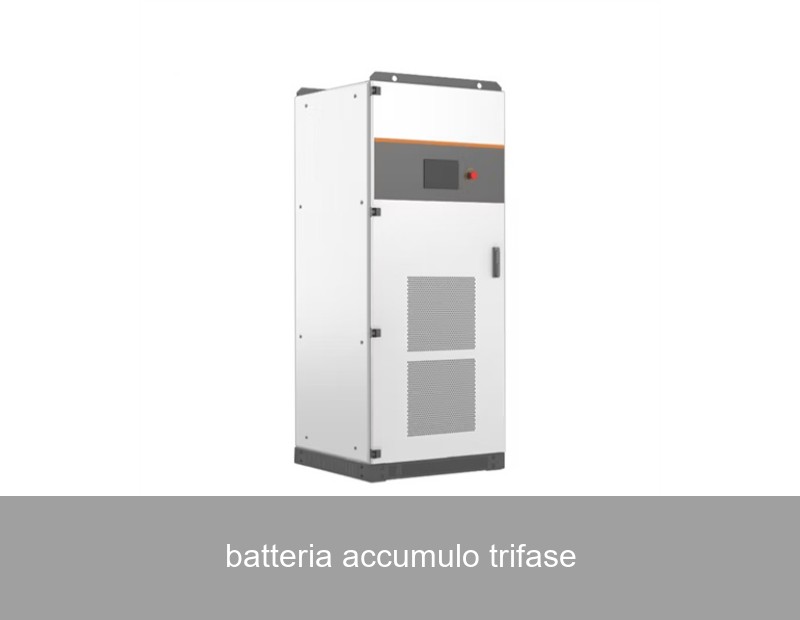
If you're a homeowner with a sizable property, a business owner, or managing an industrial facility in Europe or the US, you've likely heard about solar power. But have you ever wondered why sometimes the system doesn't seem to handle all your heavy-duty appliances or machinery seamlessly? The answer often lies not in the solar panels themselves, but in the heart of your energy system: the battery storage. Specifically, for many larger installations, the key is a batteria accumulo trifase – a three-phase battery storage system. Unlike common single-phase systems, a three-phase battery integrates with three-phase electrical grids, providing balanced, stable, and high-power energy for demanding applications. Let's explore why this technology is becoming the standard for serious energy independence and how it can transform your relationship with electricity.
Table of Contents
- What is a Three-Phase Battery Storage System?
- Why Three-Phase Power Matters for Your Home or Business
- Key Benefits of a 3-Phase Battery System
- A Real-World Case: The Italian Agri-Food Cooperative
- Choosing the Right Three-Phase Storage System
- Highjoule's Advanced Solutions for Three-Phase Energy Management
What is a Three-Phase Battery Storage System?
To understand a batteria accumulo trifase, we first need to grasp the basics of electrical phases. Most residential homes in countries like Italy, Germany, or parts of the US with standard loads use a single-phase power supply. It's a single alternating current (AC) wave delivering power, sufficient for lights, TVs, and refrigerators.
Three-phase power, however, uses three alternating currents, each out of phase with the others by 120 degrees. This creates a constant, smooth, and powerful flow of energy. It's the backbone of industrial machinery, large HVAC systems, commercial elevators, and even larger European villas or farms with electric vehicle chargers, pumps, and workshops.
A three-phase battery storage system is specifically designed to interact with this type of grid. It doesn't just store DC energy from solar panels; its inverter is a sophisticated three-phase inverter that converts stored energy into a perfectly synchronized three-phase AC output. This ensures balanced load across all three phases, preventing issues like phase imbalance which can lead to inefficiency and equipment stress.

Three-phase AC waveforms are offset by 120 degrees, providing smooth power delivery. Source: Wikimedia Commons
Why Three-Phase Power Matters for Your Home or Business
The shift towards three-phase battery storage isn't just a technical nuance; it's a response to real-world energy evolution. A decade ago, a typical home's electrical load was predictable. Today, the simultaneous demand from an electric vehicle charging at 11 kW, an air-source heat pump, and a home sauna can easily overwhelm a single-phase connection, leading to tripped breakers or the need for costly grid upgrades.
For businesses, the stakes are higher. Manufacturing processes, refrigeration, and data centers require not only high power but also exceptional stability. Voltage sags or phase imbalances can cause production halts, product spoilage, or data loss. A batteria accumulo trifase acts as a buffer and a balancer. It can provide the surge power needed for motor start-ups and seamlessly fill in during short grid interruptions, something single-phase systems struggle with at a larger scale.
According to the International Renewable Energy Agency (IRENA), integrating storage with renewable energy is critical for grid stability. Three-phase systems, in particular, offer superior grid-support functions like reactive power control, which helps maintain voltage levels across the local network—a feature increasingly valued by grid operators in Europe and North America.
Key Benefits of a 3-Phase Battery System
- High Power Output & Load Support: Capable of delivering high instantaneous power (often 10 kW per phase and above), perfect for starting motors and running multiple heavy loads concurrently.
- Superior Phase Balancing: Intelligent systems automatically redistribute loads between phases, maximizing efficiency and preventing any single phase from being overloaded.
- Enhanced Self-Consumption: For large solar arrays (common in commercial or agricultural settings), a three-phase battery ensures no solar energy is wasted. It stores excess generation from all phases and redistributes it where needed.
- Grid Support & Resilience: Provides a higher level of backup power. During a grid outage, a quality three-phase system can often power the entire property's three-phase infrastructure, not just a select few circuits.
- Future-Proofing: Prepares your property for the electrification of everything—from vehicle fleets to heating systems—without requiring another electrical system overhaul.
A Real-World Case: The Italian Agri-Food Cooperative
Let's look at a concrete example from Northern Italy. A mid-sized agri-food cooperative with refrigeration warehouses, cheese processing machinery, and packaging lines faced two problems: exorbitant peak demand charges from the grid and vulnerability to even brief power outages that risked spoiling inventory.
Their existing single-phase storage was insufficient for their three-phase loads. They installed a 50 kWh batteria accumulo trifase system coupled with a 100 kWp solar array. The results over 12 months were telling:
| Metric | Before Installation | After Installation |
|---|---|---|
| Grid Peak Demand | 180 kW | 110 kW (39% reduction) |
| Energy Self-Consumption | 35% | 82% |
| Estimated Annual Savings | — | €28,500 |
| Backup Coverage | Critical lights only | Full processing line for 4+ hours |
The system's three-phase inverter actively managed the load, using battery power to "shave" peaks when all compressors kicked in simultaneously. This not only saved costs but also provided full-facility resilience. Studies in applied energy journals confirm that such peak shaving in industrial settings offers some of the fastest returns on investment for storage.
Choosing the Right Three-Phase Storage System
Not all three-phase batteries are created equal. When evaluating a batteria accumulo trifase, consider these technical and practical aspects:
- Inverter Topology: Does it use a single three-phase inverter or three single-phase inverters coupled? The former often offers better phase balancing and simpler installation.
- Power per Phase: Ensure the continuous and peak output per phase meets your highest concurrent load requirements.
- Software Intelligence: The system's brain is its software. Look for features like dynamic peak shaving, time-of-use optimization, and the ability to participate in grid flexibility programs (like National Grid ESO services in the UK).
- Modularity & Scalability: Can you easily add more battery capacity in the future as your needs grow?

A modern, modular three-phase battery storage system in an industrial setting. Source: Unsplash
Highjoule's Advanced Solutions for Three-Phase Energy Management
At Highjoule, with nearly two decades of experience since 2005, we've engineered our H-Series Commercial & Industrial and H-Series Premium Residential lines specifically for the demands of three-phase applications. Our systems are built on a philosophy of intelligent resilience.
Our proprietary TriBalance AI software doesn't just store and release energy. It continuously monitors load across all three phases, predicting consumption patterns and proactively dispatching energy to prevent imbalance before it happens. For our commercial clients, this means protecting sensitive equipment and minimizing demand charges automatically.
Furthermore, Highjoule's systems are designed with scalability at their core. A business can start with a 30 kWh system and expand to over 300 kWh seamlessly, with our stacked battery modules and a future-proof three-phase inverter. We provide a complete solution: from initial energy audit and system design to installation, grid compliance support (crucial in diverse European and US markets), and ongoing performance monitoring through our Highjoule Energy Hub platform.
We understand that a batteria accumulo trifase is a significant investment. That's why our focus is on delivering a system that maximizes your return—not just through energy savings, but by providing operational stability and contributing to your sustainability goals.
Is your current energy setup silently limiting your growth or resilience? What would it mean for your operations or your home if you could guarantee stable, balanced power for your most critical loads, regardless of what's happening on the grid?
 Inquiry
 Online Chat