


Finding the Best Off-Grid Solar Inverter in Sweden: Your Guide to Energy Independence
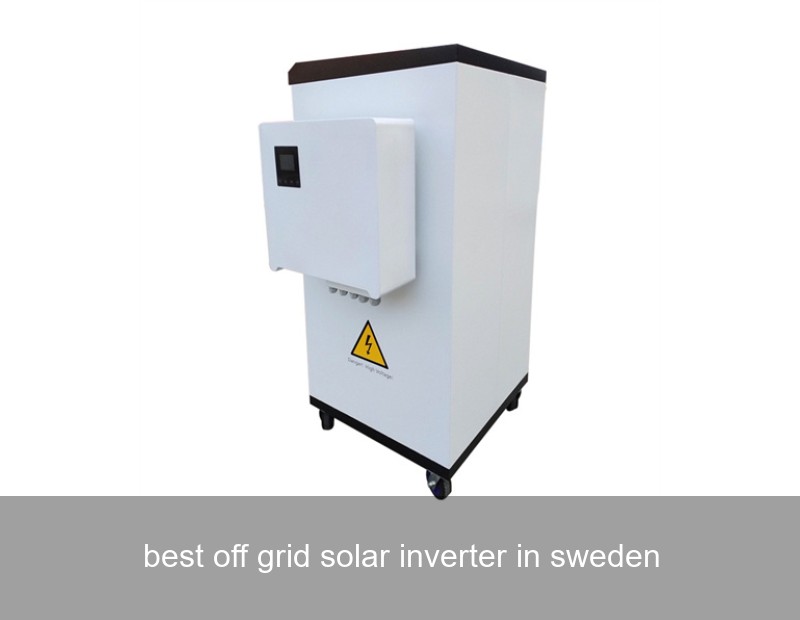
Imagine a cozy Swedish cabin nestled deep in the forests of Norrland, or a remote farmstead on the windswept plains of Gotland. The power grid is a distant thought, yet the lights are on, the refrigerator hums quietly, and the sauna is heating up. This isn't magic; it's the power of a well-designed off-grid solar system, with its heart being the best off-grid solar inverter in Sweden. But with Sweden's unique climate—long summer days followed by dark, energy-intensive winters—choosing the right inverter isn't just about specs; it's about resilience, efficiency, and smart energy management. This guide will walk you through what makes an inverter truly stand out in the Swedish context and how to achieve true energy freedom.
Table of Contents
- The Swedish Off-Grid Challenge: More Than Just Sunlight
- Beyond Conversion: The Multifaceted Role of Your Off-Grid Inverter
- Key Features of the Best Off-Grid Solar Inverter for Sweden
- A Real-World Case: The Värmland Mountain Lodge
- It's a System, Not Just an Inverter: Integration is Key
- The Highjoule Approach: Engineered for Nordic Resilience
- Looking Ahead: The Smart, Connected Off-Grid Future
The Swedish Off-Grid Challenge: More Than Just Sunlight
Going off-grid in Sweden presents a fascinating energy puzzle. Your power source—the sun—is highly variable. Data from the Swedish Meteorological and Hydrological Institute (SMHI) shows Stockholm enjoys nearly 1,821 hours of sunshine annually, but in December, it plummets to a mere 20-30 hours. This isn't just a seasonal dip; it's a fundamental design constraint. Your system must harvest and store massive amounts of energy during the bright summer months to sustain you through the dark winter. An inefficient or poorly sized inverter becomes the weakest link, wasting precious kilowatt-hours when you can least afford it. The best off-grid solar inverter in Sweden must be a master of efficiency across a wide load range and excel at managing complex battery storage cycles.
Beyond Conversion: The Multifaceted Role of Your Off-Grid Inverter
Think of your inverter as the brain and central nervous system of your off-grid power plant. Its primary job is to convert direct current (DC) from your solar panels and batteries into the alternating current (AC) that powers your home. But in an off-grid setting, its duties are far more extensive:
- Battery Management: It intelligently charges your battery bank, preventing overcharging or deep discharge that can kill batteries prematurely.
- Load Prioritization: In times of low energy, can it shed non-critical loads to keep your fridge and essential lights running?
- Multi-Source Integration: Can it seamlessly integrate a backup generator or a wind turbine for those long, still winter nights?
This is where brands like Highjoule differentiate themselves. With nearly two decades of experience, Highjoule designs its off-grid inverters not as standalone components but as intelligent hubs, built to handle the holistic energy management challenges typical for properties in Scandinavia and beyond.
Key Features of the Best Off-Grid Solar Inverter for Sweden
So, what specs should you scrutinize on your quest for the best? Here’s your checklist:
| Feature | Why It Matters in Sweden | What to Look For |
|---|---|---|
| Peak & Surge Power | Starting motors for pumps, well drills, or workshop tools requires a sudden power surge. | An inverter with a high surge capacity (2-3x its continuous rating) to handle startup loads without crashing. |
| Efficiency at Low & Partial Load | Your system will often run at partial load, especially at night or in low-sun periods. Inefficiency here wastes stored energy. | Euro efficiency or weighted efficiency ratings above 95%, even at 20-30% load. |
| Cold Temperature Operation | Batteries and electronics behave differently at -20°C. Your inverter must protect itself and your battery bank. | Wide operating temperature range (e.g., -25°C to +60°C) and integrated battery temperature sensors. |
| Advanced Battery Compatibility | Modern lithium-ion (like LiFePO4) batteries have different charging profiles than old lead-acid. | Programmable, multi-stage charging profiles tailored for specific lithium, lead-acid, or gel batteries. |
| Grid & Generator Support | A backup generator is common in Swedish off-grid setups for winter backup. | A built-in automatic start (AGS) function for generators and seamless transfer switching. |
Highjoule's H-IQ8 Off-Grid Series, for instance, is engineered with these Nordic demands in mind. It features adaptive power technology that dynamically adjusts to load surges, ultra-high efficiency curves optimized for partial loads, and a sophisticated battery management system (BMS) communication protocol that speaks directly with your lithium batteries to maximize their lifespan and performance.

Image Source: Unsplash - Representative image of a modern off-grid energy system.
A Real-World Case: The Värmland Mountain Lodge
Let's move from theory to practice. Consider a family-owned mountain lodge in Värmland, completely off-grid. Their challenge was peak winter loads from electric heating supplements, a water pump, and guests charging devices, all while solar input was minimal.
- Old System: A basic 5kW off-grid inverter with lead-acid batteries. It struggled with surge loads, required frequent generator runs in winter, and battery replacements were costly.
- Solution: Installation of a Highjoule H-IQ8 10kW off-grid inverter system paired with a 40kWh Highjoule Lithium-Ion battery bank.
- Results:
- Generator runtime reduced by over 70% in the first winter.
- System efficiency increased, capturing more of the limited winter sun.
- The inverter's smart load management automatically prioritizes heat pumps during guest occupancy hours.
- Remote monitoring via Highjoule's platform allows the owners to manage energy use from their primary home in Karlstad.
This case highlights that the best off-grid solar inverter in Sweden is one that solves real-world energy scarcity problems through intelligence and robust integration.
It's a System, Not Just an Inverter: Integration is Key
Your inverter is only as good as the ecosystem it's part of. True reliability comes from components designed to work in harmony. This means your inverter, charge controller, battery management system, and monitoring software should communicate seamlessly. Proprietary or closed systems can lock you in and create future upgrade headaches. Look for inverters that support open or widely-adopted communication standards (like CAN bus or Modbus) for flexibility. Highjoule's philosophy is to provide a fully integrated, yet modular, Energy Storage System (ESS). Their inverters are the core of a suite where batteries, monitoring, and control are designed together, tested together, and guaranteed to work together—drastically simplifying installation and ensuring long-term stability for your Swedish homestead or business.
The Highjoule Approach: Engineered for Nordic Resilience
At Highjoule, we understand that providing power off the grid is about more than just technology; it's about providing peace of mind. Founded in 2005, our journey has been focused on creating intelligent, durable storage solutions for the world's most demanding environments—and the Swedish countryside certainly qualifies. Our products, like the H-IQ8 Off-Grid Series, are not just "rated for cold weather"; they are actively engineered for it. From conformally coated circuit boards that resist condensation to algorithms that pre-warm battery compartments in extreme cold, our design considers the nuances you face. When you choose a Highjoule system, you're not just buying an inverter; you're investing in a comprehensive power security solution backed by global expertise and local support networks.

Image Source: Unsplash - Representative image of advanced inverter technology.
Looking Ahead: The Smart, Connected Off-Grid Future
The future of off-grid living in Sweden is smart and connected. Imagine your inverter not only managing solar and batteries but also forecasting weather, learning your consumption patterns, and automatically optimizing every watt-hour. It could integrate with vehicle-to-home (V2H) technology from your electric car, using your EV as an emergency power bank during a prolonged *svartmölla* (blackout). The lines between off-grid and grid-assist systems are blurring, creating resilient hybrid setups. The best off-grid solar inverter you choose today should be a platform for this future—upgradable, software-driven, and connected.
Ready to Design Your Swedish Energy Independence?
Choosing the right inverter is the most critical decision in your off-grid journey. It requires balancing technical specifications with the practical realities of Swedish seasons. We've discussed efficiency, surge power, cold-weather operation, and the irreplaceable value of a fully integrated system. But your situation is unique. What's the one energy-intensive appliance you're most concerned about powering during a dark, cold February week? Is it the heat pump, the workshop, or perhaps ensuring a constant water supply? Identifying that core need is the first step to building a system that doesn't just function, but thrives.
 Inquiry
 Online Chat