


Mango Power E 3,500Wh Portable Power Station: Your Ultimate Guide to Off-Grid Energy
a sudden storm knocks out your neighborhood's power. Your home office goes dark, the refrigerator hums to a stop, and your router's lights fade. Now, imagine a different scenario. You pull out a compact, sleek unit, plug in your essentials, and life—and work—carries on uninterrupted. This isn't magic; it's the reality offered by advanced portable power stations like the Mango Power E 3,500Wh Portable Power Station. For homeowners, outdoor enthusiasts, and remote workers, reliable power is no longer a luxury; it's a necessity. In this guide, we'll explore this powerful device, its place in the broader energy ecosystem, and how companies like Highjoule are building a more resilient energy future for homes and businesses worldwide.
Table of Contents
What is the Mango Power E 3,500Wh Portable Power Station?
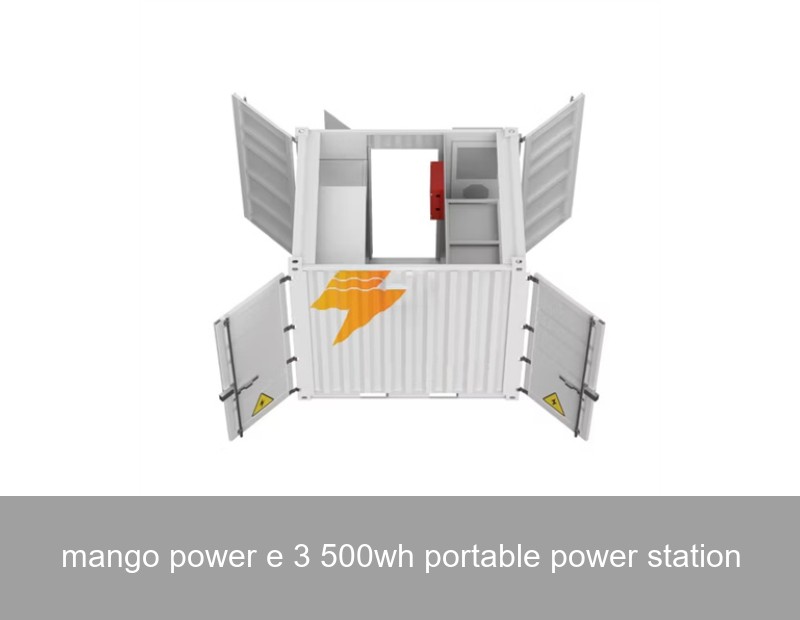
The Mango Power E is a high-capacity, lithium-based portable battery generator. The "3,500Wh" denotes its energy capacity—think of it as the size of its fuel tank. In practical terms, 3,500 watt-hours can power a 60W laptop for over 58 hours, a medium-sized refrigerator for about 24 hours, or a 500W microwave for 7 hours. Unlike noisy, fume-emitting gas generators, it operates silently, emits zero carbon, and can be safely used indoors. Its key features typically include multiple AC outlets, USB-C PD ports, DC car ports, and often the capability to recharge via solar panels, making it a true hub for off-grid and backup power.
The Rising Demand for Portable Power: A Market Shift
So, why are products like the Mango Power E gaining such traction? The phenomenon is driven by three key factors: climate volatility, the digitization of our lives, and a growing desire for energy independence.
- Climate Volatility: From wildfires in the U.S. West to intense storms across Europe, grid outages are becoming more frequent and prolonged. The U.S. Energy Information Administration notes that the average American experienced just over 8 hours of power interruptions in 2020, with major events being a primary cause.
- Digitization & Remote Work: Our dependence on constant connectivity has never been higher. A power outage doesn't just mean a dark room; it means lost income, missed deadlines, and broken communication.
- The DIY Energy Ethos: People are taking power into their own hands, literally. Portable power stations are the most accessible entry point into personal energy management, often paired with solar for true self-sufficiency.
This trend isn't replacing traditional home energy systems; it's complementing them. It represents the first step for many on a journey toward comprehensive energy resilience.

Image Source: Unsplash - Portable power enables both adventure and emergency preparedness.
Specs Deep Dive: What Does 3,500Wh Really Mean for You?
Let's break down the technical specs into everyday understanding. Capacity (Wh) is only part of the story. Two other critical metrics are power rating (W) and battery chemistry.
| Device | Estimated Wattage | Estimated Runtime on 3,500Wh* |
|---|---|---|
| LED Light Bulb | 10W | 350 hours |
| Wi-Fi Router & Modem | 20W | 175 hours |
| Laptop | 60W | 58 hours |
| Mini Fridge | 100W | 35 hours |
| 48" LED TV | 150W | 23 hours |
| Window AC Unit (Small) | 500W | 7 hours |
*Runtime is theoretical and can vary based on inverter efficiency, power surges, and battery management system performance.
Most high-capacity stations like the Mango Power E use Lithium Iron Phosphate (LFP) batteries. Why? LFP chemistry offers superior safety (more stable chemistry), a longer lifespan (3,000+ cycles vs. 500-1,000 for standard Li-ion), and better performance in a wider temperature range. This makes it ideal for a device meant to be a reliable asset for a decade or more.
A Real-World Case Study: Emergency Preparedness in Northern California
Let's look at data from a real scenario. During the 2023 Public Safety Power Shutoffs (PSPS) in Sonoma County, California, a community center used a combination of a 3,500Wh-class portable power station and a 1.2kW portable solar array to create a resilient micro-grid for its neighborhood.
- Situation: A planned 48-hour grid outage due to high fire risk.
- Solution Deployed: One central portable power station was used to cycle power to:
- A communications hub (phones, radios, laptops).
- Medical refrigeration for insulin (100W, running 50% of the time).
- LED lighting in the common area.
- Device charging for residents.
- Data & Outcome: The station's load averaged 200W. With solar recharge during the day (generating ~4kWh), the station never dropped below 40% capacity. It provided continuous, critical power for the full 48 hours and beyond, serving over 50 residents. This case, documented in a California Governor's Office of Emergency Services report, highlights how portable power is moving beyond recreation to become a core community resilience tool.
Beyond Portable: The Highjoule Ecosystem for Whole-Home Resilience
While a Mango Power E 3,500Wh Portable Power Station is perfect for powering a suite of critical devices, what if you need to run your entire home or business during an outage? Or if you want to maximize self-consumption of your rooftop solar? This is where the scalable, permanent solutions from Highjoule come into play.
Founded in 2005, Highjoule designs intelligent, integrated energy storage systems (ESS) for residential, commercial, and microgrid applications. Think of it this way: a portable power station is like a powerful, versatile emergency flashlight. A Highjoule whole-home battery system is like a permanent, automatic backup generator for your entire electrical panel—but one that's silent, clean, and smart enough to manage energy flow from the grid and solar.
Our Residential H-Series systems, for example, start at 10kWh and can be scaled modularly to over 30kWh. They feature:
- Seamless Backup: Automatic switchover in milliseconds during a grid failure.
- Solar Optimization: Store excess solar energy during the day for use at night, drastically increasing your energy independence.
- Smart Grid Services: In some markets, our systems can participate in utility programs to earn revenue by supporting grid stability.
- Robust LFP Batteries: The same safe, long-life chemistry trusted in premium portable stations, built for decades of daily cycling.

Image Source: Unsplash - A home integrated with solar panels and a permanent battery storage system.
For a small business or a large home with higher demands, our Commercial & Industrial C-Series offers even greater capacity and three-phase power support. The principle remains: we provide the foundational technology for true energy autonomy, allowing you to weather outages, reduce your carbon footprint, and take control of your energy costs.
Choosing the Right Solution for Your Energy Needs
So, how do you decide? It's about matching the tool to the task.
- Choose a Portable Power Station (like the Mango Power E) if: Your needs are mobile (camping, RVing, tailgating), you require power for specific devices during outages (fridge, comms, medical devices), or you're looking for an affordable, flexible entry point into backup power.
- Explore a Whole-Home Battery System (like Highjoule's H-Series) if: You want automatic, whole-house backup, you have or are installing rooftop solar and want to maximize its value, your outages are frequent and long, or you aim for significant grid independence and energy bill management.
Many of our customers start their journey with a portable unit and, as they understand the value of resilience, upgrade to a whole-home system. The portable station then remains invaluable for remote locations or as a supplemental backup within the home.
Your Energy Future: A Question of Control
The conversation around power is shifting from mere consumption to active management. Devices like the Mango Power E 3,500Wh Portable Power Station empower you for adventures and emergencies. Companies like Highjoule empower you to redefine your relationship with energy altogether. The technology for a more resilient, sustainable, and independent energy life is here and proven. The real question is: What will you power next, and on whose terms?
Are you ready to map out what true energy resilience could look like for your home or business? Let's start by assessing your critical load needs.
 Inquiry
 Online Chat