


Next Power Solar Battery: Unlocking True Energy Independence for Your Home or Business
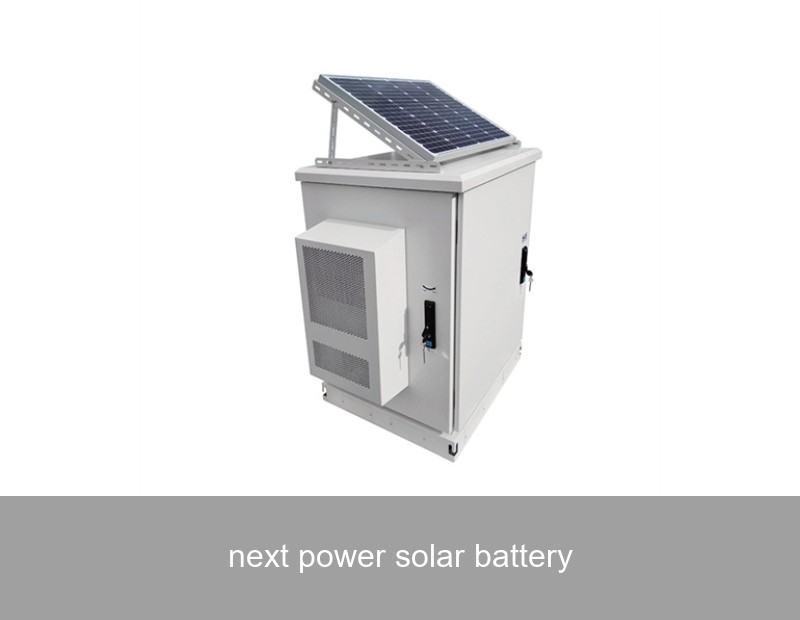
Have you ever watched your solar panels working in the bright afternoon sun, only to wonder where all that clean energy goes when the clouds roll in or night falls? This common experience highlights a critical gap in our renewable energy systems. The next power solar battery isn't just an upgrade; it's the missing link that transforms solar from a daytime supplement into a 24/7 power source. This article will guide you through the evolution, technology, and real-world impact of these advanced systems, helping you understand why they are becoming the cornerstone of modern, resilient energy strategies for homes and businesses across Europe and the US.
Table of Contents
The Problem: Why Solar Alone Isn't Enough
Let's face it: the sun doesn't shine on a utility company's schedule. This fundamental mismatch between solar generation and energy demand creates a phenomenon known as the "duck curve." Grid operators, particularly in sunny regions like California or Southern Europe, see a dramatic dip in net demand during peak solar hours, followed by a steep ramp-up as the sun sets. This strains the grid and often forces reliance on fossil-fuel-powered "peaker" plants. For you, the solar owner, it means exporting excess energy at low rates during the day and importing expensive power at night. A report from the U.S. Department of Energy details the challenges this curve presents. The next power solar battery solves this by time-shifting your solar energy, storing the midday surplus for use during the evening peak, flattening that curve right at your property line.

Image Source: Unsplash - A modern home with integrated solar and battery storage.
The Evolution: From Simple Storage to Intelligent Energy Hubs
The first-generation solar batteries were essentially just containers for electrons. Today's systems are fundamentally different. They are intelligent energy managers. Think of them as the brain of your personal power grid. They continuously monitor solar production, household consumption, grid conditions, and even weather forecasts. Using this data, they make autonomous decisions in milliseconds: store energy, discharge to power your home, avoid drawing from the grid during high-price periods, or provide backup power during an outage. This intelligence is what separates a basic battery from a next power solar battery system.
This is precisely where Highjoule's expertise shines. Since 2005, we've evolved from a storage provider to a creator of integrated energy ecosystems. Our Highjoule Hive platform is the intelligence layer that turns our hardware into a smart, grid-responsive asset. For commercial and industrial clients, this means sophisticated energy arbitrage and demand charge management. For homeowners, it means seamless, set-and-forget energy independence.
Key Features of a Next-Generation Solar Battery
When evaluating systems, look for these non-negotiable features that define modern technology:
- High Cycle Life & Depth of Discharge (DoD): Look for batteries rated for 6,000+ cycles at 90% DoD. This means you can use nearly all the stored energy daily for well over a decade. Highjoule's lithium iron phosphate (LFP) based systems are engineered for this longevity, ensuring a higher return on investment.
- Integrated Inverter & Modular Design: An AC-coupled or hybrid inverter system simplifies installation and future expansion. Modular batteries, like Highjoule's residential Resilio Series, allow you to start with a capacity that fits your budget and add more units as your needs grow.
- Advanced Energy Management Software (EMS): The true value lies in the software. A good EMS allows for customizable modes like "Self-Consumption," "Backup Priority," or "Grid-Support," and can integrate with time-of-use rate schedules.
- Seamless Backup Power: During a grid outage, a quality system should island your home or critical loads automatically, providing power in under a second—so your lights don't even flicker.
| Feature | Basic System | Next Power Solar Battery (e.g., Highjoule Standard) |
|---|---|---|
| Cycle Life (to 80% capacity) | 3,000 - 4,000 | 6,000+ |
| Usable Depth of Discharge | 80-90% | >95% |
| Integrated Smart EMS | Basic Monitoring | AI-driven forecasting & grid interaction |
| Backup Transition Time | Several seconds | < 1 second (seamless) |
| Scalability | Often Fixed | Fully Modular |
The Real Impact: A Case Study from Bavaria
Let's move beyond theory to a concrete example. Consider a medium-sized dairy farm in Bavaria, Germany. The farm had a 100 kW rooftop solar array but was still paying high energy costs, especially for running cooling and milking equipment during early morning and evening hours when solar production was zero.
The Solution: In 2023, they installed a Highjoule Industrio 120 battery energy storage system (BESS) with a capacity of 240 kWh. The system was integrated with their existing solar and configured via the Hive platform to prioritize self-consumption and participate in the German regulatory primary control reserve market.
The Data-Driven Results (First 12 Months):
- Self-Consumption of Solar Power Increased: From 35% to 82%.
- Grid Energy Costs Reduced: By approximately €18,000 annually.
- Additional Revenue Stream: Earned €4,200 from grid stabilization services.
- Carbon Footprint: Reduced by an estimated 62 tonnes of CO2 equivalent.
- Payback Period: Projected at under 7 years, thanks to the dual income stream from savings and market participation.
This case demonstrates that a next power solar battery is not just a cost but a revenue-generating asset that enhances both sustainability and operational resilience.

Image Source: Unsplash - Containerized battery storage at a renewable energy site.
Choosing Your System: Integration is Everything
The battery itself is only one component. Your system's performance hinges on flawless integration between the PV panels, inverters, battery, and control software. This is why choosing a provider with end-to-end system design capability is crucial. Highjoule's approach is to act as a single point of responsibility. From initial site assessment and financial modeling to commissioning and ongoing performance monitoring via our Hive platform, we ensure all components communicate perfectly. For microgrid applications—like remote communities or critical infrastructure—this integration extends to managing multiple generation sources (solar, wind, gensets) and complex load-shedding protocols, creating a truly independent and reliable power network.
Highjoule's Role in Your Energy Transition
Whether you're a homeowner seeking peace of mind and lower bills, a factory manager tasked with cutting operational costs and carbon emissions, or a developer building the sustainable community of tomorrow, Highjoule provides tailored solutions. Our product suites—from the sleek Resilio for homes to the powerful, containerized MegaJoule systems for utility-scale projects—are united by a common thread: intelligent software that maximizes the economic and environmental return on every kilowatt-hour.
The Future Horizon: What's Next for Solar Batteries?
The technology continues to advance at a rapid pace. We're looking at solid-state batteries promising even greater safety and energy density. More importantly, the future is in virtual power plants (VPPs). In a VPP, thousands of individual next power solar battery systems, like those from Highjoule, are aggregated via cloud software to act as a single, large power plant. This network can provide critical grid services, reduce the need for fossil-fuel infrastructure, and even generate income for participants. It's the ultimate democratization of energy. A IEA report on innovation in storage underscores this grid-scale potential.
So, as you consider taking control of your energy future, ask yourself this: Is your current energy system a collection of parts, or is it an intelligent, responsive partner in achieving your financial and sustainability goals?
 Inquiry
 Online Chat