


Do You Really Save Money with Solar Panels? The Complete Financial Breakdown
It's a question that crosses the mind of every homeowner and business owner considering renewable energy: do you really save money with solar panels? You've seen the ads promising slashed electricity bills and energy independence. The answer isn't a simple yes or no—it's a "yes, but." Yes, solar panels can lead to significant savings, but the true financial benefit hinges on a critical factor often overlooked: what you do with the energy you produce. Let's move beyond the sales pitch and dive into the real economics of solar power.
The Big Question: Do You Really Save Money?
The initial allure of solar is undeniable. You generate your own clean power, reduce reliance on the grid, and contribute to a greener planet. But the financial payoff is what seals the deal for most. The savings mechanism is straightforward in theory: every kilowatt-hour (kWh) your solar panels produce is a kWh you don't have to buy from your utility company at their retail rate. With rising electricity costs across Europe and the U.S., this offset becomes increasingly valuable. However, the sun doesn't shine on a 9-to-5 schedule that matches your home's energy consumption. This mismatch is where potential savings can slip away.

Image Source: Unsplash - A typical residential solar installation.
The Investment: Upfront Cost vs. Long-Term Gain
Let's talk numbers. A typical residential solar system in the U.S. or Europe can range from $15,000 to $25,000 before incentives. Government tax credits, like the U.S. Residential Clean Energy Credit, or European subsidies can reduce this net cost by 30% or more. The payback period—the time it takes for your savings to equal the initial cost—typically falls between 6 to 10 years. With solar panel lifespans exceeding 25 years, that's 15+ years of virtually free electricity. But this standard calculation has a flaw. It assumes you consume all the solar energy you produce the instant it's produced. In reality, most homes export surplus midday power to the grid, often for a credit (feed-in tariff) that is much lower than the retail price you pay for power in the evening.
The Export Dilemma in Data
| Scenario | Solar Energy Produced (kWh) | Energy Used Directly (kWh) | Energy Exported to Grid (kWh) | Financial Impact |
|---|---|---|---|---|
| Without Storage | 30 | 12 (40%) | 18 (60%) | Buy expensive evening power, sell surplus cheaply. |
| With Storage | 30 | 28 (93%) | 2 (7%) | Use most solar energy on-site, drastically reducing grid purchases. |
As the table shows, without a way to store surplus energy, a significant portion of your solar investment literally flows back to the grid at a discount, delaying your payback period and limiting savings.
The Missing Piece: Solar Panels Alone Aren't Enough
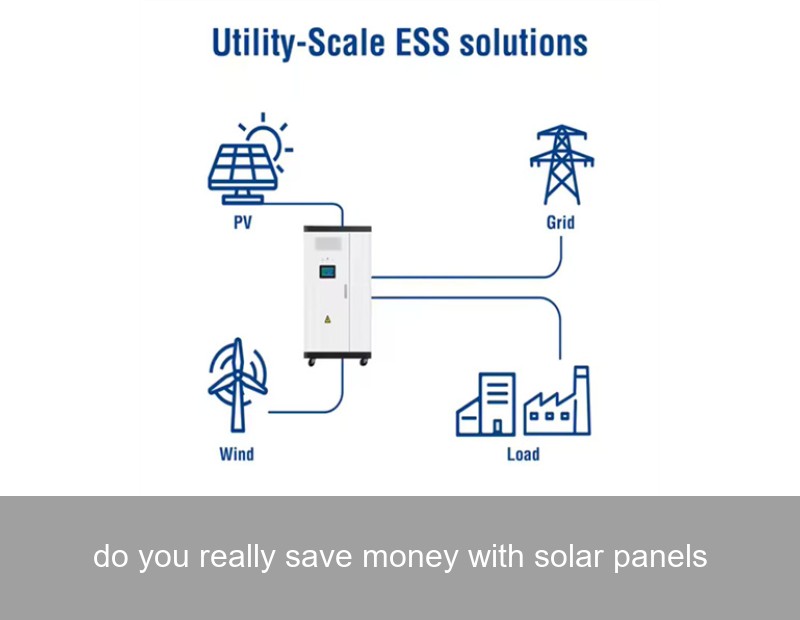
Think of a solar panel system like a rainwater collection barrel. The barrel (solar panels) catches water (sunlight) for free. But if it overflows during a storm (sunny afternoon) while you have no water at night, you haven't solved your problem. You still need to buy water (grid electricity) when your barrel is empty. The modern solution is a "water tank" for your solar energy: a battery energy storage system (BESS). This is the game-changer for maximizing financial returns. By storing your midday surplus and discharging it during peak evening hours when rates are highest, you increase your "self-consumption" rate from maybe 40% to over 80%. This directly translates to higher savings and a faster return on investment.
Case Study: Real Savings in Action
Let's look at a real-world example from Germany, a leader in renewable adoption. The Schmidt family in Bavaria installed a 10 kW solar system in 2020. While their summer bills plummeted, winter and evening costs remained high. In 2022, they integrated a 13.5 kWh battery storage system.
- Pre-Battery (2021): Annual electricity bill: €1,200. Self-consumption rate: 48%.
- Post-Battery (2023): Annual electricity bill: €280. Self-consumption rate: 92%.
- Annual Savings Increase: €920. This extra saving accelerated their combined system payback period by an estimated 3 years.
"The panels were a great start," Mr. Schmidt noted, "but the battery is what truly unlocked our energy independence and made the numbers work dramatically better. We now worry less about time-of-use rates." This case underscores that pairing solar with storage is the definitive path to maximizing the answer to "do you really save money with solar panels".
How to Maximize Your Solar Savings
To ensure you're getting the best financial return, consider this ladder of optimization:
- Right-Size Your System: Work with an expert to analyze your consumption patterns and design a system that matches your needs, not just your roof size.
- Prioritize Storage: Integrate a battery from the start or plan for easy future addition. Look for systems with high efficiency and deep cycle capability.
- Embrace Smart Management: Use an intelligent energy management system (EMS) that can automatically decide when to store, use, or export energy based on weather forecasts and tariff schedules.
- Explore Grid Services: In some regions, you can earn revenue by allowing your utility to use your battery for grid stabilization (virtual power plant programs).

Image Source: Unsplash - A modern home battery storage unit.
The Highjoule Solution: Intelligent Energy Management
This is where Highjoule's expertise transforms the solar savings equation. We understand that hardware alone isn't enough. Since 2005, Highjoule has evolved from a battery provider to a global leader in integrated, intelligent energy storage systems. Our solutions are designed specifically to answer "do you really save money with solar panels" with a resounding yes.
For residential and commercial clients across Europe and North America, Highjoule's HES (Highjoule Energy Stack) platform combines high-density lithium-ion battery storage with an AI-driven energy management system. Our system doesn't just store energy; it learns your consumption habits, predicts solar production, and integrates with dynamic electricity tariffs. It automatically dispatches stored solar energy during your most expensive peak periods, ensuring every kilowatt-hour you produce works hardest for your wallet. For businesses with larger demands, our C&I (Commercial & Industrial) series provides scalable, robust storage that manages demand charges and provides backup power, turning energy from a cost center into a strategic asset.
Why Highjoule Makes the Difference
- Maximized Self-Consumption: Our algorithms are fine-tuned to push self-consumption rates to 90% and above, directly boosting savings.
- Future-Proof Design: Our modular systems can be expanded as your needs grow, protecting your initial investment.
- Grid Resilience: Provides seamless backup power during outages, a value beyond pure financial metrics.
- Comprehensive Support: From design and permitting to installation and long-term monitoring, Highjoule partners with certified installers to ensure optimal performance.
Your Energy Future: What's the Next Step?
The journey to genuine savings with solar is clear: it's a path that leads through storage and smart management. The technology is proven, the economics are solid, and the added benefits of resilience and sustainability are invaluable. So, the most pertinent question is no longer "do you really save money with solar panels?" but rather, "how can you design a solar-plus-storage system that maximizes savings for your specific home or business?" What's the first energy consumption pattern you would change if you had control over when and how you use your solar power?
 Inquiry
 Online Chat