


Harnessing the Sun: The Transformative Potential of Paneles Solares en Pucallpa
Imagine a place blessed with abundant, powerful sunlight for most of the year, yet where reliable electricity remains a daily challenge. This is not a paradox; it's the reality for Pucallpa, a vibrant city and key port in the Peruvian Amazon. The conversation around paneles solares en Pucallpa (solar panels in Pucallpa) is more than just a trend—it's a critical pathway to energy independence, economic growth, and sustainable development. For communities and businesses operating far from stable national grids, solar energy isn't just an alternative; it's often the most viable primary power source. But simply installing panels is only half the story. The true revolution lies in capturing that solar energy effectively and using it intelligently, 24 hours a day. This is where advanced energy storage systems become the indispensable partner to solar panels, transforming intermittent sunlight into a dependable power supply.
The Data Reality: Energy Access and Cost in the Peruvian Amazon
To understand the urgency, let's look at the numbers. While Peru's national electrification rate is around 95%, this figure masks significant regional disparities. In the Amazonian regions like Ucayali, where Pucallpa is the capital, remote communities and even peri-urban areas face frequent outages and unstable voltage. Businesses often rely on expensive, polluting diesel generators to bridge the gap. According to Peru's Ministry of Energy and Mines, the generation cost from diesel gensets can be two to three times higher than the national grid tariff, not to mention the logistical cost and environmental impact of transporting fuel via river or road.
Conversely, Pucallpa's solar resource is exceptional. Data from The Global Solar Atlas shows the area enjoys a specific photovoltaic power output of approximately 1,400 kWh/kWp per year. This means a standard solar installation here can produce about 20-30% more energy than the same system would in many parts of Europe. The potential is staggering, but it's tempered by a simple fact: the sun sets, and clouds pass. Without a means to store the excess energy produced at noon for use at night or during rainy periods, the system's effectiveness and value plummet.

Image Source: Unsplash - Illustrating the remote Amazonian landscape where energy access is a challenge.
Case Study: Powering a Sustainable Agro-Industrial Plant in Pucallpa
Let's make this concrete with a real-world scenario. Consider a medium-sized agro-processing plant on the outskirts of Pucallpa. It operates cold storage for perishable goods, machinery for sorting and packaging, and administrative offices. Their challenges were classic: grid power was unreliable, causing spoilage and halting production lines. Their diesel backup was costly (over $0.35/kWh) and noisy.
The solution was a hybrid solar-plus-storage system:
- Solar Array: A 250 kW rooftop and ground-mount solar PV system (paneles solares).
- Energy Storage: A 500 kWh battery energy storage system (BESS) with integrated inverter/charger.
- Intelligence: An energy management system (EMS) to control the flow between solar, battery, grid, and generator.
The results, monitored over one year, were transformative:
| Metric | Before System | After System |
|---|---|---|
| Energy Cost | ~$0.28/kWh (mix of grid & diesel) | ~$0.11/kWh |
| Diesel Use | 45,000 liters/year | 5,000 liters/year (89% reduction) |
| Grid Dependency | 70% of load | 30% of load (for base only) |
| Production Stoppages | 15-20 hours/month | Less than 1 hour/month |
This case underscores a vital insight: the paneles solares generated the clean energy, but it was the battery storage system that ensured it was available on-demand, maximizing self-consumption and providing seamless backup. The diesel generator was relegated to a rare "last resort" instead of a daily necessity.
Beyond Panels: The Critical Role of Intelligent Energy Storage
So, why is storage non-negotiable for a serious paneles solares en Pucallpa project? Think of it this way: a solar panel system without storage is like a rainwater collection system without a tank. You can use the water only when it rains. An intelligent BESS is your tank, pump, and filtration system all in one.
- Energy Time-Shifting: Store cheap solar energy from the day for use during expensive evening peak hours or at night.
- Grid Stability & Backup: Provide instantaneous power during grid outages, keeping critical operations running without a flicker.
- Reduced Generator Wear: Minimize the runtime of diesel generators, slashing fuel costs and maintenance.
- Maximized Solar ROI: Increase the share of self-consumed solar energy from typically 30-40% to over 80%, dramatically improving payback time.

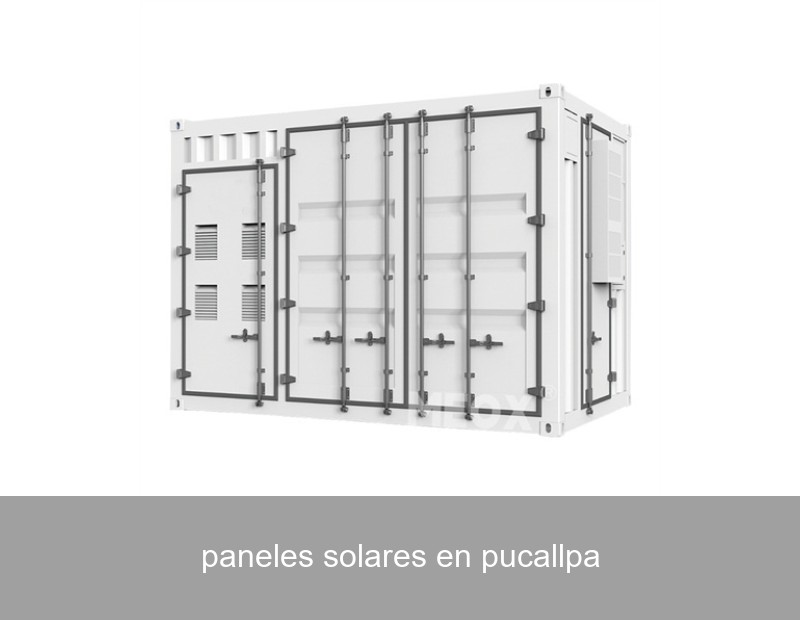
Image Source: Unsplash - Example of a modern Battery Energy Storage System (BESS) unit.
Highjoule's Holistic Solutions for Resilient Power
This is precisely where Highjoule, as a global leader in advanced energy storage since 2005, brings its expertise to bear. We understand that a successful project in challenging environments like Pucallpa requires more than just hardware; it requires a system designed for intelligence, durability, and ease of management.
For commercial and industrial applications in regions like the Peruvian Amazon, our H-Series Commercial Battery Systems are engineered to be the perfect partner for paneles solares. These systems feature:
- High Energy Density & Rugged Design: Compact footprint with enclosures built to withstand high humidity and temperature variations common in tropical climates.
- Advanced Battery Management System (BMS): Ensures safety, maximizes cycle life, and provides precise monitoring of every cell.
- Grid-Hybrid Inverter Compatibility: Seamlessly integrates with leading solar inverter brands, allowing for flexible system design.
- Scalable Architecture: Start with what you need and expand capacity as your business grows, protecting your initial investment.
Furthermore, Highjoule's Energy Management Software (EMS) platform acts as the brain of the installation. It intelligently dispatches power based on priority loads, weather forecasts, and tariff schedules, ensuring every kilowatt-hour of solar energy is used optimally. For microgrid applications—a highly relevant solution for remote communities or eco-lodges near Pucallpa—our systems can orchestrate multiple power sources (solar, storage, generator, grid) to create a stable, miniaturized power grid.
The Future of Energy in Pucallpa and Beyond: Questions to Consider
The journey of paneles solares en Pucallpa is a microcosm of a global shift towards distributed, resilient energy. The technology is proven, and the economic case grows stronger every year. As battery costs continue to decline, as noted in reports from the International Energy Agency, the hybrid solar-storage model becomes accessible to an ever-wider range of users.
The question for business owners, community leaders, and project developers in Pucallpa and similar regions is no longer *if* solar is a good idea, but *how* to build the most robust and economical system for their specific needs. Are you simply looking to reduce a diesel bill, or are you aiming for full energy autonomy? What are your critical loads that must never go offline? How can your energy system become a competitive advantage, ensuring product quality and operational continuity where others face disruption?
We invite you to explore what a tailored Highjoule energy storage solution, paired with high-quality paneles solares, could do for your project's bottom line and resilience. What would 24/7 reliable, clean power unlock for your business or community in the heart of the Amazon?
 Inquiry
 Online Chat