


Beyond the Roar: Why Modern Emergency Generators for Commercial Use Are Getting a Smart Upgrade
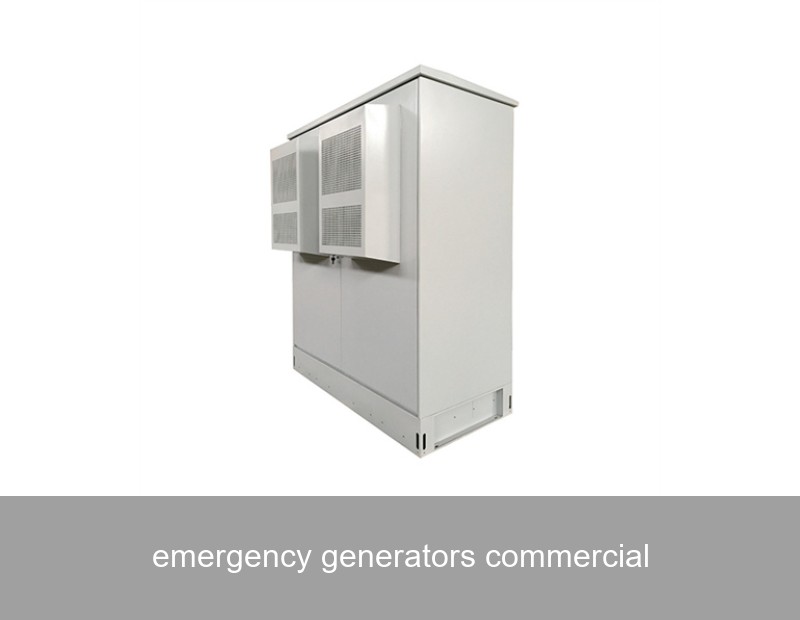
For decades, the image of a commercial emergency generator has been clear: a large, diesel-guzzling unit in the parking lot, roaring to life during a blackout. For facility managers, this sound has been synonymous with reliability. But today, that roar is also associated with rising costs, emissions concerns, and operational complexity. Is the traditional diesel generator still the only answer for commercial backup power? A new wave of intelligent, sustainable solutions is transforming how businesses ensure power resilience. This article explores the evolution of emergency generators for commercial use, moving from isolated assets to integrated, smart energy systems that promise not just backup, but strategic advantage.
Table of Contents
- The Changing Landscape of Commercial Backup Power
- The Data: Cost and Carbon of Traditional Generators
- Case Study: A European Data Center's Silent Shift
- The Modern Approach: Integrated Energy Storage as a Generator Partner
- How Highjoule's Smart Storage Complements Emergency Generators
- Building Future-Proof Commercial Power Resilience

Modern commercial energy infrastructure is evolving beyond loud generators. Source: Unsplash
The Changing Landscape of Commercial Backup Power
The core mandate remains unchanged: keep the lights on, the servers humming, and the production line moving during a grid outage. However, the context has shifted dramatically. Extreme weather events are increasing grid instability on both sides of the Atlantic. Simultaneously, corporate sustainability goals and stringent emissions regulations, like the EU's Medium Combustion Plant Directive, are putting pressure on diesel-dependent systems. Furthermore, the economics of energy have changed. Periods of high peak demand can lead to exorbitant "demand charges" on your electricity bill, a cost factor often overlooked when considering backup power. The question is no longer just "Do we have a generator?" but "How can we ensure resilience in a smarter, cleaner, and more cost-effective way?"
The Data: Cost and Carbon of Traditional Generators
Let's look at the numbers. A typical 500 kW diesel generator might consume approximately 30-40 gallons of fuel per hour at full load. During a prolonged outage, fuel cost and logistics become a significant burden. The U.S. Department of Energy notes that standby generators can have emission rates 10 to 100 times higher than central power plants per unit of energy generated, primarily due to less stringent pollution controls (source: U.S. DOE). Financially, aside from fuel, consider maintenance contracts, testing runs (which themselves consume fuel and cause wear), and potential non-compliance fines for emissions. It's a CAPEX model with high, variable OPEX. This creates a compelling business case to explore technologies that can reduce the runtime, size, and dependency on traditional emergency generators for commercial use.
Case Study: A European Data Center's Silent Shift
Consider a real-world example from Frankfurt, a major European data hub. A colocation data center was operating with multiple 2 MW diesel generators for its Tier III redundancy requirements. Their challenges were threefold: meeting ambitious corporate net-zero targets, reducing noise pollution in an urban-adjacent area, and managing the soaring cost of mandatory weekly generator testing.
Their solution was to integrate a 4 MWh battery energy storage system (BESS) alongside their existing generators. Here's how it worked:
- Primary Backup: For most short-duration grid outages (under 15-30 minutes), the BESS instantly takes the full load. The generators do not start.
- Generator Support: For longer outages, the BESS still serves as the immediate buffer, allowing generators to start and synchronize under a controlled load, reducing mechanical stress.
- Load Shedding & Grid Services: During normal operation, the BESS participates in grid frequency regulation programs, generating revenue, and reduces peak demand charges by discharging during expensive peak periods.
The Results: Generator runtime was reduced by over 80% annually. Fuel costs and associated emissions plummeted. The system paid for a portion of its investment through demand charge savings and grid service revenue within the first few years. The generators remained as critical, long-duration backup, but their role was optimized, making the entire system more resilient and sustainable.
The Modern Approach: Integrated Energy Storage as a Generator Partner
This case study illustrates the paradigm shift. The modern emergency power system for commercial facilities is not a single technology, but a hierarchy:
- First Responder: Battery Storage (Instantaneous, silent, zero-emission at point of use).
- Long-Duration Backup: Traditional Generators (For extended outages, now sized optimally).
- Energy Intelligence Layer: Software that orchestrates between grid power, on-site generation (like solar), storage, and generators.
This integrated approach turns a cost center into a strategic asset. The battery system isn't just for emergencies; it's a daily tool for energy cost management. Think of it as giving your facility a "power buffer" that protects you from outages, price spikes, and even helps stabilize the wider grid.

A smart energy management system is key to orchestrating backup power assets. Source: Unsplash
How Highjoule's Smart Storage Complements Emergency Generators
At Highjoule, we've been at the forefront of this integration for nearly two decades. We don't just sell battery containers; we provide intelligent, software-driven energy resilience platforms. For a business relying on emergency generators for commercial use, a Highjoule system acts as a force multiplier.
Our IntelliBESS commercial battery storage systems are designed with this hybrid resilience in mind:
- Seamless Transition: Our advanced power conversion systems (PCS) and control software ensure sub-20 millisecond transition to backup power, far exceeding the typical 10-60 second start time of a diesel generator. This is critical for sensitive loads like IT servers or manufacturing PLCs.
- Generator Optimization: We offer integrated controller communication that can signal your generator when it's truly needed. This allows for "peak shaving" during grid-connected operation and ensures generators are used only for their intended purpose: long-duration backup, drastically cutting maintenance and fuel costs.
- All-in-One Platform: The Highjoule Energy Management System (HEMS) is the brain. It continuously analyzes energy consumption, grid conditions, and weather forecasts. It automatically decides the most economical and resilient strategy: store energy from the grid or solar, discharge to avoid peak charges, or prepare for a forecasted storm by pre-charging the battery.
For a hospital, supermarket, or factory, this means your existing generators become part of a smarter, more efficient ecosystem. You extend their life, reduce their environmental impact, and improve your overall energy economics. The International Energy Agency highlights the crucial role of battery storage in providing flexibility and security to modern power systems (source: IEA).
Technical Considerations for Integration
Integrating storage with generators requires careful design. Key factors include:
| Consideration | Traditional Generator-Only System | Integrated Generator + Highjoule BESS |
|---|---|---|
| Response Time | 10-60 seconds | <20 milliseconds (from BESS) |
| Weekly Test Runtime | 30-60 min under load | Generator test minimized; BESS tested silently |
| Emissions During Outage | Immediate and continuous | Zero for short outages; delayed and reduced for long ones |
| Daily Operational Cost | None (idle asset) | Generates savings via peak shaving & grid services |
| System Lifespan | Generator wear tied to runtime | Generator lifespan extended due to reduced runtime |
Building Future-Proof Commercial Power Resilience
The future of commercial power resilience is clean, intelligent, and multi-faceted. As renewable penetration grows, technologies like green hydrogen may eventually fuel generators. But the immediate, high-impact step is to augment your existing infrastructure with smart storage. It's about making every component work smarter, not harder.
So, while the dependable diesel generator isn't disappearing overnight, its role is fundamentally changing. It's transitioning from the sole hero of the blackout to a specialized member of a smarter energy resilience team, led by intelligent software and battery storage.

A Highjoule IntelliBESS unit provides seamless backup and daily cost savings. Source: Highjoule
Is your organization's emergency power strategy still operating on last century's blueprint, or is it ready to leverage intelligence for resilience and return on investment? What would the impact be on your bottom line and sustainability report if your generators ran 80% less next year?
 Inquiry
 Online Chat