


How to Lower Energy Consumption in Your Business (Energieverbrauch Senken Unternehmen): A Strategic Guide
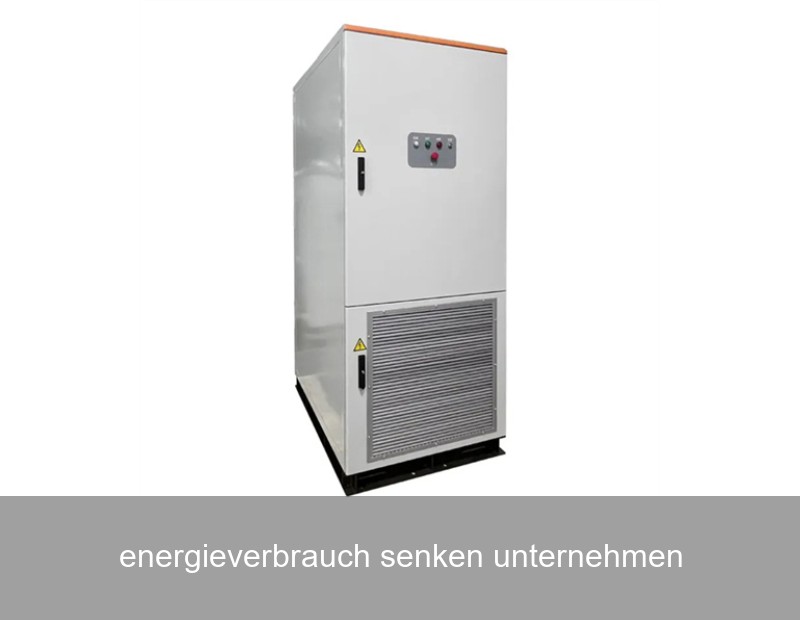
As a business leader in Europe or the US, you've likely felt the pressure: rising electricity prices, tightening sustainability regulations, and the growing expectation from customers and investors to operate responsibly. The question is no longer *if* you should lower your company's energy consumption (Energieverbrauch senken), but *how* to do it effectively and strategically. This isn't just about turning off lights; it's about a fundamental shift in how your business manages one of its most significant and volatile operational costs. The good news? Modern energy storage and management solutions have transformed this challenge into a tangible opportunity for resilience and savings.
Table of Contents
The Phenomenon: The Rising Cost of Inaction
Let's face it, energy bills are a silent profit drain. For many commercial and industrial operations, electricity is a top-three operational expense. Volatile market prices, like those experienced across Europe in recent years, can turn budgeting into a guessing game. But the phenomenon extends beyond direct costs. There's regulatory pressure—such as the EU's Energy Efficiency Directive and various state-level mandates in the US—and the carbon footprint attached to every kilowatt-hour consumed from the grid. In short, high energy consumption is a multifaceted business risk.
The Data: Where Does Your Energy Go?
Understanding is the first step to control. A typical manufacturing facility might see its energy pie chart look something like this:
| Process | Estimated Energy Share | Key Characteristics |
|---|---|---|
| Motor-Driven Systems (HVAC, Compressors) | ~40-50% | Constant, high-load, often inefficient at partial load. |
| Process Heating & Cooling | ~20-30% | Thermal loads with significant inertia. |
| Lighting & General Facility | ~10-20% | Easier to address, but savings are limited. |
| Other (IT, Office Equipment) | ~5-15% | Baseload, often running 24/7. |
Data from the U.S. Department of Energy corroborates this distribution, highlighting motor systems as the primary target. The key insight? The biggest savings don't always come from using *less* energy per se, but from using it *smarter*—shifting when it's used and supplementing with on-site resources.

Image Source: Unsplash - Representative image of industrial energy use.
The Solution: Beyond Simple Efficiency
Traditional advice focuses on efficiency: LED lighting, high-efficiency motors, better insulation. These are excellent, foundational steps. However, the next frontier is energy intelligence and storage. Think of it this way: efficiency is about using a smaller bucket to collect water, while intelligence and storage are about having a reservoir to collect water when it's plentiful (and cheap) to use when it's scarce (and expensive). This is where Battery Energy Storage Systems (BESS) become a game-changer for businesses aiming to lower consumption from the grid.
- Peak Shaving: Your utility bill often includes "demand charges" based on your highest 15-minute power draw. A BESS discharges during these short peaks, flattening your demand curve and slashing these charges.
- Time-of-Use Optimization: In regions with variable electricity rates, the system charges from the grid or your solar panels when rates are low and powers your operations when rates are high.
- Backup Power & Resilience: Provides critical backup during grid outages, preventing costly downtime.
- Renewable Integration: Maximizes self-consumption of solar PV by storing excess daytime generation for use at night.
A Real-World Case Study: Boosting Resilience and Savings for a German Bakery Chain
Consider "Bäckerei Schmidt" (a composite, realistic case), a mid-sized bakery chain with five production sites in Germany. Their challenge was twofold: high demand charges from simultaneous oven and refrigeration cycles, and vulnerability to short grid fluctuations that could spoil production batches.
They partnered with Highjoule to implement a tailored H-Ion Commercial ESS at their main production facility. Here's what happened:
- Result 1: The system's AI-driven energy management predicted and automatically shaved peak loads. This led to an 18% reduction in their overall electricity costs in the first year, with demand charges cut by over 30%.
- Result 2: The seamless transition to backup power during several micro-outages prevented an estimated €45,000 in potential lost product and downtime.
- Result 3: By integrating with their existing rooftop solar, they increased their self-consumption rate from 35% to over 70%, significantly reducing their grid reliance and carbon footprint.
This case illustrates that lowering energy consumption (Energieverbrauch senken) is a holistic strategy combining storage, management, and resilience.
The Highjoule Approach: Intelligent Energy Storage for Your Business
At Highjoule, we've spent nearly two decades moving beyond just supplying battery hardware. We provide end-to-end intelligent power solutions designed specifically for the needs of commercial and industrial enterprises. Our systems are built on three core pillars:
- The Highjoule H-Ion Series: Our flagship commercial and industrial battery storage systems. They are renowned for their high cycle life, safety (featuring our proprietary cell-level monitoring), and seamless integration with both new and existing solar installations. Unlike one-size-fits-all solutions, they are modular and scalable.
- Orion Energy Management Software (EMS): This is the brain of the operation. Orion uses predictive algorithms, factoring in weather forecasts, production schedules, and real-time utility rates to autonomously optimize your energy flow. It's like having a 24/7 energy trader and plant manager rolled into one.
- Project Lifecycle Support: From initial consultation and site-specific financial modeling to installation by certified partners and ongoing performance monitoring, Highjoule ensures your project delivers ROI from day one. We provide clear data dashboards that show exactly how much energy you're saving and storing.
For businesses, this means a turnkey solution. You get a predictable energy cost, enhanced sustainability metrics, and operational peace of mind. As the International Energy Agency notes, storage is a critical enabler for the modern, flexible, and efficient energy system that businesses now require.

Image Source: Unsplash - Representative image of a modern commercial battery storage unit.
Getting Started on Your Energy Journey
So, where do you begin? The process is more straightforward than you might think.
- Energy Audit: Start with a detailed analysis of your past 12-24 months of utility bills. Identify your peak demand patterns and the structure of your rates. Many utilities offer this analysis, or a partner like Highjoule can assist.
- Define Goals: Is your primary driver cost savings, carbon reduction, resilience against outages, or a combination? Prioritizing helps tailor the solution.
- Explore Financing: With various models available—from direct purchase to Energy-as-a-Service (EaaS) agreements—significant capital expenditure isn't always a barrier. The savings often fund the investment.
- Pilot a Project: Consider starting with your most energy-intensive facility or a new expansion project. The data and savings from a pilot can then justify a broader roll-out.
The journey to lower energy consumption is a strategic business decision. It's about taking control, building resilience, and future-proofing your operations.
 Inquiry
 Online Chat