


Flow Battery Energy Storage: The Long-Duration Powerhouse for a Renewable Grid
Imagine a battery that can power a hospital for a full day on a single charge, or store a week's worth of solar energy for a remote community. This isn't science fiction; it's the reality being built today with flow battery energy storage. As Europe and the US aggressively pursue net-zero targets, the intermittent nature of wind and solar power presents a critical challenge: how do we keep the lights on when the sun doesn't shine and the wind doesn't blow? While lithium-ion batteries excel at short, powerful bursts of energy, a different technology is emerging as the champion for long-duration energy storage (LDES). Flow batteries, with their unique chemistry and architecture, are poised to become the backbone of a resilient, decarbonized grid.
Table of Contents
What Exactly is a Flow Battery?
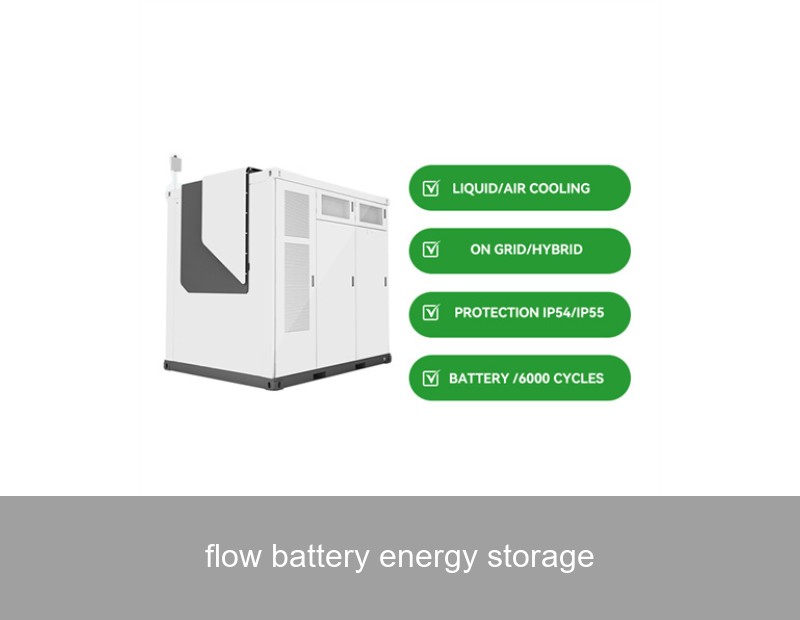
Let's break down the basics. Unlike conventional solid-state batteries where energy is stored in electrode materials, a flow battery stores energy in liquid electrolyte solutions housed in external tanks. These electrolytes are pumped through a central stack where an electrochemical reaction occurs to charge or discharge the system. Think of it like two large fuel tanks—one for positive charge, one for negative charge—connected to a power-generating engine room.
This design leads to some game-changing advantages:
- Decoupled Power and Energy: The stack size determines the power (kW), while the tank size determines the energy capacity (kWh). Need more storage? Simply increase the electrolyte volume. This makes scaling cost-effective for long durations.
- Deep Cycling and Long Lifespan: Flow batteries can undergo deep charge and discharge cycles daily without significant degradation. They typically boast lifespans of 20-30 years, far exceeding many other storage technologies.
- Enhanced Safety: The electrolytes are often water-based and non-flammable, drastically reducing fire risk—a crucial factor for commercial, industrial, and residential integration.

Image Source: Unsplash (Representative schematic of energy storage technology)
Why Flow Batteries? The Data Driving Adoption
The transition to renewables isn't just about generating clean power; it's about managing it intelligently. The US Department of Energy's Long Duration Storage Shot initiative aims to reduce the cost of grid-scale storage by 90% for systems that deliver 10+ hours of duration within this decade. Similarly, the European Commission's energy storage strategy highlights the critical need for technologies that can store energy from days to months.
Here’s the core issue: as renewable penetration exceeds 50-60% of grid mix, the need for storage shifts from hourly balancing to multi-day or even seasonal storage. A study by the National Renewable Energy Lab (NREL) suggests that achieving a 100% renewable grid in the US could require terawatt-hours of long-duration storage. Lithium-ion, constrained by cost and resource scarcity for very long durations, opens the door for flow batteries to fill this "missing middle" of the storage duration curve.
| Technology | Typical Duration | Key Advantage | Consideration for LDES |
|---|---|---|---|
| Lithium-ion | 1-4 hours | High power density, fast response | Cost scales linearly with duration, cycle life limits |
| Flow Battery | 4-12+ hours | Independent scaling of power/energy, long lifespan | Higher upfront cost, lower energy density |
| Pumped Hydro | 6-24+ hours | Very low operational cost | Geographical constraints, long permitting |
Case Study: Providing Grid Stability in Northern Germany
Let's look at a real-world application. In the windy region of Schleswig-Holstein, Germany, a local utility faced a dual challenge: frequent grid congestion due to excess wind power and the need for reliable backup power for critical infrastructure. Their solution was a 2 MW / 12 MWh vanadium flow battery installation—one of Europe's largest when commissioned.
The Phenomenon: Wind farms were often curtailed (shut down) during peak generation to avoid overloading the grid, wasting clean energy.
The Data & Solution: The utility deployed the flow battery system at a strategic grid connection point. The system charges during periods of high wind and low demand, storing that otherwise-lost energy. It then discharges to stabilize local grid frequency or provides power during periods of low wind generation.
The Outcome: The project has achieved a remarkable 95% round-trip efficiency in its application. It has reduced annual wind curtailment by an estimated 18% at its node and provides black-start capability to the local microgrid. This case perfectly illustrates the flow battery's sweet spot: absorbing excess renewable generation over long periods and delivering it as firm, dispatchable power.

Image Source: Unsplash (Wind farm and grid infrastructure)
Highjoule's Role in Advancing Flow Battery Technology
At Highjoule, with nearly two decades of experience since 2005, we've witnessed the evolution of energy storage firsthand. We recognized early the pivotal role long-duration storage would play. That's why our H-Joule Flux Series of flow battery systems is engineered to meet the rigorous demands of commercial, industrial, and microgrid applications.
Our systems are built with proprietary stack technology that maximizes energy efficiency and minimizes pump power consumption—a key factor in total cost of ownership. We offer tailored solutions where our expertise truly shines:
- For Industrial Clients: Our Flux batteries provide uninterrupted power for manufacturing processes and can integrate with onsite solar to create "round-the-clock" green energy solutions, significantly cutting energy costs and carbon footprints.
- For Microgrids: In remote communities or campuses, the H-Joule Flux serves as the stable, long-lasting core of the energy system, seamlessly integrating diesel gen-sets, solar PV, and wind to ensure 24/7 reliability.
- Services: Beyond hardware, Highjoule provides full lifecycle support, from initial feasibility studies and system design to long-term performance monitoring and electrolyte management, ensuring our clients' investments deliver value for decades.
We focus on making flow battery technology not just viable but practical and manageable for our clients, removing the complexity so they can focus on their energy resilience and sustainability goals.
The Future Outlook: A Hybrid Storage Ecosystem
The conversation is no longer about which storage technology will "win." The future grid will be supported by a hybrid ecosystem. Lithium-ion will handle frequency regulation and peak shaving, while flow batteries and other LDES technologies will manage daily to weekly energy shifting. Emerging chemistries, like iron-based flow batteries, promise to further drive down costs using abundant, non-toxic materials.
The key for businesses and grid planners is to start modeling their energy needs not just in terms of peak power, but in terms of energy duration. How many hours of backup do your critical operations require? How much of your solar generation do you currently send back to the grid because you can't store it? The answers to these questions will point directly to the optimal storage mix.
 Inquiry
 Online Chat