


The Global Energy Shift and the Rise of Regional Champions
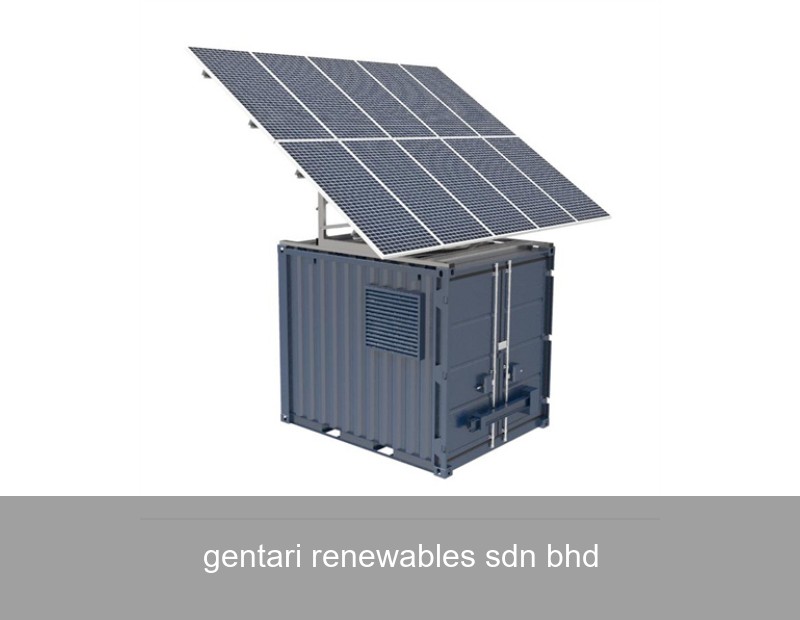
Look around the world, and you'll see a fascinating pattern. While global headlines focus on international energy giants, a new wave of powerful, regionally-focused clean energy leaders is emerging. These companies understand their local grids, resources, and challenges better than anyone. In Southeast Asia, one name stands out in this transformative journey: Gentari Renewables Sdn Bhd. As a subsidiary of Malaysia's PETRONAS, Gentari is on an ambitious mission to deliver renewable energy solutions at scale, aiming for 30-40 GW of renewable capacity by 2030. But their story, and the story of any modern renewable energy developer, hinges on a critical, often unsung hero: advanced energy storage. This is where the vision of companies like Gentari meets the practical, grid-stabilizing technology provided by global experts like Highjoule.
Gentari Renewables Sdn Bhd: A Powerhouse in the Making
Launched in 2022, Gentari isn't just another energy company. It represents a strategic pivot for a national oil corporation, signaling a profound commitment to a sustainable future. Their integrated offerings across renewable energy, hydrogen, and green mobility solutions paint a picture of a holistic clean energy ecosystem. From massive solar farms to rooftop solar installations and electric vehicle charging networks, Gentari is actively building the infrastructure for a post-carbon Malaysia and beyond.
However, integrating gigawatts of variable renewable energy into national grids—whether in Southeast Asia, Europe, or the United States—presents a universal technical puzzle. The sun doesn't always shine, and the wind doesn't always blow. This intermittency can cause grid instability, frequency fluctuations, and curtailment (wasting perfectly good renewable energy because the grid can't absorb it). This is the core challenge that every renewable champion, including Gentari, must solve to ensure reliability and maximize return on investment.

Image: Solar farms require storage for optimal grid integration. Source: Unsplash
The Storage Imperative: Why Solar Alone Isn't Enough
Let's break down the phenomenon. A solar farm like those developed by Gentari produces abundant energy during peak daylight hours. But energy demand often peaks in the early evening when solar production falls. This creates a "duck curve" – a deep dip in net load during the day followed by a steep ramp-up in the evening. Without a buffer, grid operators must fire up fast-response (and often carbon-intensive) gas peaker plants to bridge the gap.
The data is compelling. According to the International Renewable Energy Agency (IRENA), to meet global climate goals, the world needs to expand battery storage capacity over 40 times by 2030. Furthermore, a study by the U.S. Department of Energy's National Renewable Energy Laboratory (NREL) found that adding storage to solar projects can increase their value to the grid by up to 30% by enabling time-shifting of energy and providing essential grid services.
This is no longer a niche consideration. For a developer like Gentari, pairing solar or wind projects with battery storage is becoming a standard requirement for grid connection approvals and a key driver of project economics. It transforms a variable energy source into a dispatchable, reliable one.
Case Study: A Malaysian Solar Farm's Grid Integration Challenge
Consider a hypothetical but highly realistic scenario based on common grid challenges in growing economies. Imagine a 100 MW solar farm developed by a company like Gentari in a region with a moderately strong grid. The farm produces 550 MWh of clean energy on a sunny day. However, the local grid operator is concerned about two issues:
- Ramp Rate Issues: When a large cloud passes over the solar farm, production can drop by 70% in a matter of minutes, causing a sudden grid frequency drop.
- Evening Peak Shortfall: The farm stops generating at 7 PM, just as regional demand hits its daily peak, creating a 150 MW deficit.
Without storage, the project faces curtailment limits or hefty grid reinforcement costs. The solution? A co-located Battery Energy Storage System (BESS). A 50 MW / 100 MWh BESS could be programmed to:
- Smooth Ramp Rates: Instantly inject power to compensate for sudden solar drops, maintaining grid stability.
- Shift Energy: Store excess solar energy from midday (when it's abundant and cheap) and discharge it from 6-10 PM (when demand and prices are high).
- Provide Frequency Response: Act as a shock absorber for the grid, a service often monetized through ancillary markets.
In this case, the BESS doesn't just solve a technical problem; it unlocks new revenue streams and ensures the solar asset operates at its full potential, day and night.
Highjoule's Intelligent Solutions for a Complex Grid
This is where Highjoule's expertise becomes pivotal. Since 2005, we have evolved alongside the global renewable revolution, specializing in the intelligent storage systems that make projects like the one above not just feasible, but highly profitable and grid-friendly.
For a large-scale renewable energy developer like Gentari Renewables Sdn Bhd, navigating the technical and financial complexities of storage integration requires a partner with deep domain expertise. Highjoule's H-Series commercial & industrial and utility-scale battery systems are engineered for this exact purpose.
Our systems go beyond simple battery containers. They are integrated power plants featuring:
| Feature | Benefit for Renewable Developers |
|---|---|
| Advanced Battery Management System (BMS) | Maximizes cell lifespan and safety, ensuring a lower total cost of ownership over the 15-20 year project life. |
| Grid-Forming Inverter Technology | Can "black start" a grid section and provide essential stability services, crucial for weak or islanded grids. |
| AI-Powered Energy Management Software (EMS) | Automatically optimizes dispatch for maximum revenue, switching between energy arbitrage, frequency regulation, and peak shaving based on real-time market signals. |
| Modular, Scalable Design | Allows projects to start at a optimal size and scale storage capacity as the renewable farm expands or market opportunities grow. |

Image: Intelligent, scalable BESS solutions are key for renewable integration. Source: Unsplash
For a developer targeting diverse applications—from large utility projects to commercial & industrial (C&I) behind-the-meter installations—this flexibility and intelligence is non-negotiable. Highjoule's solutions ensure that every kilowatt-hour of clean energy produced by solar or wind assets is captured, optimized, and delivered with maximum value and reliability.
The Future of Energy is Integrated and Intelligent
The path forward for global leaders like Gentari and thousands of other renewable developers is clear. The future isn't just about generating clean energy; it's about building intelligent, resilient, and integrated energy systems. The synergy between generation and storage is what will ultimately allow us to phase out fossil-fuel baseload power.
As battery costs continue to decline and software intelligence grows, the business case for solar-plus-storage or wind-plus-storage becomes unequivocal. It's a transformation we see accelerating in our key markets in Europe and the United States, and a model that is perfectly suited for the ambitious growth plans of Southeast Asian champions.
So, as you watch companies like Gentari Renewables Sdn Bhd reshape the energy landscape, ask yourself this: Is your organization evaluating energy storage not just as a cost, but as the strategic enabler that will define the profitability and impact of your renewable investments for decades to come?
 Inquiry
 Online Chat