


Grid Connected Solar PV Systems: Powering Your Property and the Grid
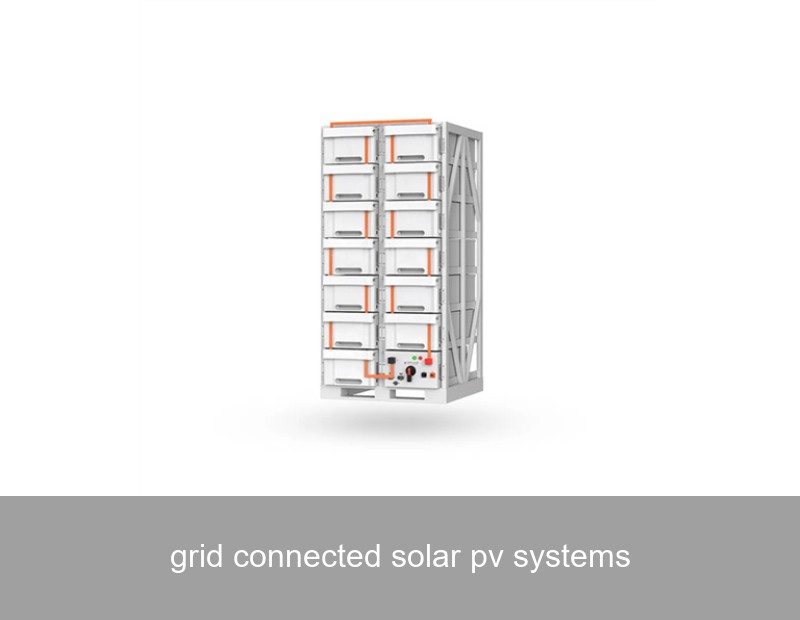
Imagine your rooftop solar panels not just slashing your electricity bill but also becoming a tiny, intelligent power station for your community. That's the transformative power of modern grid connected solar PV systems. Unlike off-grid setups with bulky batteries, these systems work in harmony with the public electricity network. They allow you to use solar energy first, export excess, and draw from the grid when needed. But as energy landscapes evolve, so does the potential of a simple grid-tied system. Let's explore how integrating smart storage and advanced control is redefining what these systems can do for homeowners, businesses, and the grid itself.
Table of Contents
- What Are Grid-Connected Solar PV Systems?
- The Challenge: Intermittency and Grid Stability
- The Evolution: From Simple Export to Smart Energy Hubs
- Highjoule's Role: Enhancing Grid-Tied Systems with Intelligence
- Case Study: A German Bakery's Recipe for Energy Resilience
- Future Trends and Your Next Steps
What Are Grid-Connected Solar PV Systems?
At its core, a grid-connected (or grid-tied) solar PV system is the most common residential and commercial solar installation. It consists of solar panels, a mounting structure, DC-AC inverters, and a critical device called a grid-interactive inverter. This inverter synchronizes your solar power's frequency and voltage with the utility grid, allowing seamless energy flow. When your panels produce more electricity than you use, the surplus is fed back to the grid. At night or on cloudy days, you simply pull electricity from the grid as usual.
The primary appeal has been financial: reducing net energy costs through net metering or feed-in tariffs. However, the story is becoming more complex and much more interesting.
The Challenge: Intermittency and Grid Stability
Here's the phenomenon: The sun doesn't always shine. Solar generation peaks midday, often not aligning perfectly with evening energy demand peaks in homes and businesses. This creates a duck curve—a deep midday dip in net grid demand followed by a steep evening ramp-up. Large amounts of unpredictable solar export can lead to grid congestion and voltage fluctuations.
Consider this data: In California, the CAISO duck curve has deepened dramatically, requiring rapid-ramping natural gas plants to balance the grid every evening. This underscores a critical insight: for solar to scale sustainably, grid connected solar PV systems must evolve from passive generators to active grid-supporting assets.

Image Source: U.S. Department of Energy, illustrating the "Duck Curve" challenge.
The Evolution: From Simple Export to Smart Energy Hubs
The next generation of grid-tied systems addresses these challenges head-on by integrating two key components:
- Battery Energy Storage Systems (BESS): This is the game-changer. Instead of sending all excess solar to the grid immediately, a battery stores it for use later during peak evening hours or during brief grid outages (if configured for backup).
- Advanced Energy Management Systems (EMS): This is the brain. A smart EMS can make autonomous decisions based on electricity prices, grid signals, weather forecasts, and your usage patterns. It decides when to charge the battery, when to discharge, and when to export, maximizing economic return and grid support.
This transforms a one-way solar export system into a versatile, two-way energy hub.
Highjoule's Role: Enhancing Grid-Tied Systems with Intelligence
This is where Highjoule's expertise becomes pivotal. Since 2005, we've moved beyond just providing components to delivering integrated, intelligent energy solutions. For modern grid connected solar PV systems, we offer the synergistic combination that unlocks true value:
- Highjoule H-series Hybrid Inverters: More than just converting DC to AC, our inverters are designed for seamless integration with storage. They feature multiple MPPT trackers for complex roof layouts and built-in grid-support functions like frequency-watt response, which automatically adjusts output to help stabilize the grid during disturbances.
- Highjoule Matrix™ BESS: Our scalable lithium iron phosphate (LFP) battery systems are the perfect partner for solar. With high cycle life and superior safety, they store midday solar surplus. The modular design allows homeowners to start small and expand, while our commercial units can be scaled to megawatt-hour levels.
- Highjoule Apex™ Energy Management Platform: This cloud-based platform is the intelligence layer. For a household, it can learn patterns and optimize for self-consumption or time-of-use savings. For a business or microgrid, it can perform peak shaving, demand charge management, and even participate in grid service programs, creating a new revenue stream.
Think of it this way: A standard grid-tied system is a helpful contributor. A Highjoule-enhanced system is a smart, grid-interactive partner that maximizes your investment and supports community energy resilience.
Case Study: A German Bakery's Recipe for Energy Resilience
Let's look at a real-world example from Bavaria, Germany. "Bäckerei Schmidt" (a pseudonym for confidentiality) is a medium-sized artisan bakery with high energy demands for ovens, refrigeration, and lighting. They had a 100 kW grid-tied solar array but faced two problems: high grid demand charges based on their 15-minute peak power draw, and the inability to use solar during early morning bake times before sunrise.
The Solution: Highjoule designed an integrated upgrade. We added a 120 kWh Matrix™ battery system and an Apex™ controller to their existing PV system. The Apex™ system was programmed with a peak shaving algorithm and used solar forecasting data.
| Metric | Before Highjoule | After Highjoule Integration |
|---|---|---|
| Monthly Demand Charges | €2,800 (avg.) | €1,150 (avg.) |
| Solar Self-Consumption Rate | 35% | 89% |
| Grid Energy Import (kWh/month) | 22,500 | 8,400 |
| ROI Period | N/A (baseline) | Estimated 4.2 years |
The bakery now uses stored solar energy to power its pre-dawn operations and deliberately discharges the battery to cap its power draw from the grid during expensive peak periods. Their grid connected solar PV system evolved from a cost-saver to a strategic asset managing multiple value streams.
Future Trends and Your Next Steps
The future points towards virtual power plants (VPPs), where thousands of distributed systems like yours are aggregated and coordinated to act like a single, large power plant. By participating, you could earn additional income for allowing your system to support the grid during times of stress. The foundational step? Having a smart, battery-enhanced grid connected solar PV system that can communicate and respond to signals.
Is your current or planned solar system just exporting energy, or is it intelligently managing and maximizing every kilowatt-hour for your benefit and the grid's stability?
We invite you to explore how Highjoule's integrated solutions can transform your energy profile. What specific energy challenge—be it rising costs, demand charges, or a desire for resilience—would you like your solar system to solve?
 Inquiry
 Online Chat