


How Much Power Do Humanoid Robots Really Need? The Untold Story of Energy in Automation
Imagine a factory floor of the near future. Alongside conveyor belts and robotic arms, humanoid robots are deftly handling delicate assembly tasks, navigating aisles, and collaborating with human workers. It's a compelling vision championed by leading tech companies. But as a product technology expert in the energy storage field, a critical question immediately comes to my mind, one that often gets overshadowed by the awe of the technology itself: how much power do these humanoid robots actually consume to perform their tasks, and what does that mean for the facilities that host them?
The conversation around humanoids typically focuses on dexterity, AI, and cost-per-unit. Yet, their energy appetite is the silent variable that will ultimately dictate their scalability, operational cost, and environmental footprint. As industries in Europe and the U.S. explore automation to address labor shortages and boost productivity, understanding and planning for this new electrical load is not just an IT concern—it's a fundamental facilities and sustainability challenge.
The Power-Hungry Reality: How Much Energy Do Humanoid Robots Consume?
Let's move beyond speculation. Current commercial humanoid robots, like those from Boston Dynamics (Atlas) or Tesla (Optimus), are still largely in development or limited deployment. However, by examining their disclosed specs and comparing them to established industrial robots, we can build a realistic picture.
A typical stationary industrial robotic arm might consume between 3 to 10 kW during active operation. A humanoid robot, by contrast, is a mobile system. It's not just an arm; it's a full-body machine requiring power for:
- Locomotion: Servo motors in legs, hips, and ankles for walking and balancing.
- Manipulation: Motors in arms, wrists, and fingers for precise movement.
- Perception: LiDAR, cameras, and depth sensors creating a constant 3D map.
- Computation: The onboard AI computer processing sensor data in real-time.
- Thermal Management: Cooling systems for high-performance computers and motors.
Early data and estimates from industry prototypes suggest a continuous operational power draw in the range of 1.5 kW to 4 kW for a humanoid performing light to medium tasks. That's roughly equivalent to simultaneously running 3 to 8 high-end gaming PCs. But here's the kicker: peak power demand during strenuous activities like lifting, climbing, or recovering from a stumble could spike dramatically higher, potentially reaching 7-10 kW for short bursts.
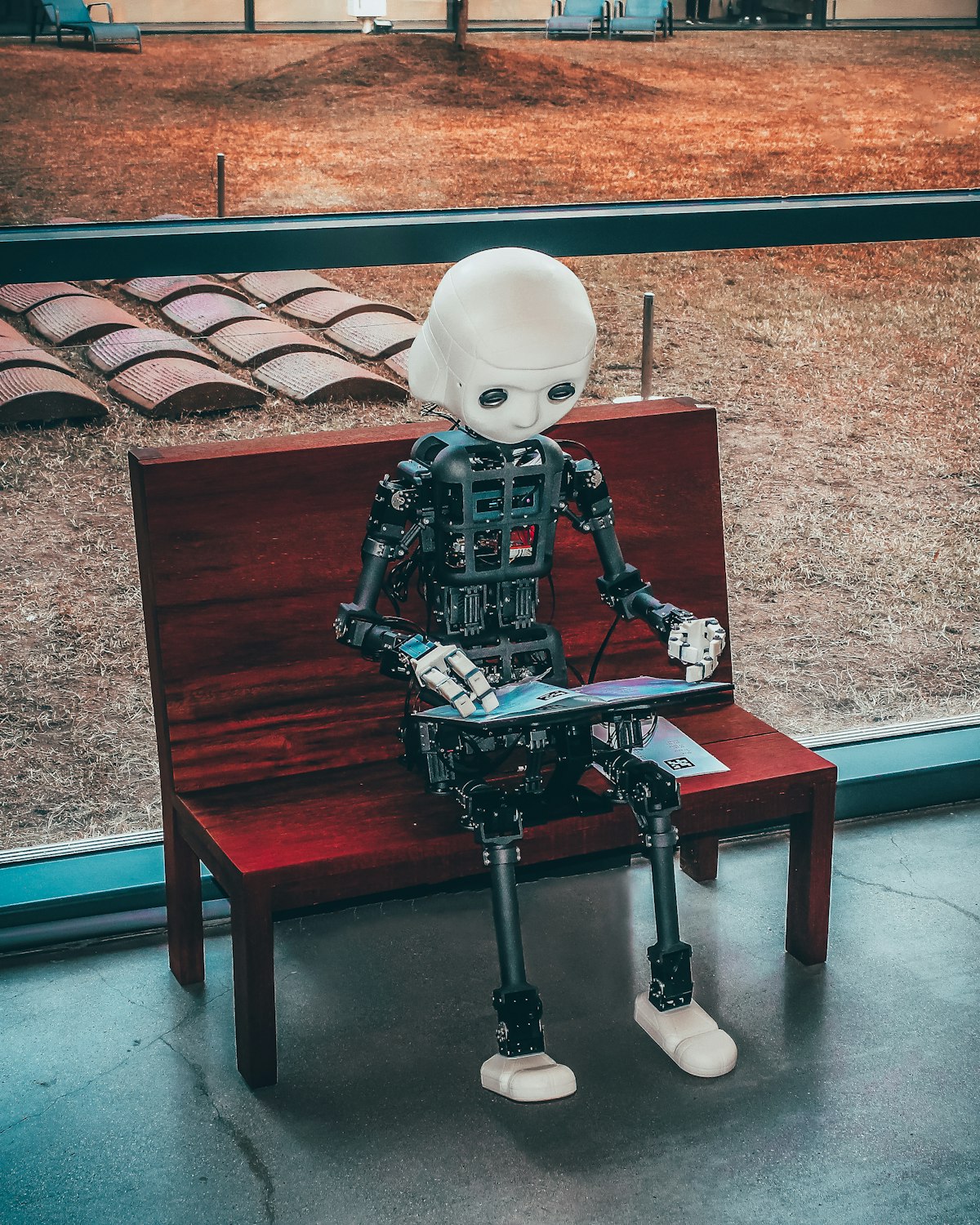
Image Source: Unsplash - Representation of robotic energy use in R&D.
Case Study: The Automotive Manufacturing Shift
Consider a real-world scenario. A major automotive plant in Bavaria, Germany, plans to integrate 50 humanoid robots for final assembly line tasks like wire harnessing and interior fitting. This plant already operates 500 traditional robotic arms. Their energy model reveals a startling insight:
| Equipment | Quantity | Avg. Power per Unit (kW) | Total Average Load (kW) | Estimated Daily Energy (kWh)* |
|---|---|---|---|---|
| Traditional Robotic Arms | 500 | 5 | 2,500 | 40,000 |
| Proposed Humanoid Robots | 50 | 2.5 (avg) | 125 | 2,500 |
*Assuming 16-hour operational day. Data is illustrative based on industry averages and public disclosures.
While the humanoids add "only" 125 kW to the average load, their introduction creates two new problems. First, peak demand charges: if all 50 robots activate a strenuous movement simultaneously, they could create a short-term spike of an additional 300-400 kW, significantly increasing the plant's monthly utility bill. Second, grid stability: in regions with an already strained electrical infrastructure, adding this dynamic, unpredictable load requires careful management to avoid tripping breakers or needing costly grid upgrades.
Beyond the Robot: The System View
Focusing solely on the robot's battery is like evaluating a car's fuel efficiency while ignoring the gas station network. The true energy equation involves the entire ecosystem:
- Charging Infrastructure: Will robots charge intermittently at docking stations (opportunity charging) or swap batteries? Fast-charging 50 robots simultaneously could require a 250+ kW micro-grid within the facility.
- Operational Downtime: If charging takes 1-2 hours per 4-hour work cycle, you need a larger fleet to maintain productivity, multiplying your capital and energy costs.
- Renewable Integration: To meet corporate sustainability goals (RE100, etc.), this new load should ideally be powered by on-site solar or wind. But solar isn't always producing when the factory is running at night or on cloudy days.
This is where the conversation turns from problem to solution. The key isn't just supplying more grid power; it's about intelligently managing and storing energy on-site to smooth out demand, integrate renewables, and ensure operational resilience.
Highjoule's Role: Powering the Future of Automation
At Highjoule, we've been solving complex energy orchestration problems since 2005. The challenge posed by advanced automation is precisely what our intelligent Battery Energy Storage Systems (BESS) are designed to address. For a facility integrating humanoid robots, our solution operates on multiple levels:
Our H-Joule Cube Industrial Series acts as a dynamic power buffer. It can:
- Shave Peak Loads: Instantly discharge during those short, sharp spikes in demand when multiple robots initiate heavy lifts, preventing costly demand charges from the utility.
- Store Renewable Energy: Capture excess solar power generated during the day and dispatch it during the evening shift or overnight, making your robotic workforce truly green.
- Provide Backup Power: Ensure that a grid fluctuation doesn't cause a fleet of valuable robots to shut down mid-task, protecting both productivity and equipment.

Image Source: Unsplash - Example of a modern industrial energy storage system.
Furthermore, our AI-powered energy management software doesn't just react—it predicts. By analyzing production schedules, robot duty cycles, and weather forecasts for solar generation, it pre-charges the BESS to optimally cover anticipated loads. This transforms the storage system from a passive battery into the intelligent "heart" of the facility's power flow, ensuring that the answer to "how much power do the humanoid robots need" is always: "Exactly as much as we have efficiently planned for, without straining the grid or the budget."
The Sustainable Automation Path Forward
The journey toward widespread humanoid robotics is as much an energy challenge as it is a robotics one. The companies that will lead this transition are those planning their energy infrastructure in tandem with their automation roadmaps. They are asking not just "what can this robot do?" but also "how will we power it sustainably, reliably, and cost-effectively for the next decade?"
As you contemplate integrating advanced automation into your operations, what is your strategy for managing the inevitable increase in dynamic, high-value electrical load? Have you evaluated how on-site energy storage could turn this challenge into a competitive advantage through lower operational costs and enhanced sustainability?
 Inquiry
 Online Chat