


How Much Does a 5.5 kW Inverter Cost? A Complete 2024 Breakdown for Homeowners
If you're considering solar power for your home in Europe or the US, you've likely encountered the term "5.5 kW solar system." It's a popular, efficient size for many households. But a crucial—and often confusing—piece of this puzzle is the inverter. So, you find yourself asking: how much does a 5.5 kW inverter actually cost? The short answer is, it depends. Prices can range from $1,200 to over $3,000. But the price tag is just the beginning. The real value lies in understanding what you're paying for: efficiency, reliability, smart features, and the long-term health of your entire energy investment. Let's demystify the costs and explore what makes a high-quality inverter the true brain of your solar setup.
Table of Contents
Why Your Inverter Choice Matters More Than You Think
Think of your solar panels as the hardworking muscles of your system, generating raw DC power. The inverter is the brain and nervous system. Its primary job is to convert that DC electricity into the AC electricity that powers your home. But a modern inverter does so much more. It constantly optimizes performance, monitors system health, manages voltage, and can even enable battery storage integration. Choosing the wrong inverter for your 5.5 kW array can lead to significant energy losses, compatibility issues, and a shorter system lifespan. It's not just a component; it's the command center for your personal power plant.
The Real Cost Breakdown of a 5.5 kW Inverter
When budgeting, you need to look at more than just the unit's retail price. The total cost encompasses the technology, installation, and its operational intelligence.
| Inverter Type | Estimated Price Range (USD/EUR) | Key Characteristics | Best For |
|---|---|---|---|
| String Inverter | $1,200 - $1,800 | Centralized, cost-effective, proven technology. | Simple roof layouts with consistent shading. |
| Microinverters | $2,200 - $3,300+ | Panel-level optimization, maximizes output in shaded conditions. | Complex roofs with multiple angles or shading. |
| Hybrid Inverter | $1,800 - $2,800 | Built-in battery connectivity, essential for energy storage. | Homes planning to add batteries now or in the future. |
Note: Prices are pre-installation estimates and can vary based on brand, region, and specific features. Installation typically adds $500-$1,000 to the total project cost.
This table highlights a critical point: the cheapest upfront option (a basic string inverter) may not provide the best long-term value if your goal is energy independence or if your roof isn't ideal. For instance, the U.S. Department of Energy notes that panel-level power electronics like microinverters can recapture 5-25% of energy lost to shading or debris.
Looking Beyond Price: Key Features That Impact Value
When evaluating a 5.5 kW inverter, consider these performance-driven features that affect your return on investment:
- Efficiency (Peak & Weighted): Look for weighted efficiencies above 97%. Every percentage point lost is money lost over the inverter's 10-15+ year lifespan.
- Warranty & Reliability: A standard warranty is 10 years. Some premium brands offer extendable warranties up to 25 years. This speaks volumes about expected longevity.
- Smart Monitoring & Grid Services: Advanced inverters offer real-time monitoring apps and can support grid stability functions (like frequency response), which may become a revenue stream in some markets.
- Battery Readiness: Even if you're not installing a battery today, a hybrid or storage-ready inverter protects your investment and simplifies future upgrades.

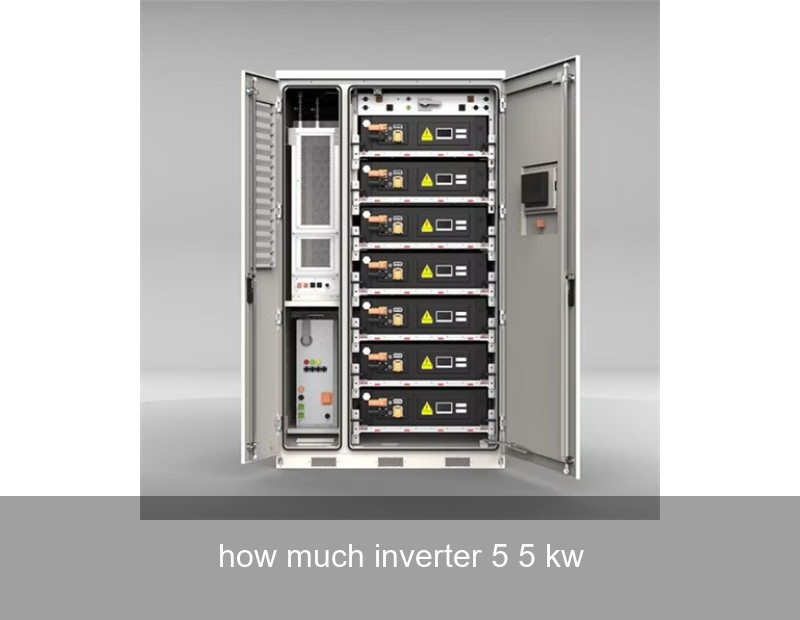
Image: A modern hybrid inverter, like Highjoule's H-Energy Hub, enables seamless solar and storage integration. (Source: Unsplash, representative image)
Real-World Impact: A Case Study from Hamburg
Let's move from theory to practice. Consider the Müller family in Hamburg, Germany. In 2022, they installed a 5.5 kWp solar array on their south-east facing roof, which experiences afternoon shading from a neighboring building.
The Initial Plan: A standard 5.5 kW string inverter was quoted, saving them approximately €800 upfront.
The Data-Driven Decision: After a detailed simulation, their installer showed that panel-level microinverters would increase their annual energy production by an estimated 18% due to the shading. Over 20 years, this extra production was valued at over €4,200, far outweighing the initial cost difference.
The Outcome: They opted for the microinverter solution. Two years of monitoring data confirms an average 17.5% production gain, aligning almost perfectly with the projection. The system consistently meets 85% of their household electricity needs, and the detailed panel-level monitoring helped them quickly identify and resolve a minor wiring issue. This case underscores that the lowest-cost inverter is rarely the lowest-cost solution over time.
Future-Proofing Your Power: The Highjoule Integrated Approach
At Highjoule, we view the inverter not as a standalone commodity, but as the intelligent core of a holistic energy ecosystem. For a 5.5 kW solar system, our solution goes beyond simple conversion.
Our H-Energy Hub, a versatile hybrid inverter, is engineered for the evolving energy landscape. For homeowners asking "how much inverter 5.5 kW," we offer a system designed to maximize your investment today and tomorrow:
- Adaptive Power Processing: With a weighted efficiency of 98.2%, it ensures you harvest the maximum possible energy from every ray of sunshine.
- Native Storage Integration: The H-Energy Hub is built from the ground up to work with Highjoule's CellMatrix™ battery systems. This seamless integration provides unmatched safety, communication, and performance, whether you install storage immediately or years down the line.
- Grid Intelligence: It's equipped for advanced grid-interactive functionalities, preparing your home to participate in virtual power plants (VPPs) or dynamic tariff management, turning your system from a cost-saver into a potential asset.
This integrated philosophy is backed by our global experience since 2005, providing commercial, industrial, and residential clients with smart, efficient, and sustainable power solutions. We design our residential products with the same rigor, ensuring reliability and long-term value.
Making the Right Choice for Your Home
So, how do you decide? Start by asking the right questions:
- What is the shading and roof layout of my property? (A detailed satellite analysis can help)
- What are my goals: pure bill reduction, backup power, or full energy independence?
- Does my utility offer incentives for grid-supportive inverters or have specific interconnection requirements?
- Is my installer certified and experienced with the technology they recommend?
Consulting resources like the Solar Energy Industries Association (SEIA) can provide broader market context. Ultimately, the best inverter for your 5.5 kW system is the one that aligns with your home's unique physics and your family's long-term energy vision.
Image: The ultimate goal: understanding and controlling your home energy production and consumption. (Source: Unsplash)
Given that energy needs and technology are never static, what is the one energy goal for your home in the next five years that would make you feel most secure and in control?
 Inquiry
 Online Chat