


How Much Energy Can the JKM410M-54HL4-V Solar Panel Power? A Practical Guide
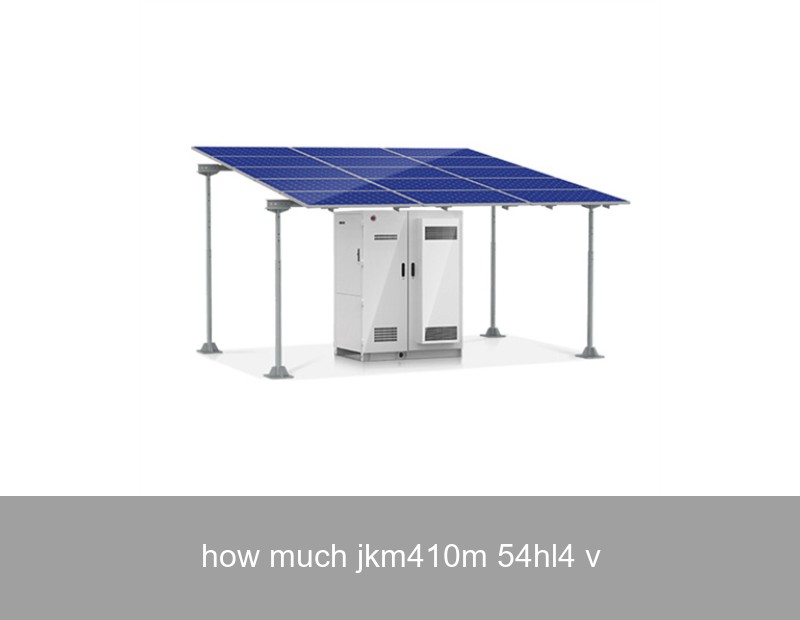
If you're researching solar panels, you've likely come across model numbers like the JKM410M-54HL4-V. It's a specific and powerful module from a leading manufacturer. But the most common question we hear from homeowners and businesses alike is a simple one: "How much can this panel actually power?" The answer goes beyond the wattage on the spec sheet. It's about understanding real-world energy production, system design, and how to turn sunlight into reliable power for your home or business. As a global leader in advanced energy storage since 2005, Highjoule specializes in pairing high-efficiency solar with smart storage to create truly sustainable power solutions.
Table of Contents
- Understanding the JKM410M-54HL4-V Specs
- From Lab to Rooftop: Calculating Real-World Output
- What Can a JKM410M-54HL4-V System Power? Scenarios
- A Real-World Case Study: Maximizing Solar ROI
- Beyond the Panel: The Critical Role of Energy Storage
- The Highjoule Solution: Intelligent Energy Management
Understanding the JKM410M-54HL4-V: More Than Just 410W
Let's break down the key specifications of this panel. The "410M" denotes its maximum power output of 410 watts under ideal laboratory conditions (STC). The "54HL4-V" refers to its cell configuration—54 high-efficiency cells arranged in a half-cut layout. This design reduces energy loss from resistance and shading, making it more durable and efficient in partial shade conditions.
Key electrical parameters include:
- Maximum Power (Pmax): 410W
- Module Efficiency: Typically over 21%, meaning it converts more than one-fifth of sunlight into electricity.
- Temperature Coefficient: This is crucial. For every degree Celsius above 25°C, the panel's power output decreases by about -0.34%. So on a hot 35°C day, the output can drop by nearly 3.4%.
Understanding these numbers is the first step. But the sticker rating is just the beginning of the story.
From Lab to Rooftop: Calculating Real-World Output
Your location is the single biggest factor. A JKM410M-54HL4-V panel in sun-drenched Arizona will produce significantly more energy than one in cloudy Germany. We measure this in "peak sun hours" – the equivalent number of hours per day when sunlight intensity averages 1,000 watts per square meter.
| Location (City) | Average Daily Peak Sun Hours | Estimated Daily Output per Panel* |
|---|---|---|
| Los Angeles, USA | 5.5 | ~2.26 kWh |
| Munich, Germany | 3.2 | ~1.31 kWh |
| Rome, Italy | 4.8 | ~1.97 kWh |
*Calculation: 410W x Peak Sun Hours x 0.75 (system losses). This is a simplified estimate.
As you can see, system losses (about 20-25%) from inverters, wiring, dust, and temperature dramatically impact production. This is why professional design and high-quality balance-of-system components are non-negotiable.

Image: Proper installation is key to achieving rated output. Source: Unsplash
What Can a JKM410M-54HL4-V System Power? Practical Scenarios
Let's translate kilowatt-hours (kWh) into everyday life. One JKM410M panel produces roughly 1.3 to 2.3 kWh per day, depending on location.
- For a Residential Rooftop: A typical 6 kW system might use 15 of these panels. In Southern Europe, such a system could generate 25-30 kWh on a good day—enough to cover the daily consumption of an energy-efficient household, running appliances, lighting, and even an electric vehicle for a short commute.
- For a Commercial Installation: A 100 kW array using about 244 panels could offset a significant portion of a small business's energy demand, powering servers, lighting, and HVAC during the sunniest parts of the day.
But here's the catch: solar production is intermittent. What happens at night or during a week of rain? This is where the conversation shifts from solar generation to reliable power supply.
Case Study: The Bavarian Bakery – From Solar to Savings
A family-run bakery in Bavaria, Germany, installed a 45 kW solar array using high-efficiency panels similar to the JKM410M-54HL4-V. Their goal was to reduce soaring energy costs from their ovens and refrigeration.
The Data:
- System Size: 45 kW (110 panels)
- Annual Solar Generation: ~42,000 kWh (as monitored).
- Initial Problem: They were consuming 70% of their solar energy instantly but exporting 30% to the grid at a low feed-in tariff, while still drawing expensive power from the grid at night.
They partnered with Highjoule to integrate a 150 kWh commercial battery storage system. The result? Their self-consumption rate jumped from 70% to over 94%. They now use nearly all the solar they produce, drastically reducing grid imports. The battery provides backup power, ensuring their refrigerators never fail. The project is on track to pay for itself in under 7 years, a figure accelerated by Europe's high energy prices. This case shows that the true value of a solar panel is unlocked when paired with intelligent storage.
Beyond the Panel: The Critical Role of Energy Storage
Asking "how much can it power?" is the right question, but it needs a time dimension: "How much can it power, and when do I need it?" A solar panel produces energy when the sun shines. Your home or business consumes energy on its own schedule. This mismatch is solved by energy storage.
A Highjoule battery storage system, like our HES Series for homes or CUBE Series for commercial use, acts as a reservoir for your solar energy. It stores excess production from your JKM410M panels for use in the evening, at night, or during peak rate periods. This turns your solar array from a daytime energy saver into a 24/7 power asset. According to the U.S. Department of Energy, storage is key to building a resilient, modern grid.

Image: Energy storage systems enable 24/7 solar power. Source: Unsplash
The Highjoule Solution: Intelligent Energy Management
At Highjoule, we don't just sell components; we provide integrated power solutions. Our expertise lies in designing systems where high-performance solar panels, like the JKM410M-54HL4-V, work in perfect harmony with our advanced battery storage and AI-driven energy management software.
Our GridComply OS™ constantly analyzes energy production, consumption patterns, weather forecasts, and even utility rate schedules. It makes millisecond decisions to store, discharge, or conserve energy, maximizing your financial return and energy independence. For microgrids and industrial applications, this intelligence ensures stability and can seamlessly island critical operations from grid outages. Learn more about grid services from independent authorities like NREL.
So, when you choose Highjoule, you're not just buying a battery; you're investing in a smarter, more resilient energy ecosystem for your property.
Ready to Discover Your True Potential?
The question "how much can the JKM410M-54HL4-V power?" has a dynamic answer that depends on your location, your energy habits, and most importantly, your ability to store and manage the energy you produce. What would a 24/7 clean power supply mean for your energy bills and your peace of mind?
 Inquiry
 Online Chat