


How Much Power Does a Powerbox System Really Deliver? A Practical Guide
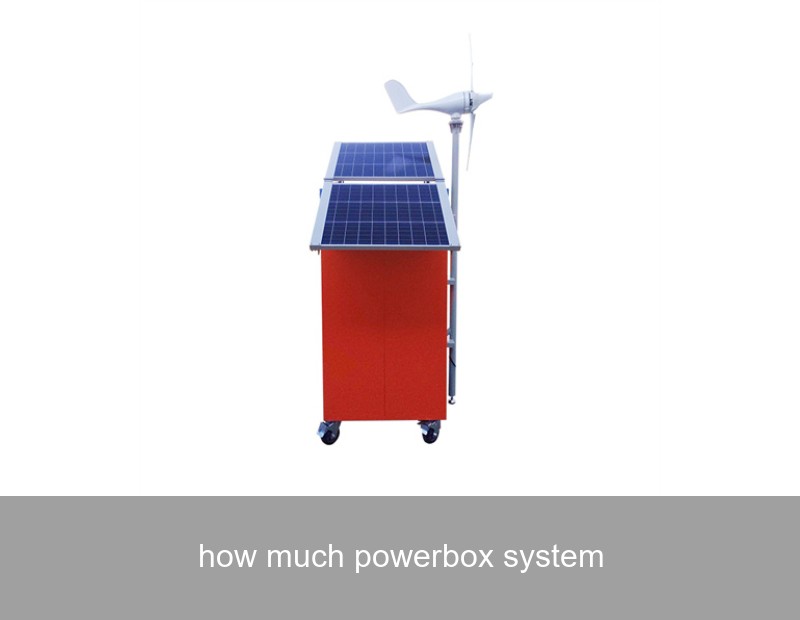
You've likely heard about Powerbox systems, or all-in-one energy storage solutions, and the promise of energy independence. But when considering the investment, one question rises above the rest: how much powerbox system capacity do I actually need to power my home or business? The answer isn't a simple number. It's a balance between power (instantaneous energy) and energy (stored capacity), deeply tied to your unique consumption patterns and goals. Let's demystify the real-world performance of these systems.
Understanding Power vs. Energy: The Core Concepts
Think of your Powerbox like a water tank. Energy (kWh) is the total volume of water in the tank—it determines how long you can run your appliances. Power (kW) is the width of the pipe coming out of the tank—it determines how many appliances you can run at the same time.
- Continuous Power Rating: The steady flow of power the system can deliver for hours. Can it handle your fridge, lights, and internet router simultaneously all night? That's about continuous power.
- Peak/Surge Power Rating: The short burst of power for seconds to minutes needed to start motors (like in air conditioners, pumps, or industrial machinery). This is often 2-3 times the continuous rating.
- Usable Energy Capacity (kWh): The actual amount of stored electricity you can access after accounting for battery chemistry and system efficiency. It answers: "For how many hours can I power my essential loads during an outage or off-peak period?"
So, "how much powerbox system" you need depends on whether you're asking about its peak muscle (kW) or its endurance (kWh).

Credit: Unsplash - A modern Powerbox system integrates seamlessly into residential settings.
Key Factors Determining Your System's "How Much"
To move from abstract concepts to a specific number, you must audit your energy life. Here’s what truly matters:
| Factor | Question to Ask | Impact on System Size |
|---|---|---|
| Load Assessment | What appliances will I run, and when? | High-wattage, concurrent loads (e.g., HVAC + EV charging) demand higher power (kW) and energy (kWh). |
| Backup Goals | Do I want whole-home backup or just essential circuits? | Essential-only (lights, fridge, router) can reduce needed capacity by 60-70%. |
| Solar PV Integration | Do I have or plan to install solar panels? | Solar can recharge the battery daily, allowing a smaller battery to cover nightly use effectively. |
| Utility Rate Structure | Do I have time-of-use rates or demand charges? | Commercial demand charge management requires high power discharge. Time-of-use shifting requires sufficient energy capacity. |
| Future-Proofing | Do I plan to buy an EV or expand my property? | Systems should have modular capacity for cost-effective expansion. |
Real-World Case Study: A German Bakery's Solution
Let's look at a concrete example from Bavaria, Germany. A family-run bakery with high early-morning energy demand faced crippling peak demand charges from the grid and wanted to stabilize operations.
- Challenge: Simultaneous operation of industrial ovens, dough mixers, and refrigeration created a peak load of 85 kW for 3-4 hours each morning. Grid demand charges were unsustainable.
- Solution: A customized Highjoule Industrial Powerbox system was installed, sized not just for energy, but specifically for high-power discharge.
- System Specs: The system featured a 120 kWh lithium iron phosphate (LFP) battery bank with a continuous power output of 100 kW and peak capability of 200 kW.
- Result: The Powerbox system "shaves" the bakery's peak draw from the grid by injecting power during the morning rush. This led to a 40% reduction in monthly demand charges and provided full backup during two grid outages in winter 2023, preventing €15,000 in potential lost production. The system is also integrated with their existing rooftop solar, maximizing self-consumption.
This case highlights that for commercial applications, the question of "how much powerbox system" is often driven by power (kW) needs for cost savings, not just energy (kWh) for backup.
Highjoule's Tailored Approach to System Sizing
At Highjoule, with nearly two decades of experience, we understand that the right answer to "how much" is never one-size-fits-all. Our process ensures your system is perfectly calibrated.
Our H-Series Powerbox lineup is designed for this flexibility:
- Residential H2/H4 Series: Scalable from 5 kW / 10 kWh modules up to whole-home solutions of 25 kW+ and 50 kWh+. Perfect for backup essentials, time-of-use shifting, or maximizing solar self-consumption.
- Commercial & Industrial (C&I) H-Stack Series: Modular, cabinet-based systems that can be configured from 50 kW / 100 kWh to multi-megawatt-hour installations. They are engineered for the dual duty of demand charge management and resilient backup power.
Our technical experts don't just sell a product; we deliver a solution. We start with a detailed energy analysis, often using monitoring tools to understand your precise load profile. We then model different scenarios—outage duration, solar production, financial goals—to recommend the optimal balance of power and energy. This consultative approach has made us a trusted partner from California to California.

Credit: Unsplash - Scalable C&I systems like Highjoule's H-Stack can be deployed for large applications.
Making the Right Decision for Your Needs
Before you get lost in spec sheets, take these three actionable steps:
- Conduct a 1-Week Load Audit: Use a simple plug meter or review your smart home data. List the wattage and typical run-time of key appliances. Focus on high-wattage items: heating/cooling, water heaters, EV chargers, and industrial equipment.
- Define Your "Why": Is your primary driver financial savings (shaving peaks, arbitraging rates), energy resilience (backup during outages), or sustainability (maximizing renewable use)? The priority dictates the sizing focus.
- Consult with Experts Who Ask the Right Questions: A reputable provider will delve into the details of your audit and goals, not just promote the largest system.
For authoritative information on battery technologies and safety standards that underpin systems like ours, you can refer to resources from the U.S. Department of Energy and the International Energy Agency (IEA).
So, What's the First Question You Should Ask About Your Energy Future?
The journey to answering "how much powerbox system" you need begins by shifting the question. Instead of just "how much," start asking "what for?" and "when?" With clear goals and expert guidance from partners like Highjoule, you can invest in a system that delivers precisely the right amount of power and peace of mind for years to come. What specific energy challenge in your home or business feels most urgent to solve today?
 Inquiry
 Online Chat