


How Much Do Prefab Homes in the UK Cost? The Surprising Role of Energy Systems
When you ask "how much do prefab homes in the UK cost?", you're likely expecting a simple number per square meter. But here's a truth seasoned homeowners and builders know: the upfront sticker price is just the beginning. The real cost—and value—of a modern prefabricated home is increasingly defined by what powers it. In an era of volatile energy prices and stringent sustainability goals, integrating intelligent energy storage and solar systems isn't an add-on; it's central to calculating total cost of ownership and long-term comfort.
Introduction: More Than Just a Price Tag
The UK's prefab home market is booming, driven by demand for faster build times, higher quality control, and sustainable living. While base prices can range from £1,800 to £3,000+ per m², focusing solely on this figure is like buying a car based only on its chassis. The performance—your ongoing energy bills, carbon footprint, and resilience against power outages—is determined by the home's "heart": its energy system. This is where forward-thinking providers differentiate themselves, and where companies like Highjoule become crucial partners. With nearly two decades of expertise, Highjoule specialises in integrating advanced battery storage and solar energy management into modern homes, ensuring they are not just structures, but efficient, self-sustaining power hubs.

Image: A modern prefab home designed with integrated renewable energy. Source: Unsplash
The True Cost Breakdown of a UK Prefab Home
Let's deconstruct the costs. A holistic budget includes:
- Base Unit Fabrication & Design: The core structure, materials, and architectural design.
- Site Works & Foundations: Ground preparation, utilities connections, and planning permissions.
- Assembly & Finishing: On-site construction, interior fit-out, and landscaping.
- The Critical 20% - Energy & Smart Systems: This is the variable that most impacts your future. It encompasses solar PV panels, battery storage, smart inverters, and energy management software. Omitting or underspending here can lead to decades of higher operational costs.
According to industry analysis, investing in a comprehensive solar and storage system can add 5-15% to the initial build cost but can reduce lifetime energy costs by 60% or more, often paying for itself within a decade.
The Hidden Game-Changer: Energy & Storage Costs
Why is energy storage so pivotal? The UK's climate means solar production is inconsistent. Without storage, excess daytime energy is sold back to the grid at a low rate, only to buy it back at night at a higher price. A battery system breaks this cycle.
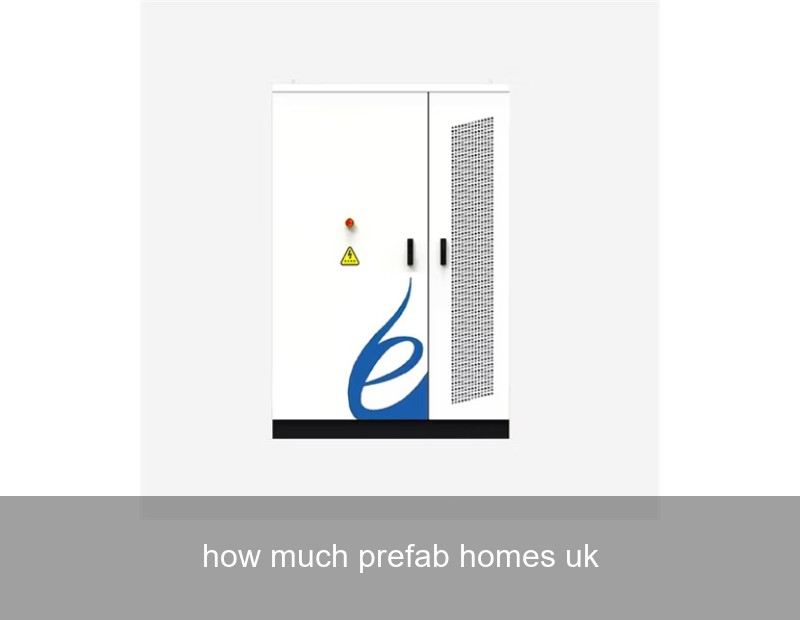
This is precisely the problem Highjoule's residential solutions, like the Highjoule HomePower Stack, are designed to solve. These modular lithium-ion battery systems seamlessly integrate with your solar array, storing surplus generation for use at peak times. Coupled with their intelligent Energy Management System (EMS), it learns your household patterns, optimises consumption, and can even provide backup power during grid outages—a feature becoming ever more valuable. For prefab home builders and buyers, partnering with an expert like Highjoule means the energy system is not a clumsy retrofit but a pre-planned, optimised core component.
| Cost Component | Estimated Range (Avg. 3-bed home) | Notes |
|---|---|---|
| Prefab Structure & Build | £150,000 - £250,000 | Varies with design, materials, and manufacturer. |
| Site & Foundation Works | £30,000 - £50,000 | Highly dependent on location and ground conditions. |
| Basic Electrical & Heating | £15,000 - £25,000 | Standard grid-tied systems, gas boiler etc. |
| Solar PV + Battery Storage System (e.g., Highjoule HomePower) | £8,000 - £20,000 | Adds long-term savings, energy independence, and increases property value. |
Case Study: A Devon Family's Net-Zero Prefab Journey
Let's look at real data. The Carter family in South Devon completed their high-spec prefab home in 2022. Their goal was net-zero energy and resilience against the region's occasional storm-related power cuts.
- Home Size: 180m², 4-bedroom timber-frame prefab.
- Energy Strategy: 8kWp solar roof integrated during fabrication + a 15kWh Highjoule HomePower Stack battery system.
- Upfront Energy Investment: £16,500 (fully integrated into their mortgage).
- Results (First 12 Months):
- Annual electricity bill: £42 (standing charge only).
- Self-sufficiency rate: 92% of annual power consumed was self-generated.
- Carbon savings: Estimated 4.2 tonnes of CO2 avoided.
- During a 9-hour grid outage, the home operated normally on battery backup.
"The battery system wasn't the cheapest option," said Mr. Carter, "but viewing it as part of the house's core infrastructure, like plumbing, made the decision easy. It transformed our relationship with energy." This case highlights how the question of "how much prefab homes UK" cost evolves into "how much value do they deliver?"

Image: A sleek, integrated battery storage unit in a modern home utility room. Source: Unsplash
Future-Proofing Your Investment: The Smart Home Angle
A prefab home is a long-term investment. Future-proofing means anticipating electric vehicle (EV) charging, heat pumps, and potential energy market shifts like dynamic time-of-use tariffs. A basic battery system might store energy, but a smart system like Highjoule's Adaptive EMS actively manages it. It can automatically charge your battery when grid electricity is cheapest (or greenest), schedule EV charging during surplus solar, and prioritise essential loads during backup—all controllable via an app.
This intelligence maximises your financial return and convenience. For developers and volume builders, Highjoule offers scalable commercial and industrial storage solutions, enabling entire communities or multi-unit prefab developments to operate as efficient microgrids, sharing and optimising energy locally. This isn't just homebuilding; it's building the resilient, decentralised energy grid of the future.
Authoritative Data on Energy Trends
To understand the broader context, consider that the UK government aims for a 68% reduction in emissions by 2030, driving building regulations like the Future Homes Standard. Furthermore, independent analysis from sources like Energy UK consistently highlights the critical role of domestic flexibility and storage in achieving grid stability as we transition to renewables.
Your Path to an Informed Decision
So, how much do prefab homes in the UK really cost? The answer is a formula: Base Build Cost + (Energy System Investment x 0.8). That 0.8 multiplier represents the significant long-term reduction in operational expense and risk. By factoring in a high-performance energy storage solution from the design phase, you're not adding cost; you're strategically reallocating it from a lifetime of bills into your asset's equity and capability.
When you request quotes from prefab home companies, what questions will you ask about their integrated energy solutions and partnerships with technology providers like Highjoule?
 Inquiry
 Online Chat