


How Much STK Solar Panel Do You Need for Your Home or Business?
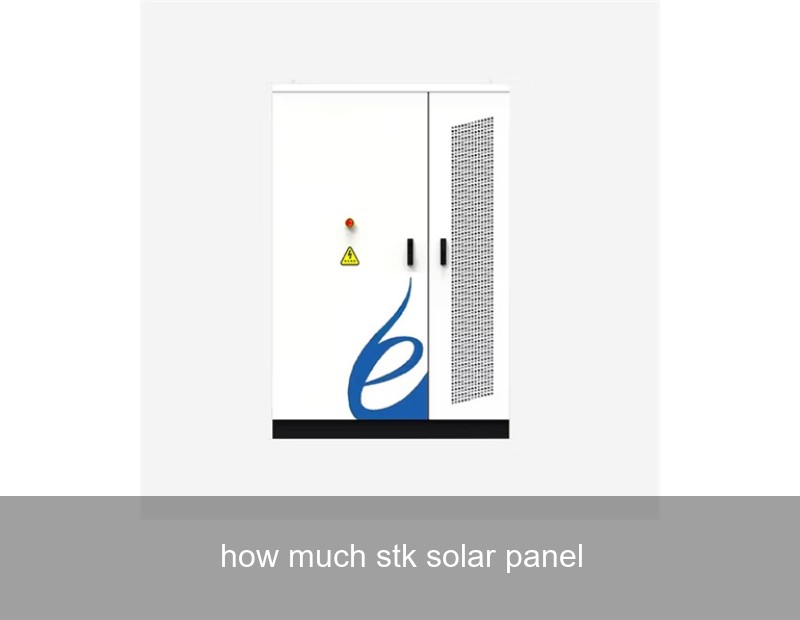
You've decided to go solar—fantastic! But now you're faced with one of the most common and crucial questions: "How much STK solar panel capacity do I actually need?" It's not just about counting roof tiles. The answer lies at the intersection of your energy consumption, your location's sunshine, and the intelligent technology that manages it all. As a global leader in smart energy storage since 2005, Highjoule understands that the right solar array is the first step, but pairing it with the right battery system is what truly unlocks energy independence and resilience.
Table of Contents
The Phenomenon: From "Just Panels" to a Smart Energy Ecosystem
Gone are the days when solar was just about panels on the roof. Today, savvy homeowners and business managers are thinking in terms of complete energy ecosystems. The question "how much STK solar panel?" is inherently linked to "how will I store and use that power when the sun isn't shining?" This is where the real magic happens. An oversized array without storage might feed excess power back to the grid for a low feed-in tariff, while an undersized one leaves you still dependent on expensive peak-hour electricity. The modern approach is to size your solar generation in harmony with a battery energy storage system (BESS) to maximize self-consumption, protect against outages, and provide financial predictability.
Image Source: Unsplash - A modern home energy setup.
The Data: Key Factors That Determine Your STK Solar Panel Needs
Let's break down the calculation. Determining the right capacity (typically measured in kilowatts-peak, kWp) of STK solar panels involves a few critical data points:
- Your Annual Energy Consumption: This is your starting point. Check your electricity bills for total kilowatt-hour (kWh) usage over the year. A typical U.S. household uses about 10,632 kWh annually, while European households vary widely, often between 2,500 and 5,000 kWh.
- Your Location's Solar Insolation: Not all sunshine is created equal. A roof in Arizona produces more energy than one in Scotland. This is measured in peak sun hours per day. You can use tools like the NREL PVWatts Calculator to get precise data for your address.
- Your Roof's Characteristics: Direction (south-facing is ideal in the Northern Hemisphere), tilt, and any shading from trees or chimneys significantly impact output.
- Your Future-Proofing Plans: Are you planning to buy an electric vehicle, install a heat pump, or expand your business operations? Factor in this future load.
A simplified formula to estimate system size is: Annual kWh usage / (365 days * average daily sun hours) = Approximate system size in kW. For example, a home in California using 10,000 kWh/year with 5.5 sun hours needs about a 5 kW system. But this is just the generation side.
| Annual Consumption | Location (Avg. Sun Hrs/Day) | Estimated Solar Array Size (kWp) | Recommended Battery Storage* |
|---|---|---|---|
| 10,000 kWh (US Home) | Los Angeles, USA (5.5) | ~5.0 kWp | 10-15 kWh |
| 4,500 kWh (EU Home) | Munich, Germany (3.8) | ~3.2 kWp | 8-12 kWh |
| 50,000 kWh (Small Business) | Madrid, Spain (5.2) | ~26.5 kWp | 30-50 kWh |
*Battery sizing depends heavily on load-shifting and backup needs. Highjoule's energy management system optimizes this dynamically.
A Real-World Case: The German Bakery's Energy Transformation
Let's look at a concrete example from our work in Bavaria. Bäckerei Schmidt, a family-run bakery, faced high energy costs, especially for early morning refrigeration and oven use before sunrise. Their annual consumption was 48,000 kWh. They initially considered a 30 kWp STK solar panel array.
After a Highjoule energy audit, we proposed a different approach: a 24 kWp solar array paired with a Highjoule HES-40 commercial battery system (40 kWh capacity) and our IntelliGrid AI energy manager. Why the smaller array? Because our analysis showed that with intelligent storage, they could capture and time-shift over 90% of their solar production for self-use, drastically reducing grid imports. The system was programmed to charge the batteries during midday solar peaks and power the overnight refrigeration and pre-dawn baking cycle.
The Result? Within the first year:
- Grid electricity consumption reduced by 82%.
- They achieved a payback period of under 6 years, thanks to optimized self-consumption and participation in a local grid flexibility program managed by the IntelliGrid system.
- The bakery gained full backup power, ensuring dough never spoiled during grid outages.

Image Source: Unsplash - Commercial bakery operations have unique energy needs.
This case illustrates that "how much STK solar panel" is not a question answered in isolation. It's about the synergy between generation, storage, and intelligence.
Beyond the Panels: Highjoule's Intelligent Energy Solutions
This is where Highjoule completes the picture. We don't just sell components; we provide integrated, smart power solutions. Once you have your STK solar panels, our technology ensures you get the maximum value from every photon.
Highjoule HES Series: The Heart of Your Energy System
Our HES (Home Energy Storage) and CES (Commercial Energy Storage) battery systems are built with safety, longevity, and performance in mind. Using premium lithium-iron-phosphate (LFP) chemistry, they offer a long cycle life and stable performance. They seamlessly integrate with most major solar inverter brands, making them a perfect addition to your new or existing STK solar panel installation.
IntelliGrid AI: The Brain of Your Energy System
This proprietary software platform is what sets Highjoule apart. IntelliGrid AI doesn't just store energy; it learns your consumption patterns, predicts weather and solar yield, and makes real-time decisions to optimize your energy flow. It can:
- Prioritize solar self-consumption to slash your bills.
- Provide seamless backup power during grid failures.
- In some markets, participate in grid services (like peak shaving or frequency response) to generate additional revenue streams—a feature particularly valuable for our commercial and microgrid clients.
For a business or homeowner asking "how much STK solar panel?", our team first uses this advanced software to model your specific scenario, showing you the optimal combination of panels and storage for your financial and resilience goals.
What's Your Energy Profile?
The journey to energy independence starts with understanding your unique needs. The perfect answer to "how much STK solar panel?" is a gateway to a larger, more empowering conversation about taking control of your energy. Are you ready to move beyond just a quote for panels and explore how an intelligent storage system can transform your solar investment from a simple saver into a resilient, smart energy asset? What would you power first during an outage?
 Inquiry
 Online Chat