


Industrial Battery Boxes: The Silent Powerhouse Revolutionizing Modern Manufacturing
a sprawling manufacturing plant. The hum of machinery is constant, the production line never sleeps. Suddenly, the grid voltage dips—a common occurrence in many industrial areas. A decade ago, this might have caused a costly shutdown, spoiled materials, and delayed orders. Today, a different scenario unfolds. A sleek, container-sized unit sitting quietly on the facility's perimeter instantly detects the disturbance and injects precise power to stabilize the line. No flicker, no halt. This is the silent revolution powered by industrial battery boxes.
For facility managers and plant engineers across Europe and the US, energy is no longer just a utility bill; it's a critical, variable input that directly impacts the bottom line and operational integrity. The convergence of volatile energy prices, ambitious sustainability targets, and an aging grid infrastructure is pushing industries to take control. Enter the modern industrial battery energy storage system (BESS)—often modularized in robust, plug-and-play "boxes." These are not your typical emergency lead-acid batteries. They are intelligent, grid-interactive power assets.
The Power Shift: Why Factories Are Going Off-Grid (Mentally, at Least)
The phenomenon is clear. According to the International Energy Agency, global energy storage capacity is set to expand dramatically by 2030, with front-of-the-meter and behind-the-meter industrial applications being a key driver. The data is compelling: energy-intensive industries face two major financial drains. First, demand charges—fees based on the highest 15-30 minute power draw in a billing cycle—can constitute up to 50% of a commercial electricity bill. Second, the gap between peak and off-peak electricity prices (price arbitrage) continues to widen in many deregulated markets.
This creates a perfect use case for battery storage. An industrial battery box acts like a strategic energy reservoir. It charges during periods of low cost and low grid stress, then discharges during expensive peak hours or when the factory's demand spikes, effectively shaving the peak and slashing those demand charges. The logic is a straightforward economic ladder: from passive consumption, to active management, to becoming a proactive grid participant.
What Exactly is an Industrial Battery Box?
Let's demystify the technology. At its core, an industrial-grade battery storage system is an integrated solution comprising three key components:
- Battery Racks: The core energy storage media, typically using Lithium Iron Phosphate (LFP) chemistry for its superior safety, long cycle life (often 6,000+ cycles), and stability. These racks are modular, allowing capacity to scale from hundreds of kWh to multiple MWh.
- Power Conversion System (PCS): The brain and muscle. This bidirectional inverter converts DC battery power to AC for the factory and vice-versa. Its speed and precision enable grid services.
- Energy Management System (EMS): The strategic commander. This software platform uses algorithms and sometimes AI to decide when to charge or discharge based on electricity rates, production schedules, and weather forecasts for on-site solar.
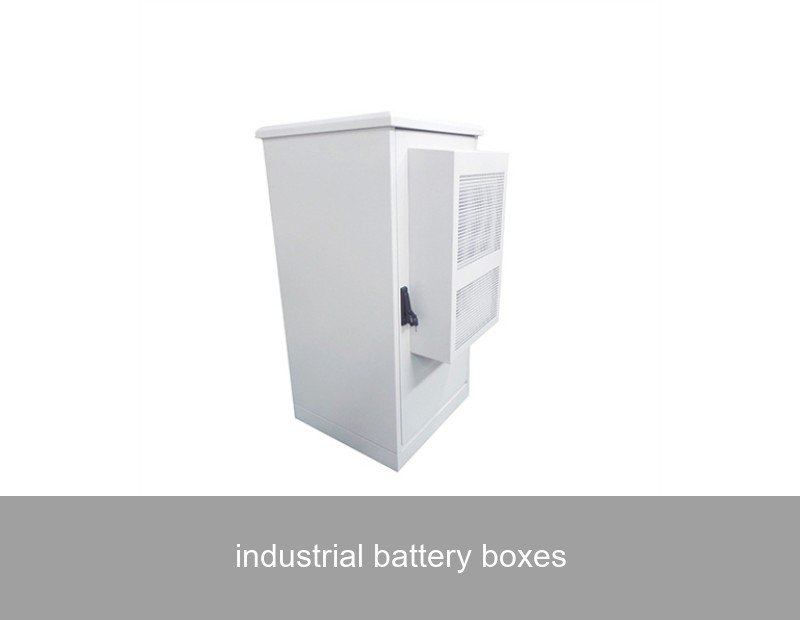
Companies like Highjoule specialize in packaging these components into robust, self-contained industrial battery boxes. Think of them as "power plants in a box." Highjoule's H-Series Industrial BESS, for example, comes pre-assembled, tested, and containerized for rapid deployment. They feature integrated climate control, fire suppression, and grid-connection hardware, significantly reducing on-site installation complexity and time. This plug-and-play approach is crucial for minimizing factory downtime during integration.

Image: Modern industrial battery systems are designed for safe, integrated installation within industrial settings. (Source: Unsplash, representative image)
Beyond Backup: The Core Benefits of Deploying Industrial Battery Boxes
1. Cost Control & Energy Arbitrage
The most immediate benefit is financial. By strategically discharging during peak rate periods, an industrial battery box can dramatically reduce both energy consumption charges and, more importantly, demand charges. For a medium-sized plant with a €50,000 monthly bill where 40% is demand charges, peak shaving can lead to savings of €10,000 or more per month. The system pays for itself by transforming a cost center into a value-generating asset.
2. Grid Support & Sustainability
Industrial batteries are key to unlocking the full potential of on-site renewables. They store excess solar generation for use at night, maximizing self-consumption. Furthermore, advanced systems can provide frequency regulation services to the grid—responding to grid operator signals in milliseconds to help balance supply and demand. This not only generates additional revenue streams but also directly contributes to grid stability and decarbonization, a win-win for corporate ESG goals.
3. Operational Resilience
While not always the primary design goal for every installation, the resilience benefit is immense. In the event of a grid outage, a configured industrial BESS can provide seamless backup power to critical loads, preventing spoilage, safety hazards, and production losses. Highjoule's systems are engineered with this in mind, offering configurable backup power options that ensure essential processes keep running, protecting both product and profit.
A Real-World Case Study: Powering a Bavarian Automotive Supplier
Let's move from theory to practice. A leading automotive parts supplier in Bavaria, Germany, faced steep ‘Netzentgelte’ (grid fees) and sought to increase the usage of its 2 MW rooftop solar array. Their goal was to reduce grid dependence and stabilize energy costs.
The Solution: Highjoule deployed a 1.2 MWh H-Series Industrial Battery Box integrated with the existing solar PV and factory energy management system. The system was configured for peak shaving, solar self-consumption optimization, and basic backup for critical QA and server rooms.
| Metric | Result (Annual) |
|---|---|
| Peak Grid Demand Reduction | 28% |
| Solar Self-Consumption Increase | From 55% to over 85% |
| Grid Energy Cost Savings | €145,000 |
| CO2 Emission Reduction | Equivalent to 95 metric tons |
| Project Payback Period | Under 5 years |
The plant manager noted, "The system runs autonomously. We see the savings on our bill and have the peace of mind that our clean energy isn't going to waste. It's become a reliable, silent partner in our production." This case exemplifies the multi-faceted return on investment that modern industrial battery boxes deliver.
Choosing the Right Industrial Battery Storage Solution
Not all battery storage is created equal. For industrial applications, safety, longevity, and intelligence are non-negotiable. When evaluating providers, ask these key questions:
- Chemistry & Safety: Does the provider use inherently stable chemistry like LFP? What tier-1 cell brands do they use? What physical and battery management system (BMS) safety protocols are in place?
- System Intelligence: Can the EMS integrate with my production schedule and local weather data? Does it allow for participation in grid service markets if available in my region?
- Total Lifetime Value: What is the warranted cycle life and capacity retention (e.g., 80% after 10 years)? What are the operational and maintenance expectations?
Highjoule's approach is to act as a long-term partner, not just a vendor. From initial feasibility analysis using proprietary modeling tools to seamless integration, ongoing remote monitoring, and performance guarantees, the focus is on delivering a resilient power asset that performs for decades.

Image: Intelligent Energy Management Systems are crucial for optimizing battery performance and ROI. (Source: Unsplash, representative image)
The Future Outlook for Industrial Energy Storage
The trajectory is towards even greater integration and intelligence. We are moving into an era of Virtual Power Plants (VPPs), where aggregators will remotely coordinate thousands of distributed assets—including industrial battery boxes—to act as a single, flexible power plant. This will open larger revenue opportunities for factories. Furthermore, advancements in battery chemistry and system design continue to drive down costs ($/kWh) while improving performance.
The question for industrial leaders is no longer if battery storage is relevant, but how to strategically implement it. It's a capital investment that directly mitigates operational risk and energy cost volatility.
Is your facility's energy strategy still reactive, or is it ready to become a proactive, profit-protecting asset? What would a detailed analysis of your last 12 months of utility bills reveal about your potential for peak shaving and cost savings with an industrial battery box?
 Inquiry
 Online Chat